Three-Wheel Vehicle Assembly Line: Description and Features
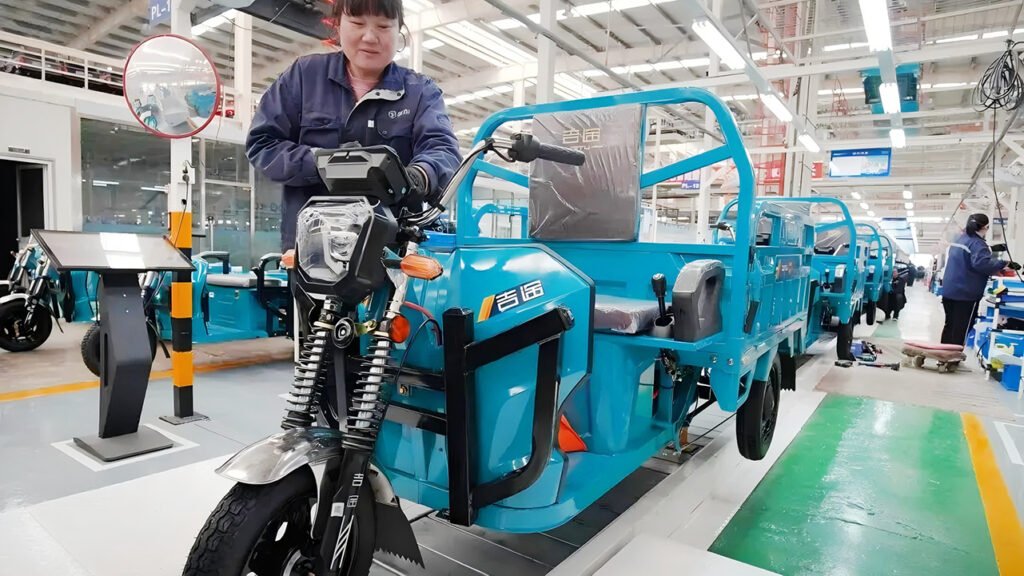
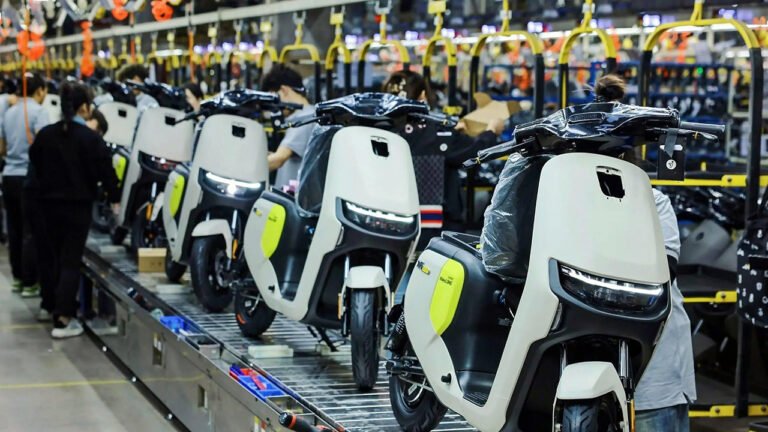
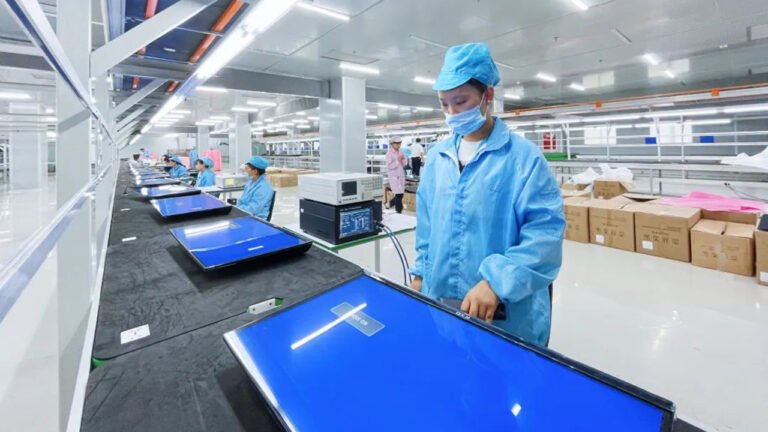
The three-wheel vehicle assembly line is a flow production line for frames, motors, tires, and cargo boxes, using continuous conveyors and fixed workstations. Key steps include chassis assembly, electrical wiring, cargo box fitting, and testing. Main features: modular design for mixed model production, heavy-duty stations with manipulators, centralized brake and light testing, adjustable takt time (3–10 min/unit), and integrated logistics.
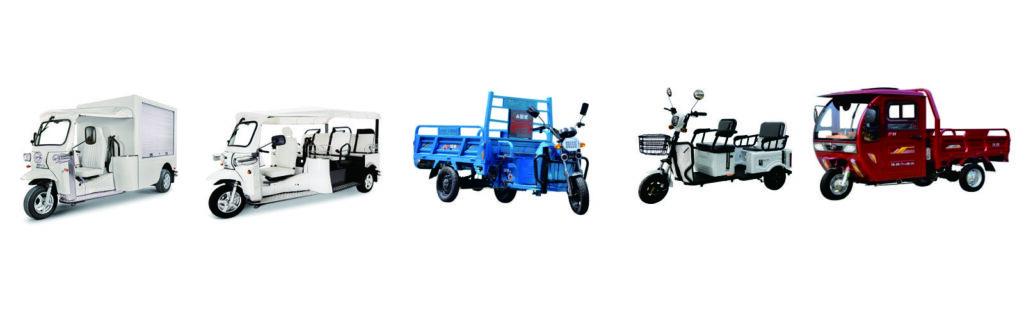
Tricycle Assembly Lines/Production Lines are Suitable to Produce/Assemble 3 wheeler, tricycles, and so on.(If customers request, we also can design the Production Line/Assembly Line suitable for 2 wheeler and 3 wheeler depends on exact vehicle models.)
Three-Wheel Vehicle Assembly Line: Description and Features
I. Description of the Three-Wheel Vehicle Assembly Line
The three-wheel vehicle assembly line is a flow production line that sequentially assembles components—such as the frame, engine (or electric motor), tires, electrical system, and cargo box—into a complete three-wheel vehicle. It typically uses a continuous or intermittent conveying method, with workstations arranged in process order. Workers or machines perform designated assembly tasks at fixed stations.
Typical Assembly Process:
- Line preparation: Frame marking/engraving, cleaning, anti-rust treatment.
- Chassis & powertrain: Install rear axle, electric motor (or engine), transmission system, brake shoes.
- Running gear: Install front fork, front wheel, rear wheels, tighten hubs.
- Electrical & lines: Wiring (headlight, turn signals, horn), install controller (for EVs), brake fluid/cables.
- Cargo box & accessories: Install cargo box, seat, backrest, armrests, rearview mirrors.
- Filling & testing: Add brake fluid (for hydraulic brakes), inflate tires, test lights, test brakes, road test (sampling).
- Offline inspection: Visual inspection, functional tests, attach nameplate/certificate of conformity.
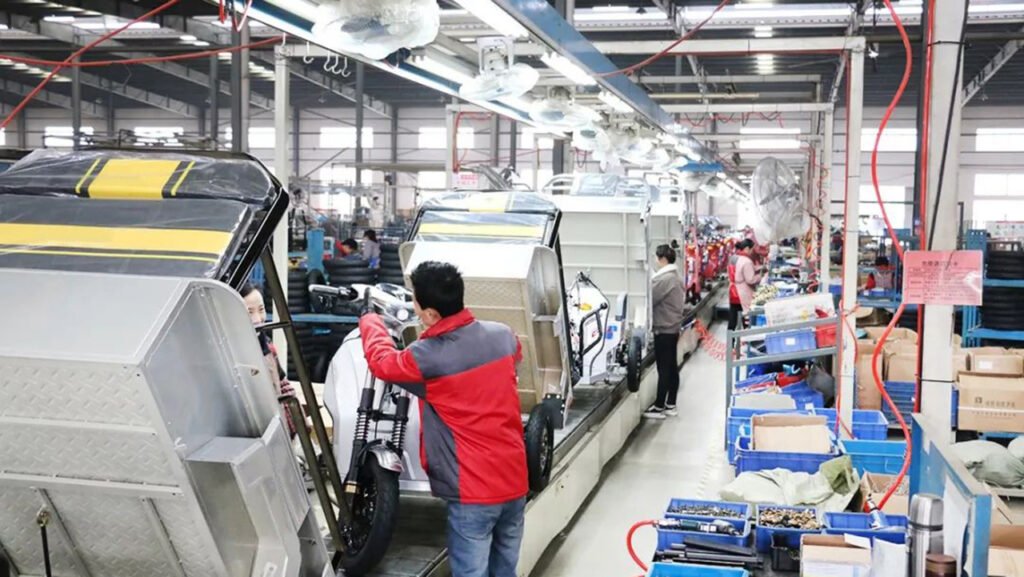
II. Main Features of the Three-Wheel Vehicle Assembly Line
| Feature | Description |
|---|---|
| 1. Modular assembly | Divided into modules (frame, powertrain, electrical, cargo box). Parallel operations at different stations improve efficiency. |
| 2. Multi-model mixed production capability | Adjustable tooling, fixtures, and material racks allow compatibility with different models (fuel/electric, cargo/leisure). |
| 3. Heavy-duty station design | Heavy components (rear axle, motor, cargo box) are handled with assistive manipulators or pneumatic hoists to reduce labor intensity. |
| 4. Centralized inspection stations | Dedicated testing sections (e.g., brake tester, light tester, motor performance tester) ensure safety and regulatory compliance. |
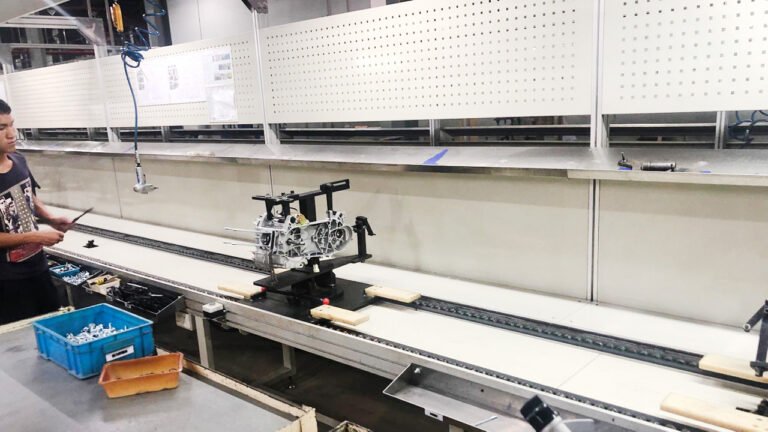
| 5. Flexible line type | Common types include slat chain lines (workers move with the vehicle or vehicle remains stationary at stations) . |
| 6. Adjustable takt time | Conveyor speed can be adjusted based on order volume. Takt time is typically 3–10 minutes/unit (slower for heavy-duty cargo trikes, faster for leisure trikes). |
| 7. Integrated logistics aisles | Material racks or AGV delivery points are placed alongside the line to minimize worker walking and ensure timely parts supply. |
| 8. Safety & environmental features | Suspension for pneumatic/electric tools, anti-slip flooring, waste fluid collection trays (at filling stations), emergency pull cords, etc. |
III. Common Optimization Directions
- Digital management: Equip the assembly line with an MES (Manufacturing Execution System) to collect torque, missing-tightening, and test data in real time.
- Error-proofing design: Use torque-controlled wrenches for critical bolts; adopt mistake-proof connectors for electrical wiring.
- Flexibility: Apply SMED (Single Minute Exchange of Die) for cargo box model changes to reduce line stoppage time.