

A slat chain conveyor is a heavy-duty continuous conveying system driven by chains with metal plates, featuring extremely high load capacity, smooth operation, and adaptability to harsh environments. It is widely used in industries such as automotive, motorcycles, home appliances, heavy machinery, logistics, and others for transporting heavy components, complete units, pallets, and cases. It serves as a reliable infrastructure for automated production.
Slat Chain Conveyors are suitable to Assemble/Produce Motorcycles, Tricycles, Automobiles, Hardware and Electrical Machinery, Household Appliance and so on. (If clients have more requirements or want to produce products, welcome to contact us.)
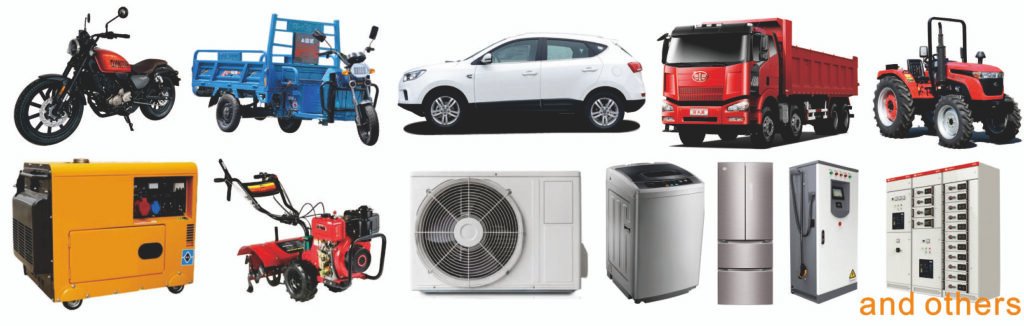
Introduction and Applicable Products for Slat Chain Conveyor Lines
I. Introduction to Slat Chain Conveyor Lines
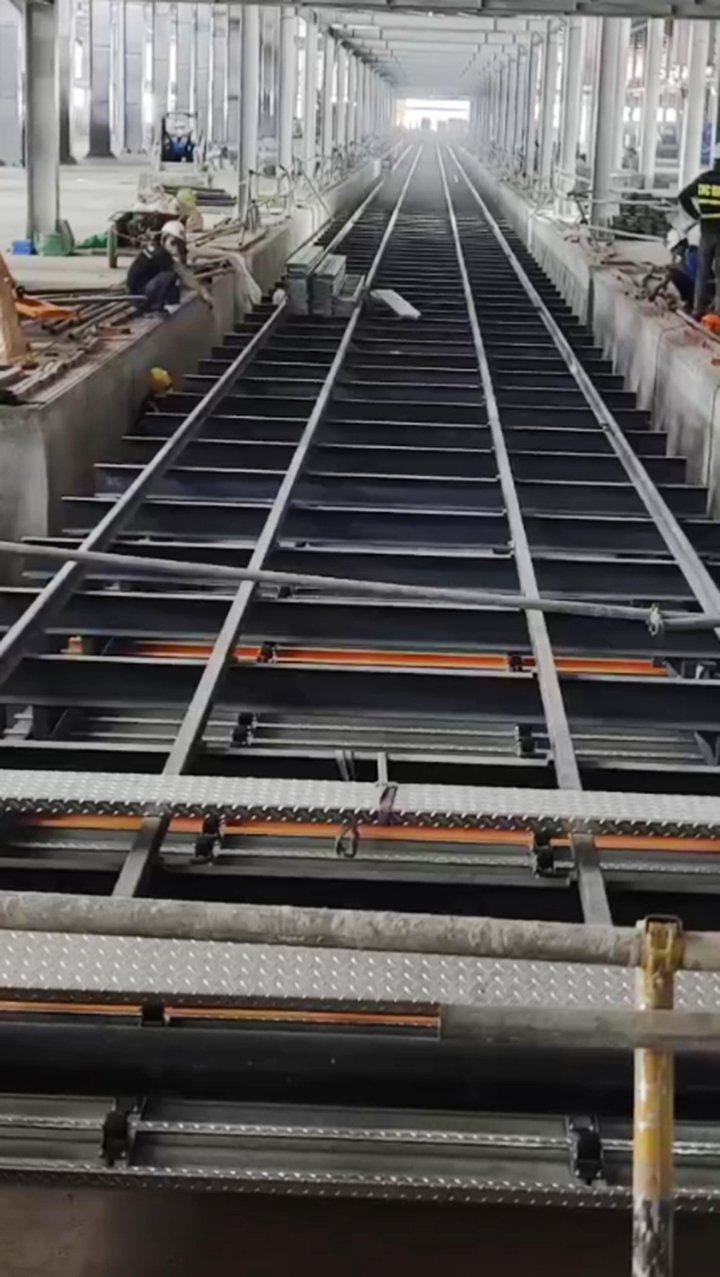
A slat chain conveyor line is a heavy-duty continuous conveying system that uses metal (or stainless steel, plastic) plates as the carrying surface, driven by chains. High-strength metal plates (also called “slats”) fixed onto chains are interlinked to form a sturdy, stable moving platform for transporting materials.
Core Structure and Working Principle:
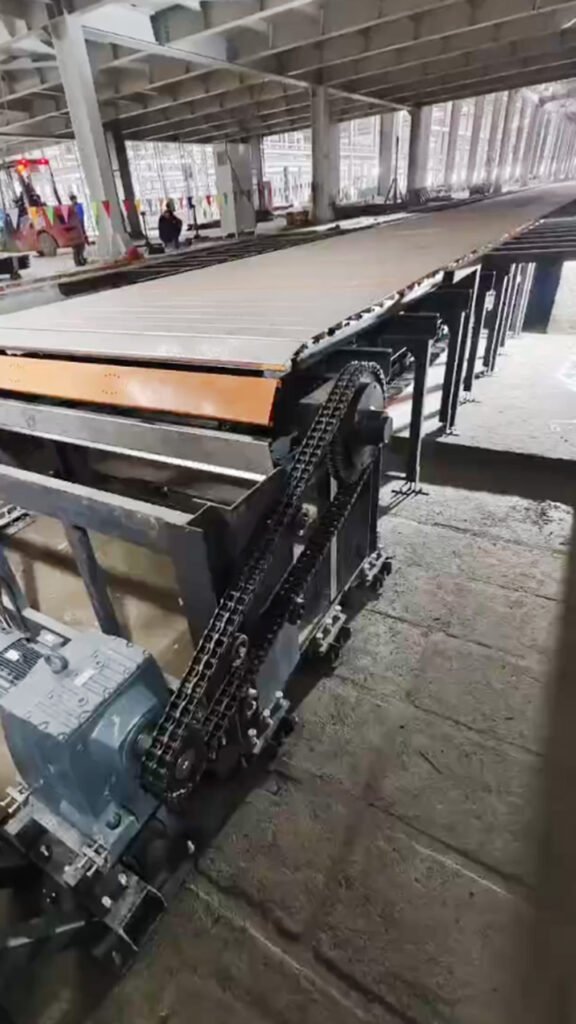
- Slats (Chain Plates): The core load-bearing components, typically made of carbon steel, stainless steel, or engineering plastic. Shapes include flat-top, raised, wave-like, etc., and can be designed with attachments like side guards or rollers as needed.
- Drive Unit: Composed of a motor, reducer, and drive sprocket, providing power.
- Chains: Typically heavy-duty roller chains responsible for pulling the slats.
- Frame: The steel structure supporting the entire conveyor system.
- Working Principle: The motor drives the drive sprocket to rotate via the reducer. The sprocket engages the chain, which pulls the fixed slats to move steadily along the frame rails, thereby transporting objects.
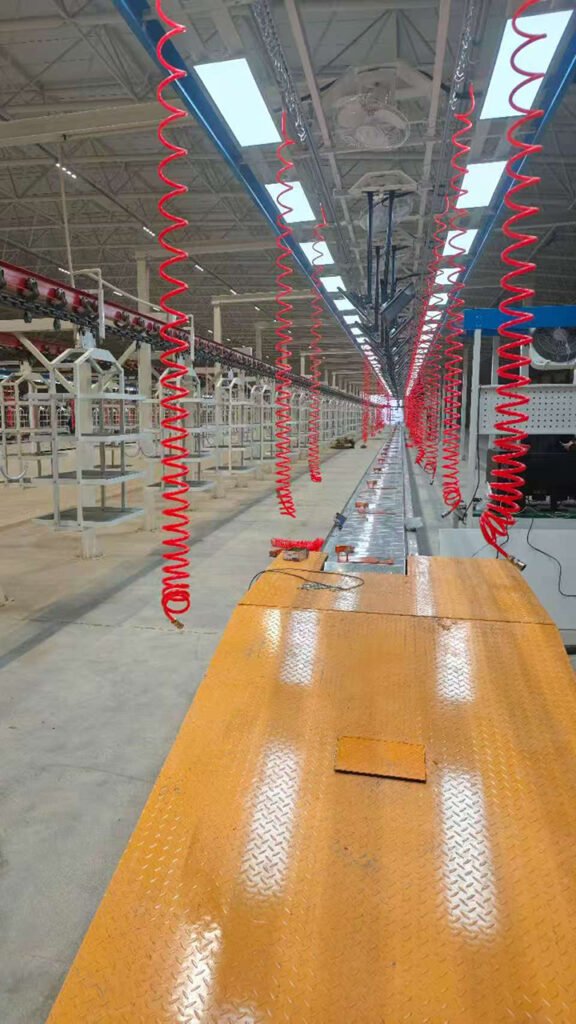
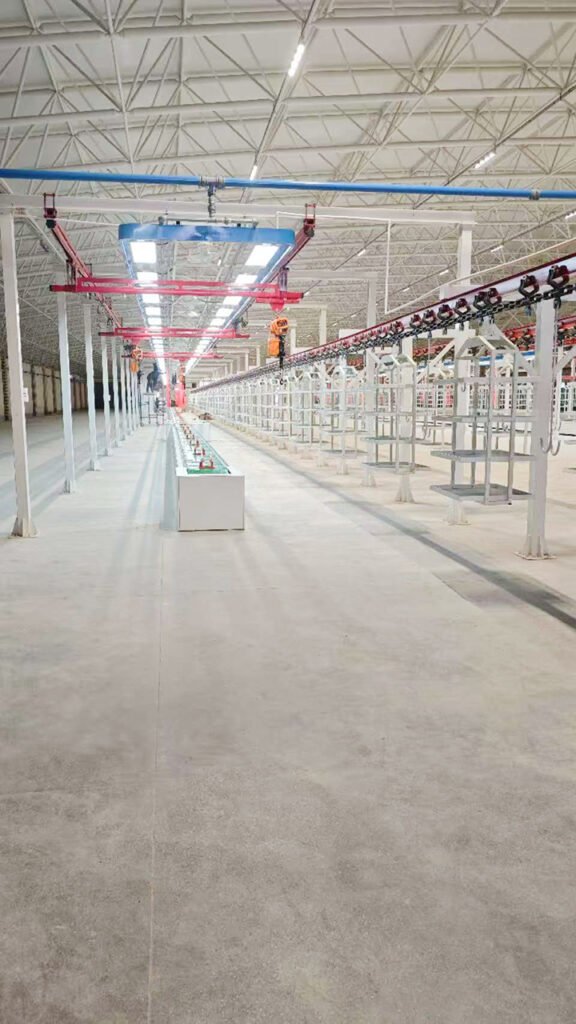
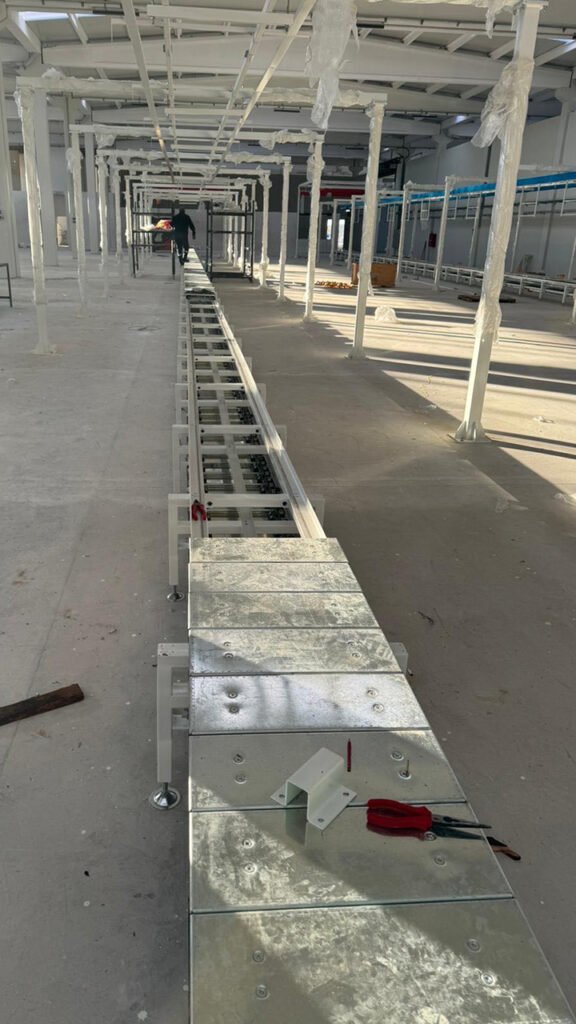
Key Features and Advantages:
- Extremely High Load Capacity: One of the preferred choices for heavy-duty conveying, capable of withstanding point loads ranging from hundreds of kilograms to several tons, suitable for transporting large, heavy items.
- Smooth and Reliable Operation: The flat slat surface ensures materials are transported without relative sliding, making it ideal for processes like assembly, testing, and packaging.
- Wide Adaptability:
- Resistant to Harsh Environments: Especially metal slats can withstand harsh conditions like high temperature, low temperature, humidity, oil, grease, and dust.
- High Design Flexibility: Can be configured into various layouts such as inclined (typically at angles ≤30°), turning (using curved slats for horizontal turns), vertical lifting, and more.
- Long Service Life: Robust metal structure offers durability and relatively low maintenance costs.
- Easy Functional Expansion: Easy to integrate pallets, positioning mechanisms, stoppers, lift-and-transfer units, scanners, etc., on the line to enable automated production.
II. Applicable Products and Industries
Due to its heavy-duty, stable, and durable characteristics, slat chain conveyors are widely used in the following industries and for the following products:
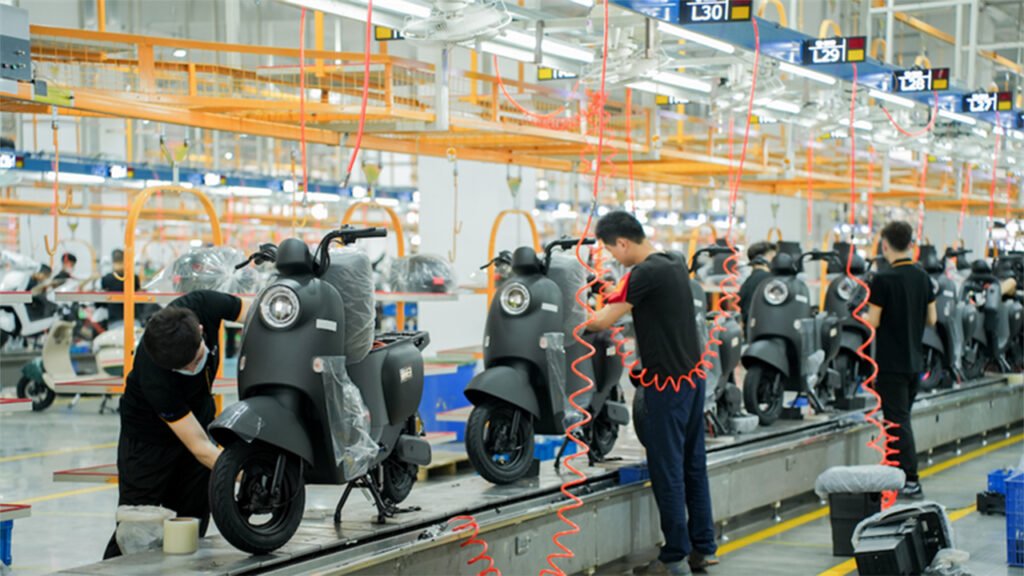
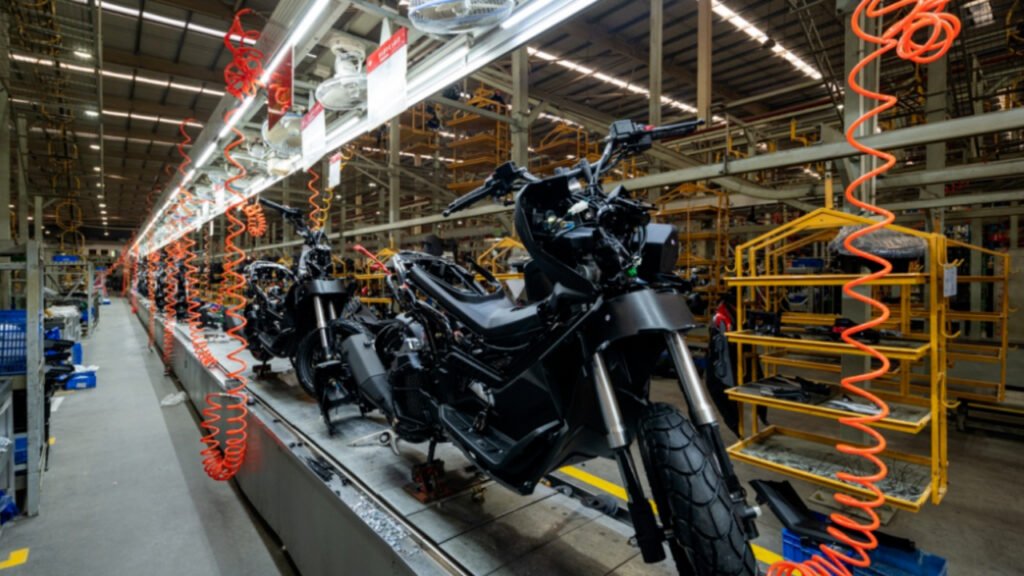
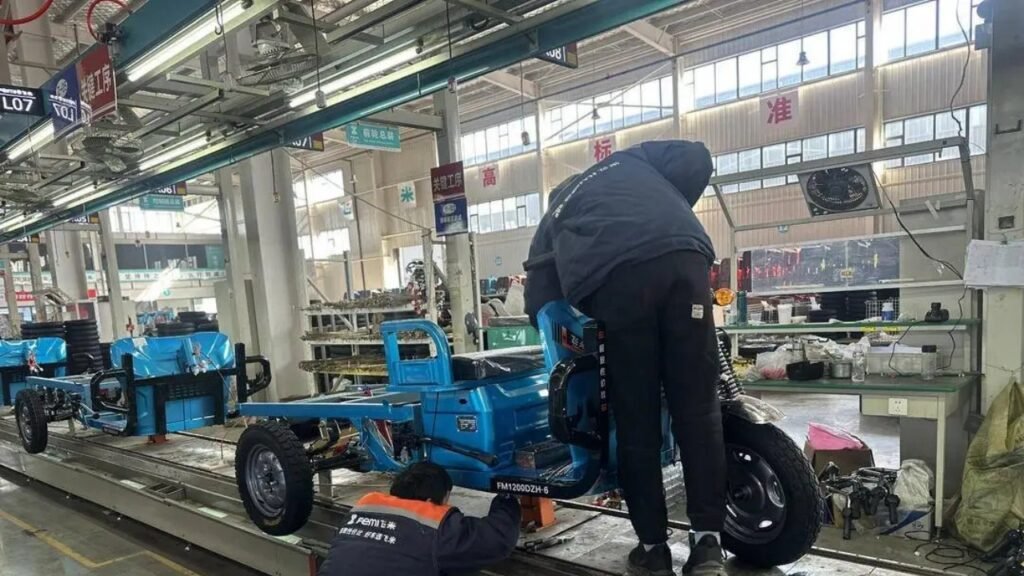
1. Motorcycle, E-bike, Bicycle Manufacturing
- Applications: Motorcycle assembly lines, Electric bike assembly lines, E-scooter assembly lines, Tricycle assembly lines, Bike assembly line and so on.
- Reasons for Suitability: Similar to the automotive industry, though on a smaller scale, meeting needs for heavy and stable conveying.
2. Automotive Manufacturing and Components Industry
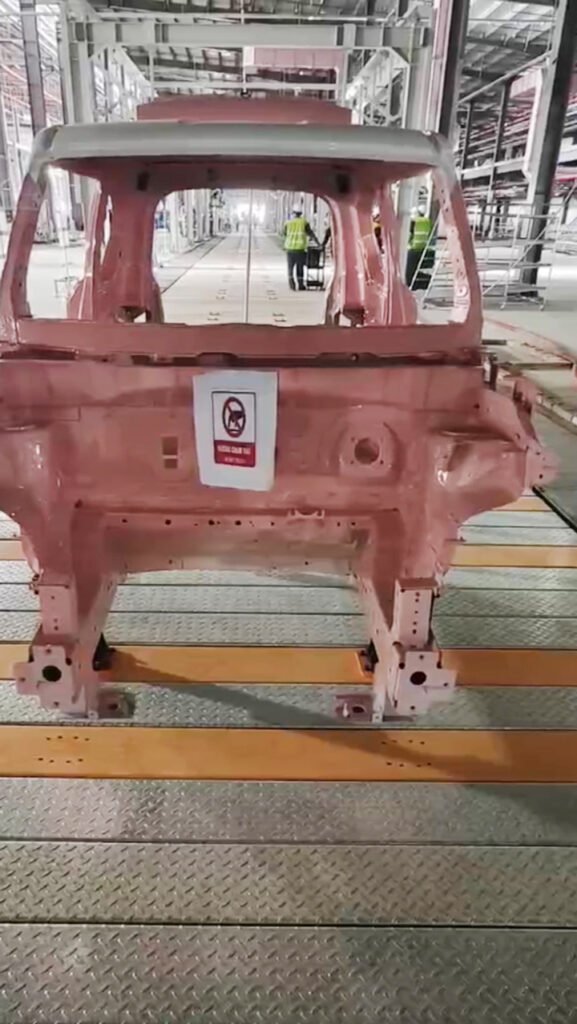
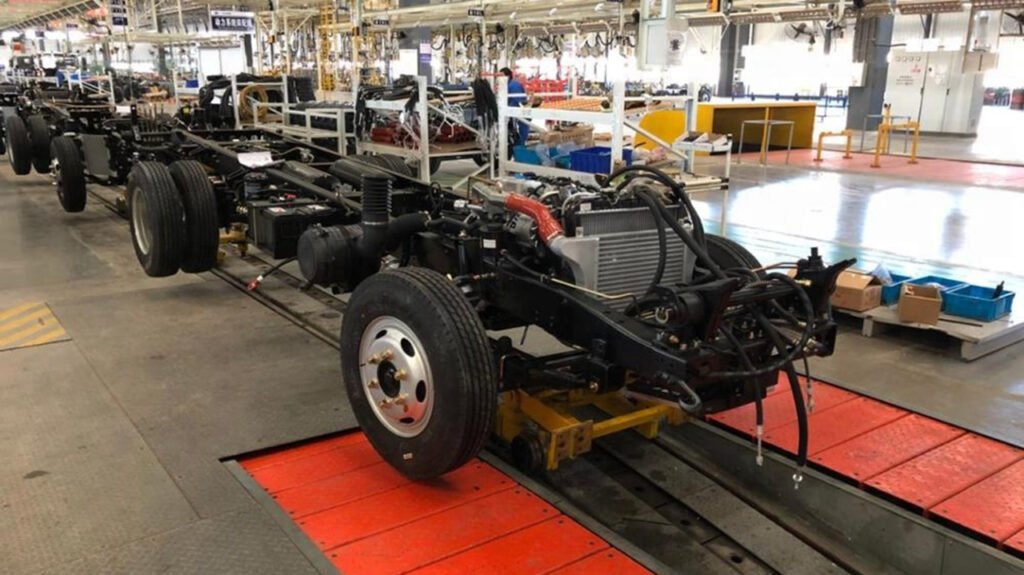
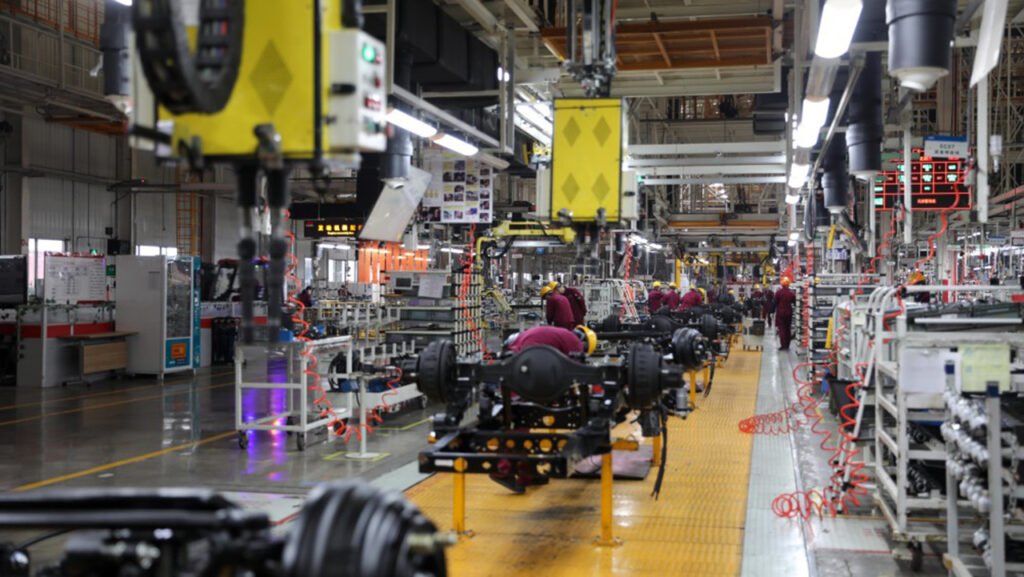
- Applications: Final vehicle assembly lines, engine assembly lines, transmission assembly lines, axle conveying, large stamping part conveying.
- Reasons for Suitability: Capable of smoothly conveying heavy components like car bodies and engines, suitable for paced assembly stations.

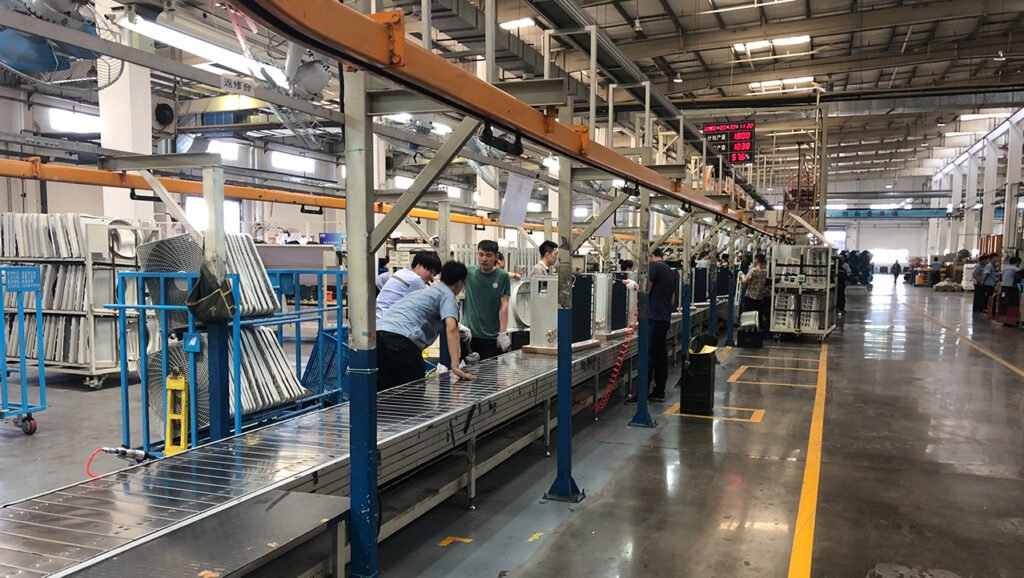
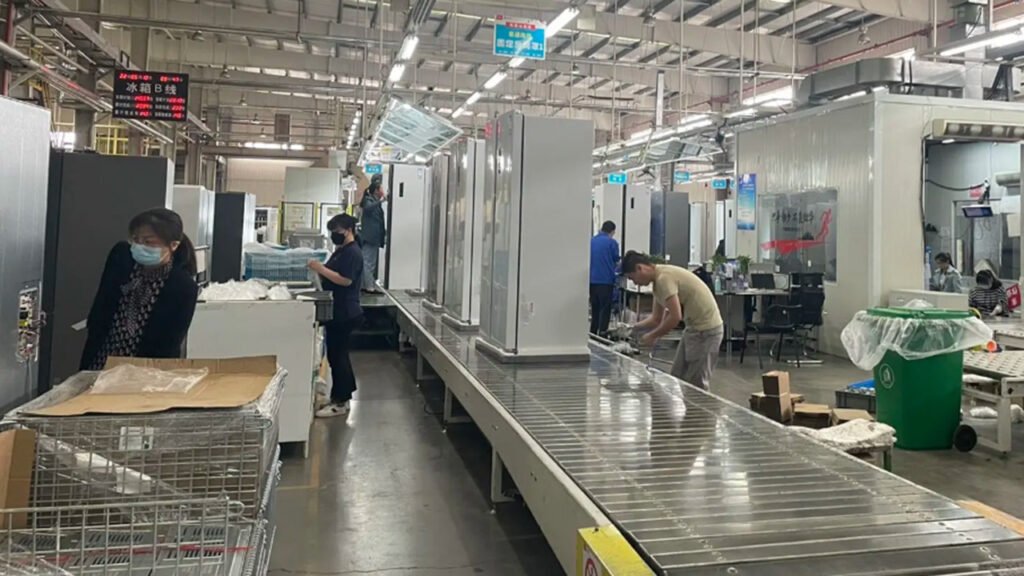
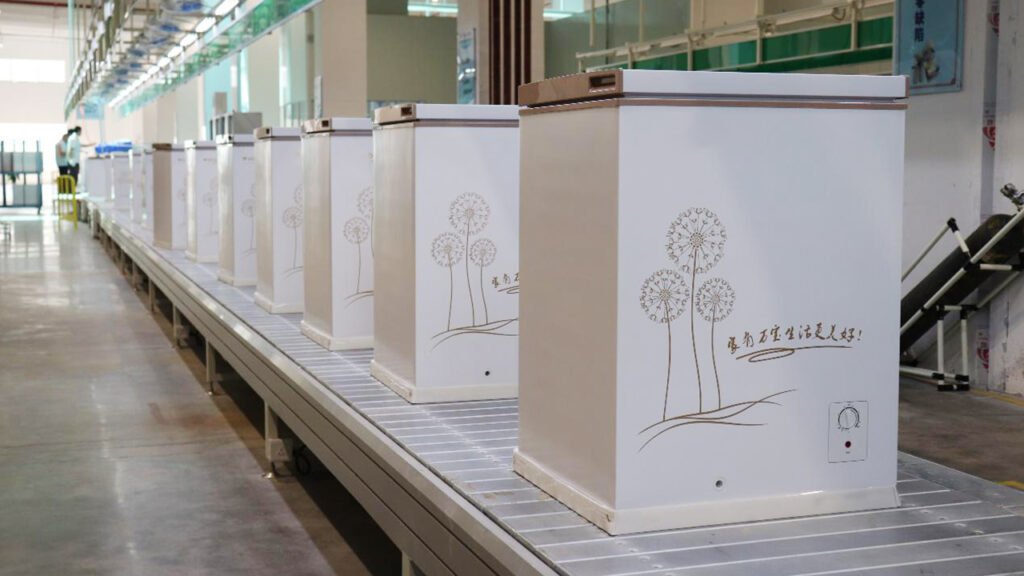
3. Home Appliance Manufacturing
- Applications: Final assembly and testing lines for white goods like refrigerators, washing machines, air conditioners, microwave ovens.
- Reasons for Suitability: High load capacity for conveying whole units with or without packaging; suitable for aging/burn-in test lines (stable for long-duration operation).
4. Logistics Warehousing and Sorting
- Applications: Base for heavy-duty sorters, pallet conveyor lines, container unloading dock conveyors.
- Reasons for Suitability: Can withstand the impact and load of pallets (wooden, plastic) and heavy cartons.
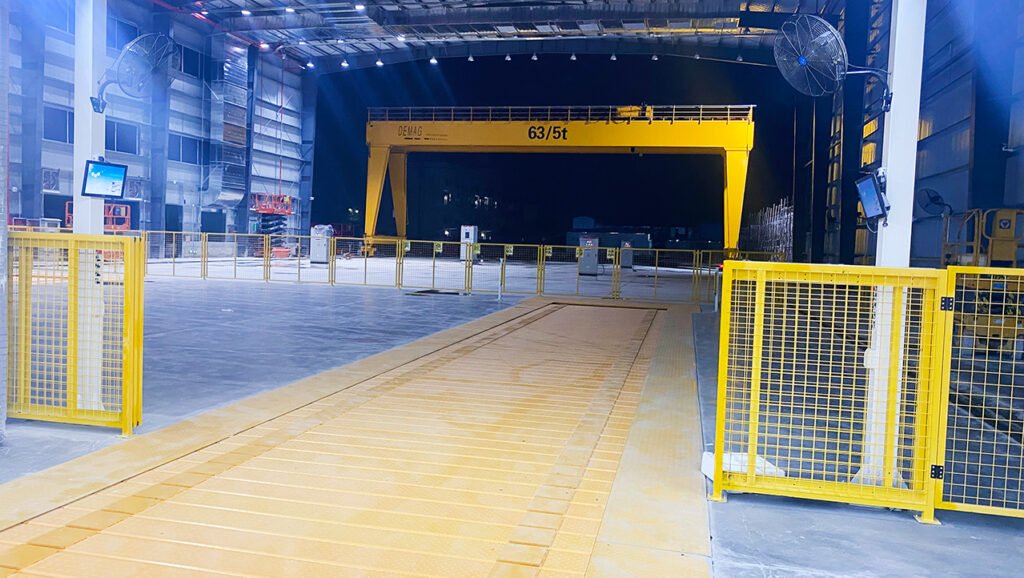
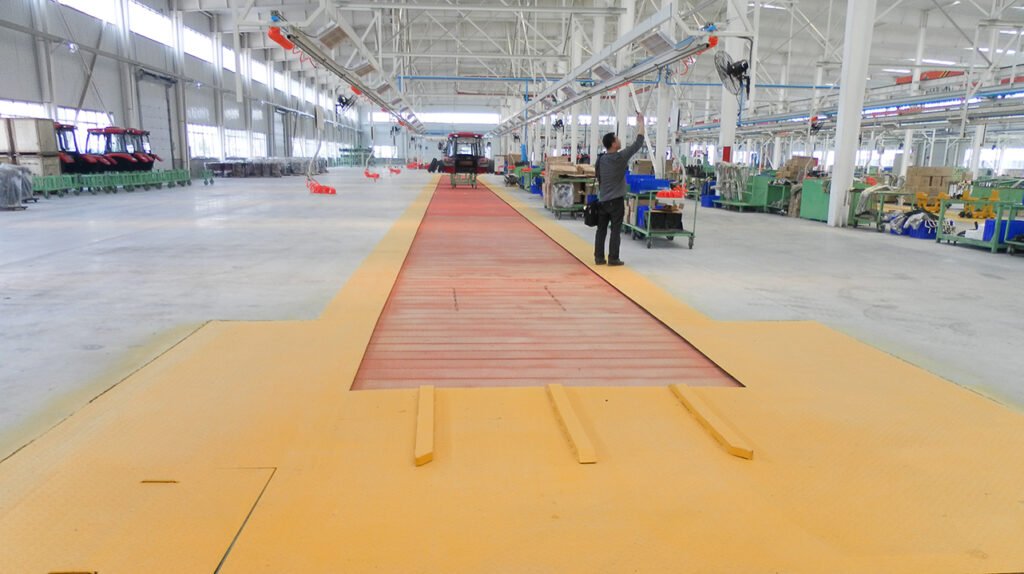
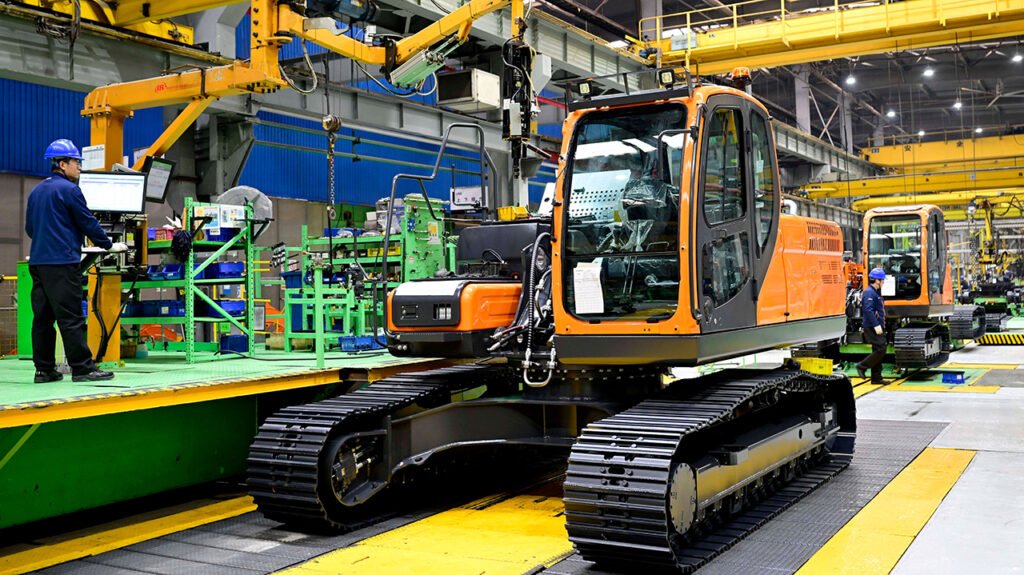
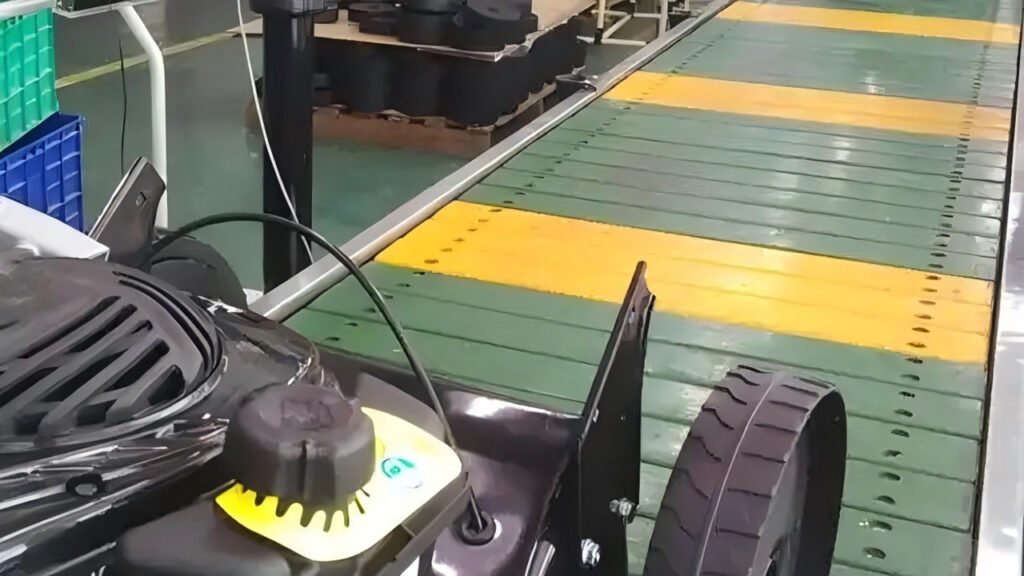
5. Heavy Machinery and Engines
- Applications: Assembly and testing of tractors, construction machinery, generator sets or mowers, etc.
- Reasons for Suitability: Handles extremely heavy components and assemblies; one of the few continuous conveyors capable of this task.
6. Tire Manufacturing
- Applications: Finished tire conveying and storage.
- Reasons for Suitability: Can handle tire weight and easily integrates with automation equipment.
7. Casting and Forging Industry
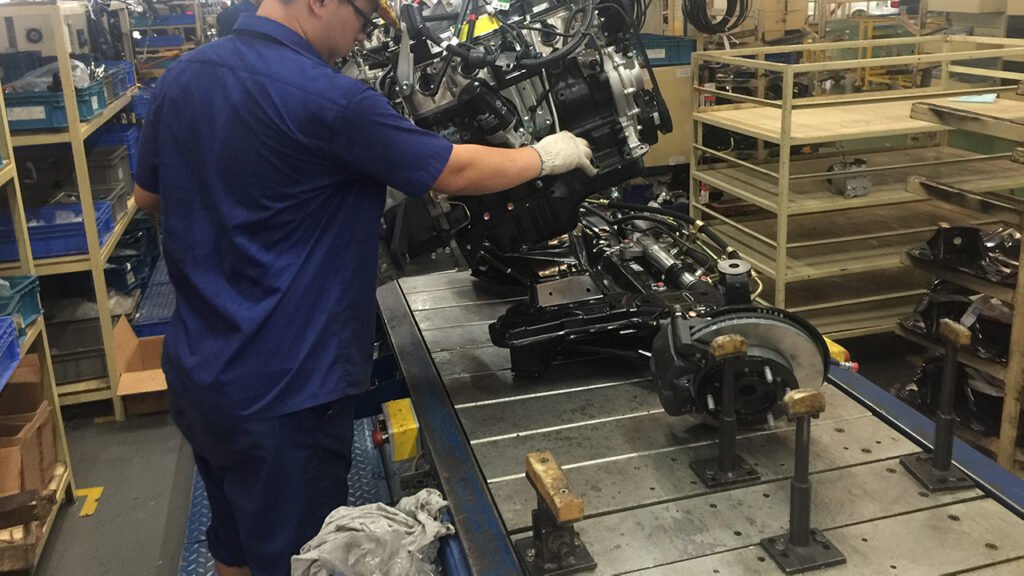
- Applications: Conveying molds, castings, forgings (e.g., engine blocks, crankshaft blanks).
- Reasons for Suitability: Resistant to high temperatures and impact, can endure harsh foundry environments and heavy rough parts.
8. Glass Products and Building Materials Industry
- Applications: Conveying flat glass, automotive windshields, glass bottles/containers, ceramic sanitary ware.
- Reasons for Suitability: Smooth operation is crucial for fragile items; can be designed with soft surfaces or padding to protect products.
Summary
A slat chain conveyor line is essentially the “heavy-duty highway” of industrial production. It is often the most reliable choice when your products are heavy, your production process requires stability, the environment is relatively harsh, and you need a robust, durable continuous conveying solution. It is not merely a simple transport tool but a core infrastructure element enabling automated, continuous production.
We can customize according to the client’s product specifications, production capacity or other requirements.
We provide comprehensive services including design, production, and installation/commissioning.