How to Establish a Motorcycle Assembly Line Factory?


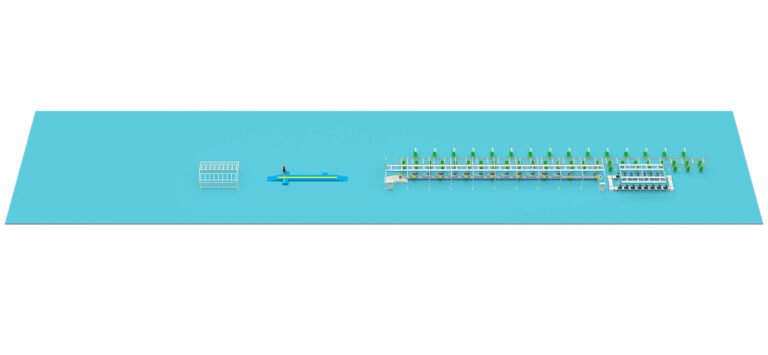
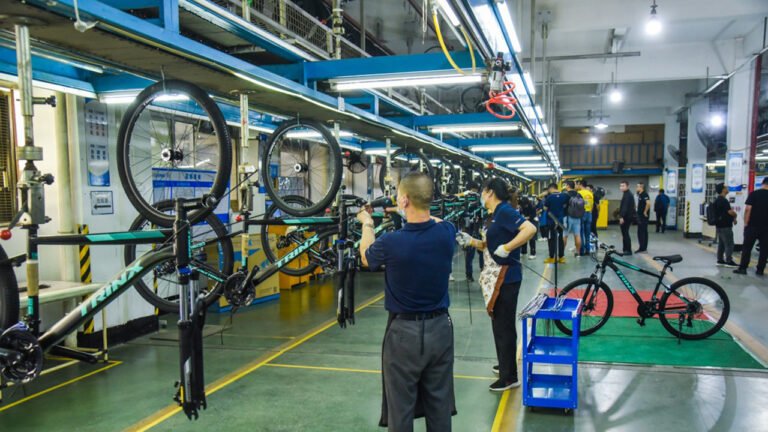
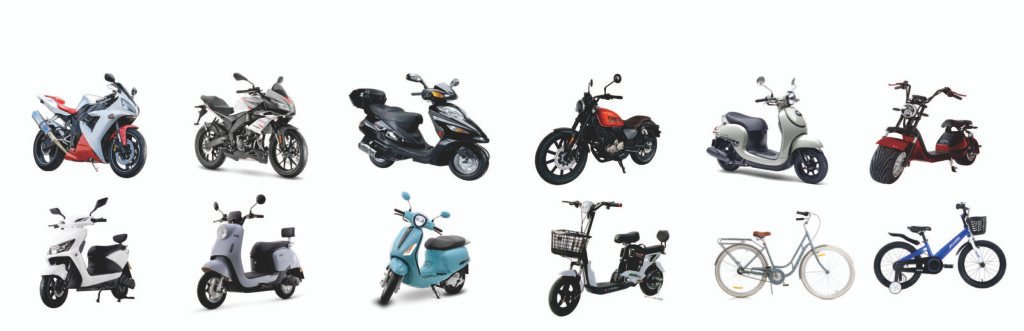
Motorcycle Assembly Lines are suitable to Assemble/Produce 2 wheel Motorcycles, 2 wheel Scooters, 2 wheel Electric-cycles, 2 wheel E-Bikes, Bicycles, Bikes, and so on. (Sometimes, suitable for the production of Tricycles.)
How to Establish a Motorcycle Assembly Line Factory?
Phase 1: Strategic Planning and Feasibility Analysis (Preparatory Stage)
This is the most critical step.
- Market Research and Positioning:
- Target Market: Who are you producing for? Commuting, recreation, or the high-performance market?
- Product Positioning: What type of motorcycles will you produce? Scooters, street bikes, off-road bikes, or cruisers?
- Competitor Analysis: Understand the prices, sales volumes, strengths, and weaknesses of existing brands.
- Demand Forecast: Predict future sales volume and growth potential based on market data.
- Business Plan:
- Financial Planning: Estimate in detail the startup capital (land, factory building, equipment, raw materials, labor), operating costs, expected revenue, and profit cycle.
- Funding Sources: Determine if it will be self-funded, through bank loans, or by seeking investors.
- Business Model: Will it be Original Brand Manufacturing (OBM), Original Equipment Manufacturer (OEM), or Original Design Manufacturer (ODM)?
- Technology and Partnerships:
- Technology Source: Will you purchase mature technical licenses (e.g., partnering with a foreign brand) or conduct independent research and development?
- Key Partners: Find reliable suppliers for core components like engines, frames, and ECUs.
Welcome to contact us for more information of Motorcycle Components.
Phase 2: Factory Construction and Supply Chain Setup
- Site Selection and Land/Factory Building:
- Geographical Location: Prioritize industrial parks close to the target market, with convenient transportation (near ports, highways), and a well-developed supporting supply chain.
- Policy Support: Investigate local tax incentives, land, and policy benefits.
- Infrastructure: Ensure water, electricity, gas, internet, and other infrastructure are complete.
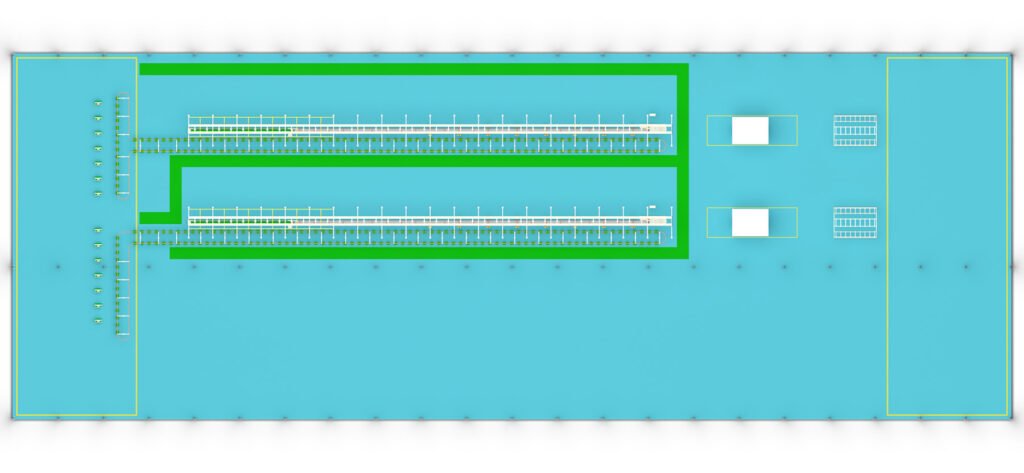
- Factory Requirements: Design the factory layout according to the production scale, including receiving area, warehouse, production line, quality inspection area, testing area, finished product warehouse, etc.
- Supply Chain System Establishment:
- Core Components: Identify suppliers for key parts like engines, frames, suspension, brakes, and tires, and sign long-term contracts.
- Secondary Components: Establish a supply network for electronic components, wiring harnesses, lights, plastic parts, and standard parts (screws, nuts).
- Supply Chain Management: Establish strict supplier audits (quality, delivery time, price) and inventory management systems (e.g., Just-in-Time production).
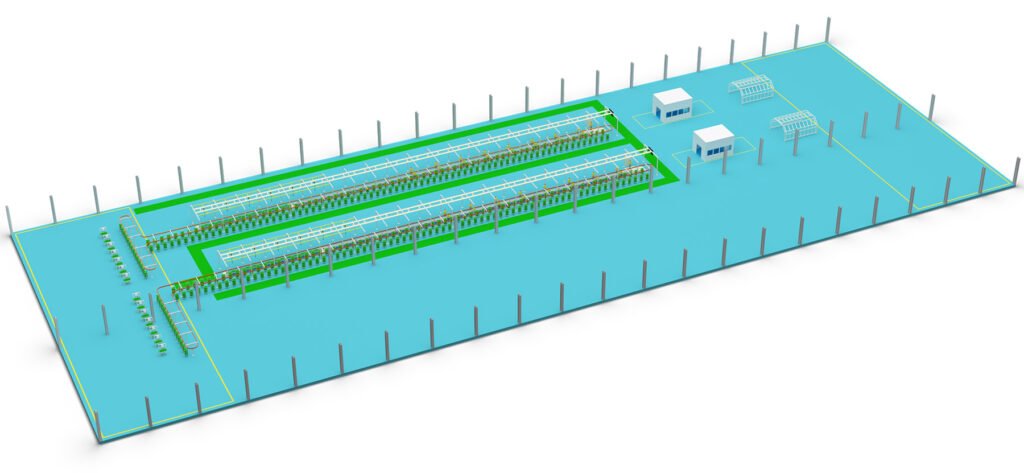
Phase 3: Assembly Line Design and Equipment Procurement
This is the core of the “assembly line.”
- Production Process Design:
- Break down motorcycle assembly into several logical steps. A typical process is:
- Frame hoisting onto the line
- Install rear suspension, engine
- Install front fork, wheels
- Install fuel tank, seat
- Install wiring harness, ECU, instrument panel
- Install exhaust system
- Fill with fluids (engine oil, brake fluid, coolant)
- Install body panels, lights
- Final debugging and inspection
- Road test and packaging
- Break down motorcycle assembly into several logical steps. A typical process is:
- Assembly Line Layout:
- Type Selection:
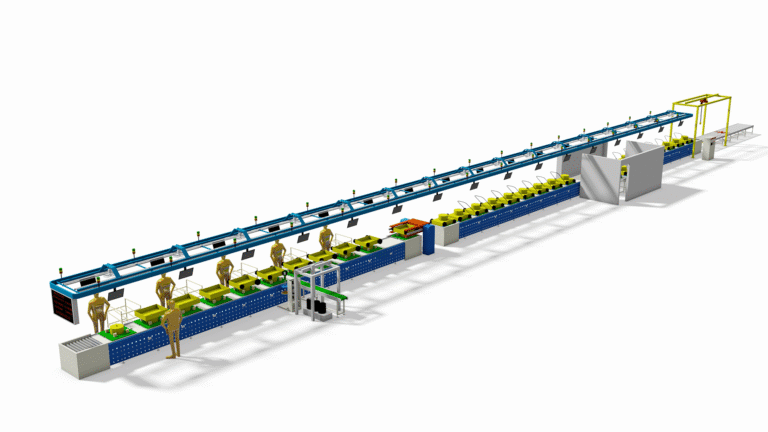
- Assembly Line: Uses a conveyor belt; vehicles move at a constant speed, and workers perform tasks at fixed stations. High efficiency, suitable for large-scale standardized production.
- Cellular Manufacturing: Vehicles are at fixed stations, where a small team completes most of the assembly work. High flexibility, suitable for small-batch, multi-variety production.
- Layout Planning: Design material distribution routes to ensure parts can be delivered to corresponding stations efficiently and accurately.
- Type Selection:
- Equipment and Tool Procurement:
- Basic Equipment: Conveyor belts, lifting platforms, vehicle support stands.
- Tools: Pneumatic/electric wrenches, torque wrenches, screwdrivers, pliers, measuring instruments.
- Professional Equipment: Engine hoists, wheel balancers, headlight testers, brake test benches, chassis dynamometers, emission analyzers.
- Fluid Filling Equipment: Vacuum filling machines for engine oil, brake fluid, coolant.
- Information Systems: MES (Manufacturing Execution System) for tracking production progress and quality data.
Welcome to contact us for more information of Auxiliary Equipment: testing line, air compressor, filling equipoment, tools or others.
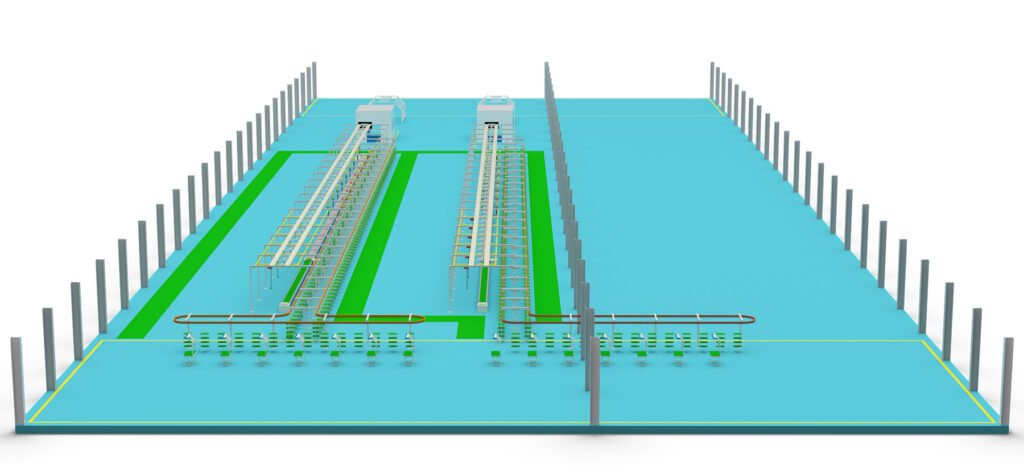
Phase 4: Team Building and Quality Management
- Organizational Structure and Recruitment:
- Management Team: Factory General Manager, Production Manager, Quality Manager, Procurement Manager, etc.
- Technical Team: Process Engineers, Maintenance Engineers, Quality Inspectors.
- Production Team: Line Supervisors, Assembly Workers.
- Other Functions: Warehouse, Logistics, Administration, Finance personnel.
- Training System:
- Standardized Work: Develop detailed work instructions for each station.
- Skills Training: Includes tool use, torque management, quality standards, and safety regulations.
- Ongoing Training: Regular training for new models and new processes.
- Quality Assurance System:
- Establish Standards: Develop a full set of inspection standards from component arrival to finished vehicle output.
- Process Control:
- IQC (Incoming Quality Control): Inspect incoming components.
- PQC (Process Quality Control): Set up quality checkpoints at key stations.
- FQC/OQC (Final/Outgoing Quality Control): Perform 100% inspection and road tests on finished vehicles.
Phase 5: Production Launch and Continuous Improvement
- Trial Production and Debugging:
- Use small batches of materials to debug the production line, verifying equipment, processes, and personnel training.
- Produce the first pilot vehicles for rigorous testing and evaluation.
- Official Production and Ramp-up:
- Start formal production, gradually increasing the production tempo until the designed capacity is reached.
- Closely monitor and promptly resolve issues during production.
- Continuous Improvement:
- Introduce lean manufacturing concepts such as 5S, Kanban systems, and waste elimination to continuously optimize processes, improve efficiency, and reduce costs.