

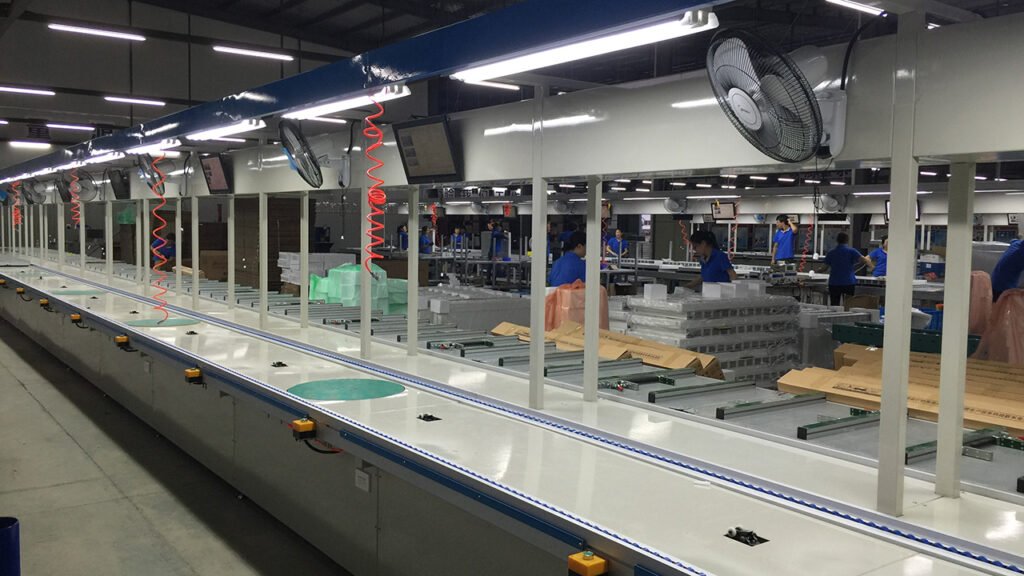
A heater assembly line is a systematic production process that assembles various components (such as heating elements, casings, fans, control boards, etc.) into complete, marketable heating appliances. Its core objectives are efficiency, quality, and safety.
1. Typical Assembly Line Workstations and Process Flow
A modern heater assembly line typically employs flow line production, divided into the following main stages:
Stage 1: Pre-processing and Preparation
- Incoming Inspection and Sorting: All components (metal/plastic casings, PTC heating cores/electric heating tubes, motor fans, PCB control boards, power cords, knobs/touchscreens, etc.) undergo quality sampling before entering the line.
- Component Pre-processing:
- Casing Treatment: Deburring and cleaning plastic casings; metal casings may undergo spraying, logo/indicator screen printing.
- Harness Pre-assembly: Crimping terminals onto power cords and internal wiring, or assembling them into harness modules.
Stage 2: Core Module Assembly
- Base and Stand Assembly: Installing the base, casters, or stand to ensure product stability.
- Internal Frame and Heating Element Installation:
- Fixing the internal support frame to the base.
- Installing Core Heating Unit: For PTC heaters, installing PTC ceramic heating blocks and aluminum heat sinks; for wire/element or quartz tube heaters, installing and securing the corresponding heating tubes. This station has extremely high requirements for insulation and positioning accuracy.
- Fan and Motor Installation: Installing the fan blade and drive motor, ensuring proper alignment with the heating element for optimal airflow.
- Control Board Installation and Wiring:
- Mounting the main control PCB.
- Key Electrical Connections: Connecting wiring harnesses for the heating element, motor, sensors (tip-over switch, overheat protector), control panel, etc. This is a safety-critical station, often requiring torque screwdrivers and electrical testing.
Stage 3: Final Assembly and Packaging
- Casing Closure: Attaching and fastening the front/rear panels, grilles, and other external covers. Grille spacing must comply with safety standards to prevent ingress of foreign objects or contact with live parts.
- Control Panel and Accessory Installation: Installing knobs, buttons, displays, or remote control receivers.
- Functional Testing and Safety Inspection (Most Critical Step):
- Electrical Safety Tests: Performing hipot (high-potential) test, insulation resistance test, and ground continuity test to ensure no risk of electric shock.
- Functional Test: Powering on to test all heating levels, fan speeds, oscillation (if applicable), timer, thermostat, and other functions.
- Safety Protection Test: Activating the tip-over switch and overheat protection device to verify automatic power cutoff.
- Final Cleaning and Visual Inspection: Cleaning the product surface and checking for scratches or assembly defects.
- Packing: Placing the instruction manual and warranty card, securing the unit with foam or cardboard inserts, and placing it into the color box. An additional shipping carton may be required for e-commerce.
2. Assembly Line Design and Key Considerations
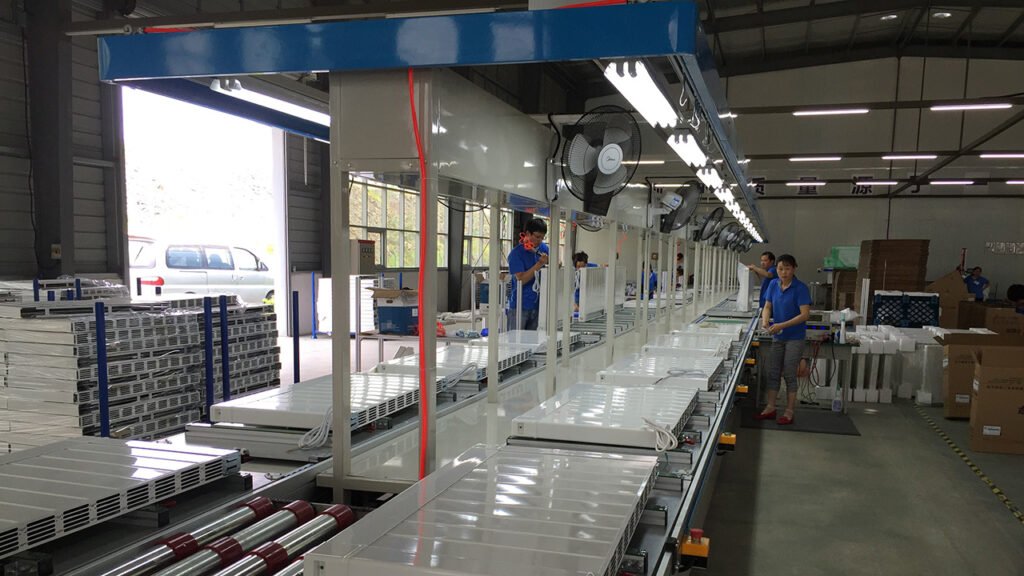
- Line Type:
- Belt Conveyor Line: Most common, allows controlled pacing.
- Chain-on-Edge (Platen) Line: More stable for heavier loads.
- Lean Pipe Workstations + Trolleys: Suitable for flexible, low-volume, multi-model production.
- Automation Level:
- Fully Manual Line: Low investment, flexible, suitable for small factories or complex models.
- Semi-Automatic Line: Introduces automation at key stations, such as:
- Automatic Screwdriving Machines: For casing and frame screw fastening.
- Automatic Marking Machines: Laser marking for production date and model.
- Automatic Test Stations: Equipment automatically performs all electrical safety and functional tests, recording data.
- Fully Automatic Line: Very high investment, suitable for ultra-large-scale production of a single model, incorporating robotic assembly arms, AGV material handling, etc.
- Core Processes and Equipment:
- Fastening Tools: Electric/pneumatic torque screwdrivers ensure consistent screw torque.
- Testing Equipment: Comprehensive Safety Tester (hipot/insulation tester) is essential core equipment.
- Welding Equipment: Soldering stations or automatic soldering machines if power cord soldering is required.
- ESD Protection: Anti-static measures are needed at assembly stations, especially during control board installation.
- Ergonomics: Workbench height and material bin placement must be well-designed to reduce worker fatigue.
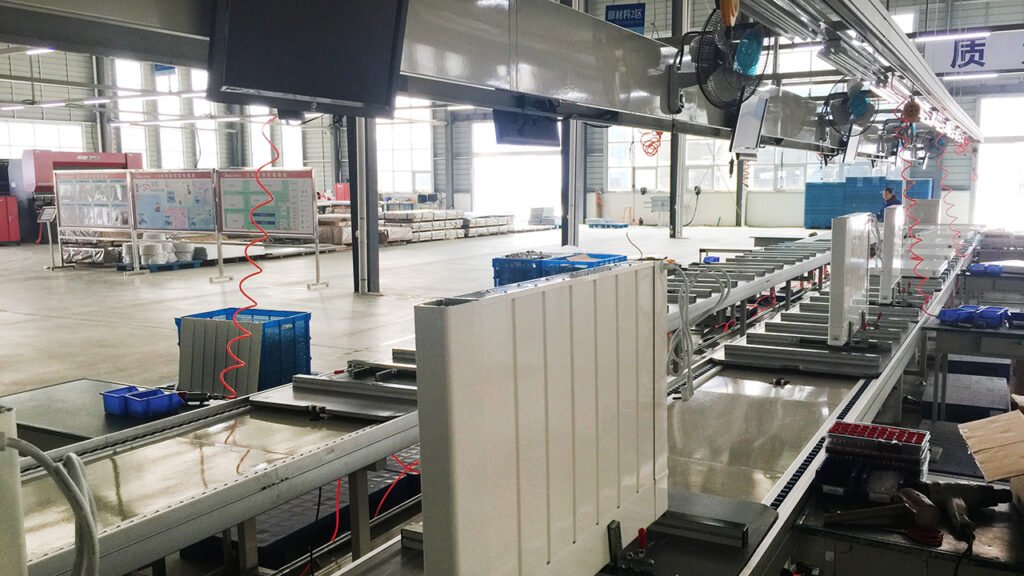
3. Quality and Safety Control Focus
This is the lifeline of heater production.
- Incoming Quality Control (IQC): Critical components like heating elements, power cords, and capacitors must come from qualified suppliers and comply with relevant national certification requirements.
- In-line Inspection:
- In-Process Check: Simple continuity tests can be set up after wiring or heating element installation.
- Final Inspection: full functional and safety compliance testing is needed.
- Traceability: Using barcodes or RFID to record production batch, key component serial numbers, and test data for each product, enabling rapid traceback if issues arise.
Conclusion
An excellent heater assembly line is an integrated system combining process planning, tooling/equipment, quality management, and personnel training. It must not only pursue assembly speed but, more importantly, ensure that every heater leaving the factory is safe, reliable, and fully functional through rigorous processes and testing. With technological advancements, automated testing, data traceability, and flexible production have become key factors in enhancing competitiveness.