Characteristics of Semi-Automatic Air Conditioner Production Line
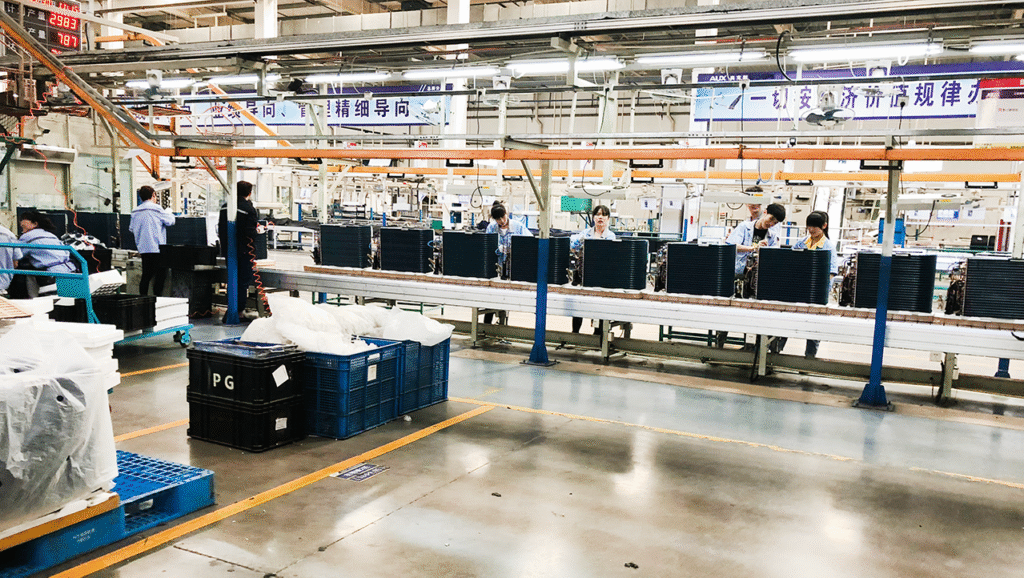
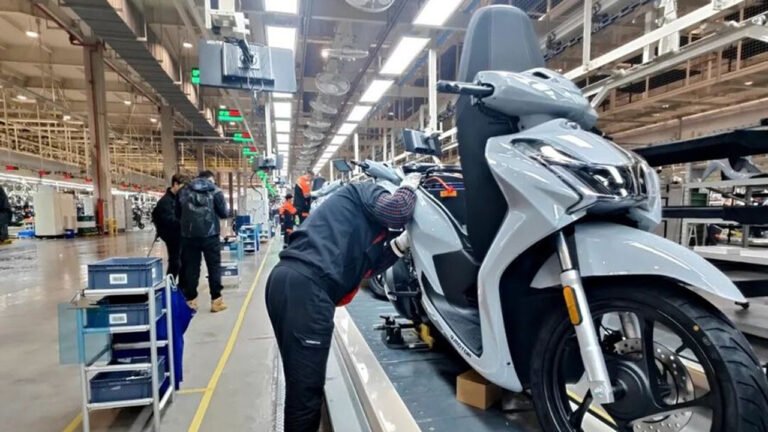
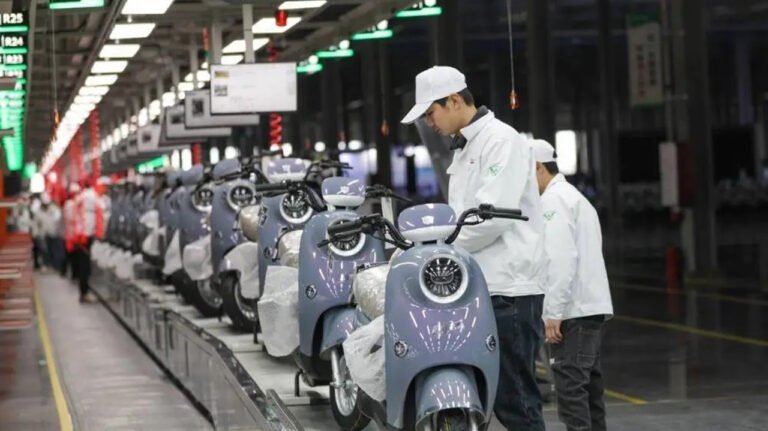
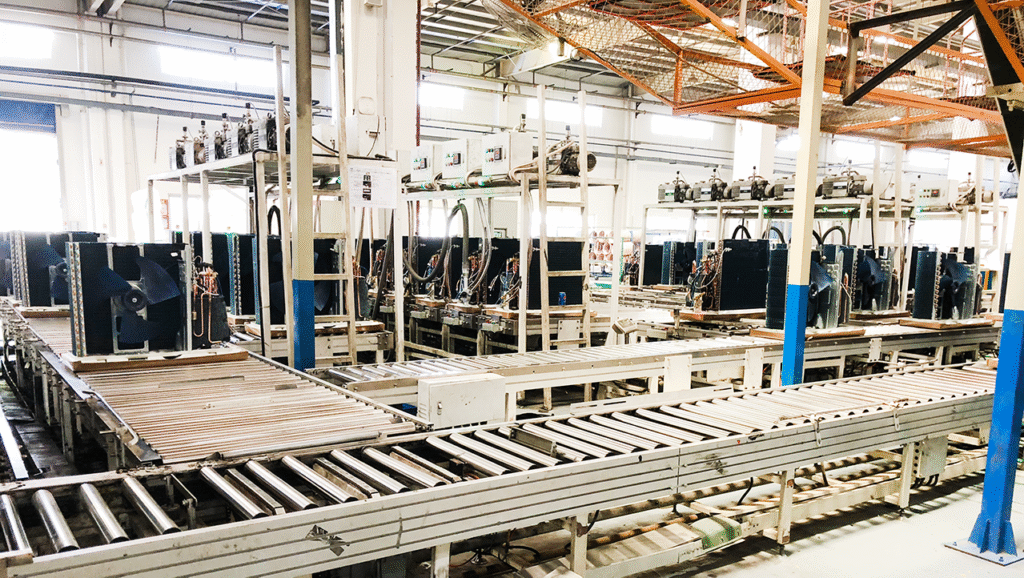
A Semi-Automatic Air Conditioner Production line combines manual operation and automated equipment. Key processes including welding, leak detection, vacuum pumping, refrigerant charging and performance testing are automated, while assembly, wiring and inspection rely on labor. It features controllable production tempo, flexible model switching, moderate investment and easy maintenance. Compared with fully automatic lines, it is more adaptable to multi-variety production; compared with manual lines, it improves efficiency and quality stability. It is widely used for mass and flexible manufacturing of household and commercial air conditioners.
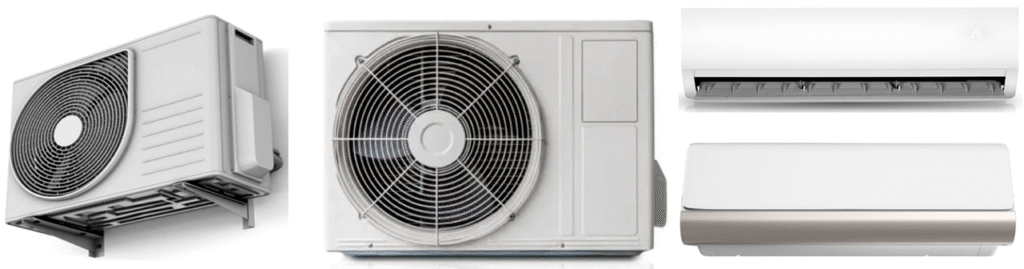
Air Conditioner Assembly Lines/Production Lines are Suitable to Assemble/Produce Air Conditioners.(Welcome to contact us, we will suggest and design the suitable Assembly Lines/Production Lines for your Air conditioners.)
Characteristics of Semi-Automatic Air Conditioner Production Line
A semi-automatic air conditioner production line adopts a collaborative mode of manual operation and automated equipment, balancing efficiency, cost and flexibility, making it one of the mainstream solutions in air conditioner manufacturing. The specific features are elaborated from core definitions, structure, processes, production management, advantages, limitations and applicable scenarios as follows:
I. Core Definition & Essence
- Semi-automation: Key processes (e.g., welding, vacuum pumping, refrigerant charging, performance testing) are completed by automated equipment; complex assembly, wire harness arrangement, visual inspection, and installation of flexible materials (sponge, wire harnesses, etc.) are performed manually.
- Human-machine cooperation: Workers are responsible for decision-making, precise operations and exception handling; machines undertake repetitive, high-precision and heavy-duty tasks.
- Flexible production: Adaptable to multi-model, small-batch production and quick model changeovers, with higher flexibility than fully automatic lines.
II. Structural & Layout Features
- Main line types
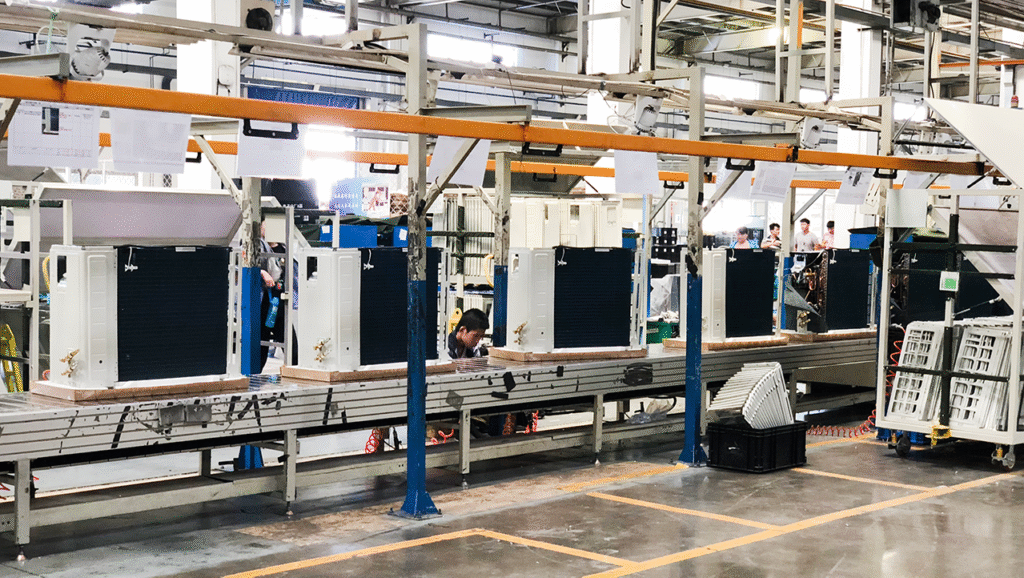
- Double-speed chain / plate chain line: Used for main assembly lines, with stable load bearing and controllable cycle time, suitable for indoor and outdoor unit assembly.
- Circular line: Commonly applied in vacuum pumping, inspection and aging testing, saving space and facilitating tooling recycling and rework.
- Roller / belt conveyor: Used for component conveying and packaging sections, lightweight and flexible.
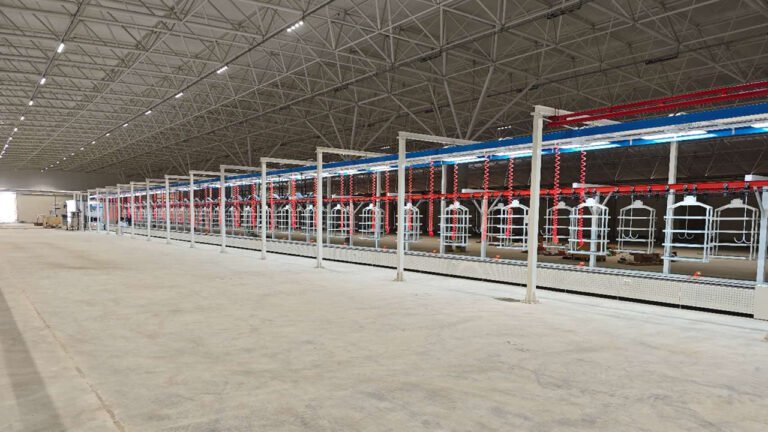
- Double / multi-layer layout: Assembly on the lower layer, testing / packaging on the upper layer, connected by vertical elevators to improve space utilization.
- Typical layout flow (for household AC outdoor units)Chassis loading → Compressor / condenser / evaporator assembly (human-machine mixed) → Pipeline welding (automatic) → Leak detection (automatic) → Vacuum pumping (automatic) → Refrigerant charging (automatic) → Electrical control installation (manual) → Performance testing (automatic) → Visual inspection (manual) → Packaging & off-line (semi-automatic).
III. Process & Equipment Features
1. Automated Core Processes (Machine-dominated)
- Welding: Automatic flame / plasma welding ensures pipeline sealing and consistency.
- Leak detection: High-pressure nitrogen / helium detection with pressure sensors, automatic leakage judgment and error-proofing.
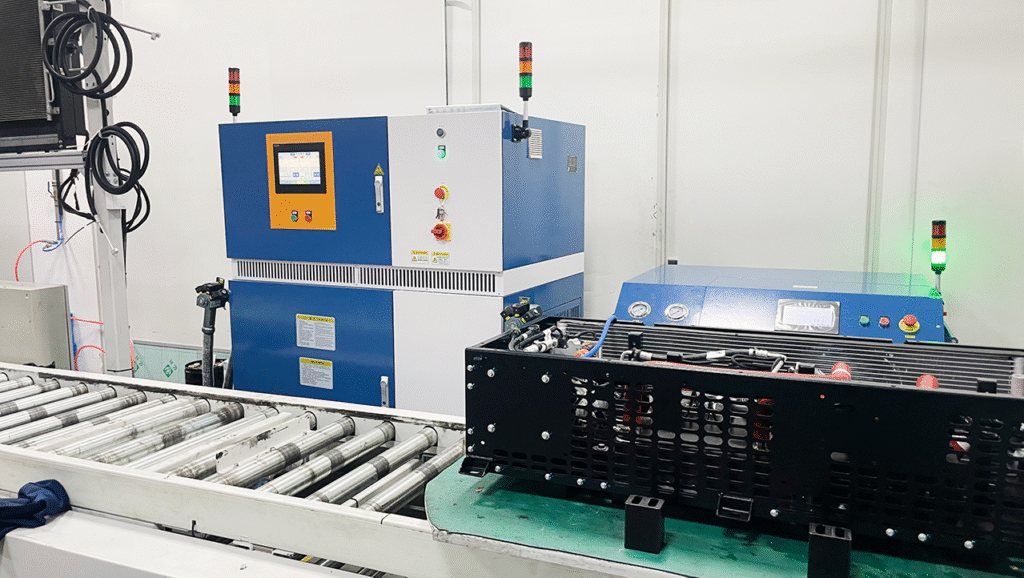
- Vacuum pumping & refrigerant charging: High-precision metering pumps automatically control vacuum level and charging volume with accuracy of ±1g.
- Performance testing: Automatic detection of cooling / heating capacity, current, voltage, noise, vibration (NVH) and air speed, with data uploaded to the system.
- Marking: Laser marking for automatic coding to realize full-process traceability.
- Logistics conveying: Lift transfer, elevators assistance to reduce manual handling.
2. Manual-dominated Processes (Flexible adaptation)
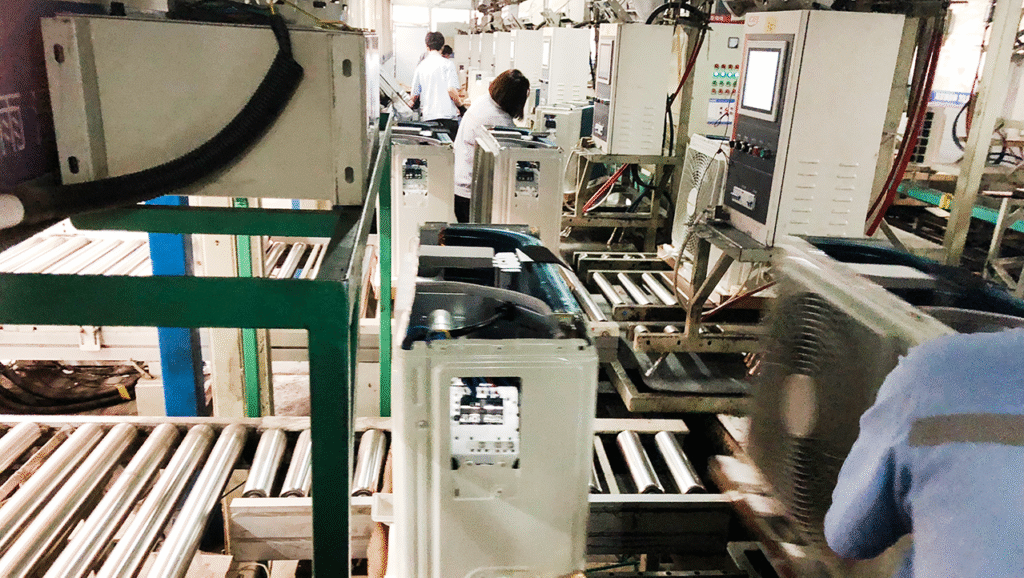
- Assembly of complex components (electrical control boxes, wire harnesses, fans, panels, etc.).
- Pipeline arrangement, wrapping and sealing sponge pasting.
- Appearance defect inspection, labeling and packaging assistance.
- Exception handling, model change debugging and equipment inspection.
3. Inspection & Quality Control
- Full-process error-proofing: Sensors, gratings and code-scanning verification with automatic alarms for missing or wrong parts.
- 100% automatic inspection of key indicators: Leakage, electrical safety, performance and noise.
- Data traceability: MES system records process parameters, test results and operators for each unit, facilitating quality analysis and recall.
IV. Production Management Features
- Controllable cycle time: Adjustable line speed to match different capacities (e.g., 30–60 seconds per unit).
- Flexible model change: Switching models by replacing tooling plates and adjusting programs, with changeover time usually 30 minutes to 2 hours, much faster than fully automatic lines.
- Continuous operation: Supports 24-hour running with automatic equipment operation and three-shift manual duty.
- Manpower allocation: Reduces labor by 50%–70% compared with manual lines, while retaining 10%–30% manual positions compared with fully automatic lines.
- Convenient maintenance: Modular design with clear fault points, allowing quick manual repair and short downtime.
V. Core Advantages
- Moderate cost: Equipment investment accounts for 60%–80% of fully automatic lines, with a shorter payback period.
- High flexibility: Quickly responds to multi-variety, small-batch orders, adapting to the fast model iteration of the air conditioner industry.
- Balance of efficiency and quality: Machines ensure consistency and efficiency, while workers handle complexity and exceptions, achieving high overall yield.
- Easy upgradability: Modules such as robots and visual inspection can be gradually added to transition to intelligent production.
- Worker-friendly: Reduces heavy physical labor and provides a more standardized working environment.
VI. Applicable Scenarios
- Mixed-line production of multi-model household / commercial air conditioners.
- Trial production of new models and small-batch orders.
- Factories with limited budgets pursuing cost performance.
- Workshops requiring frequent model changes and high flexibility.
VII. Comparison with Fully Automatic / Manual Production Lines
| Items | Semi-Automatic AC Production Line | Fully Automatic AC Production Line | Manual Production Line |
|---|---|---|---|
| Automation level | Human-machine collaboration, automatic key processes | Full-process automation, minimal labor | Pure manual work with equipment assistance |
| Production capacity | Medium to high | Highest | Low |
| Flexibility | High (easy model change) | Low (mainly dedicated lines) | Extremely high (flexible but inefficient) |
| Investment cost | Medium | High | Low |
| Labor demand | Low to medium | Minimal | High |
| Quality stability | High | Highest | Average |
| Applicable scenarios | Multi-variety, medium & small batches | Single variety, large batches | Trial production, very small quantities |
The semi-automatic air conditioner production line is the mainstream compromise solution in today’s air conditioner manufacturing industry, achieving a sound balance among efficiency, cost and flexibility, suitable for most large-scale enterprises requiring flexible production.