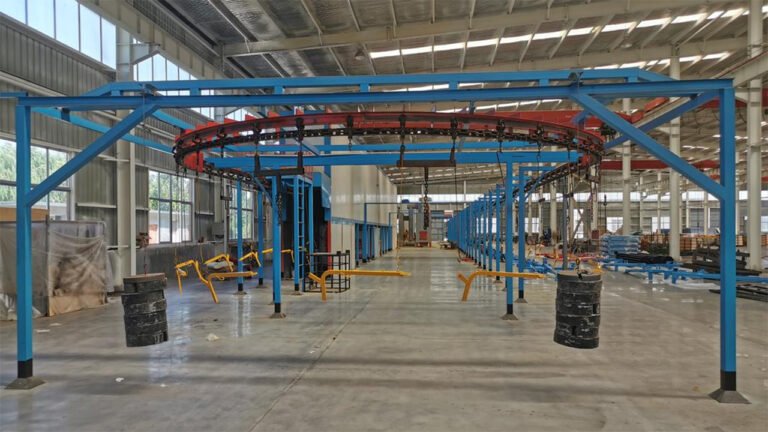
Characteristics of Bicycle Assembly Lines—Bike Assembly Lines—Bike Production Lines
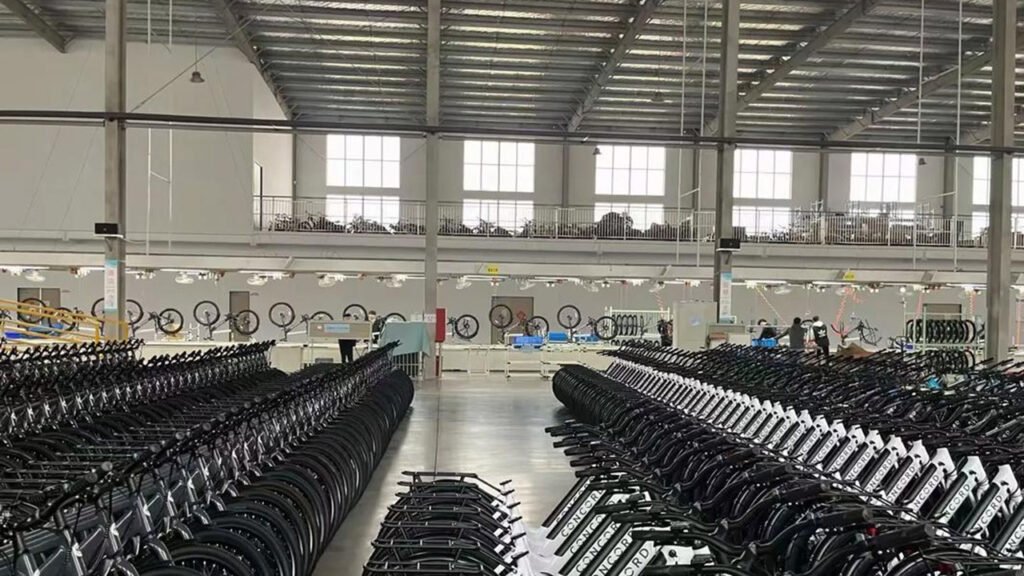
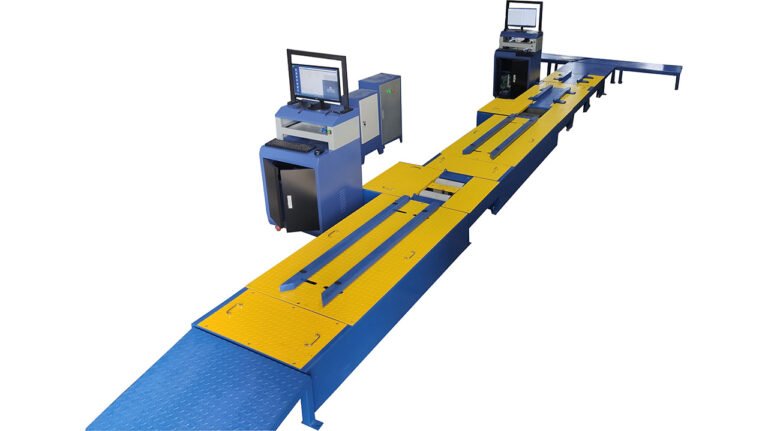
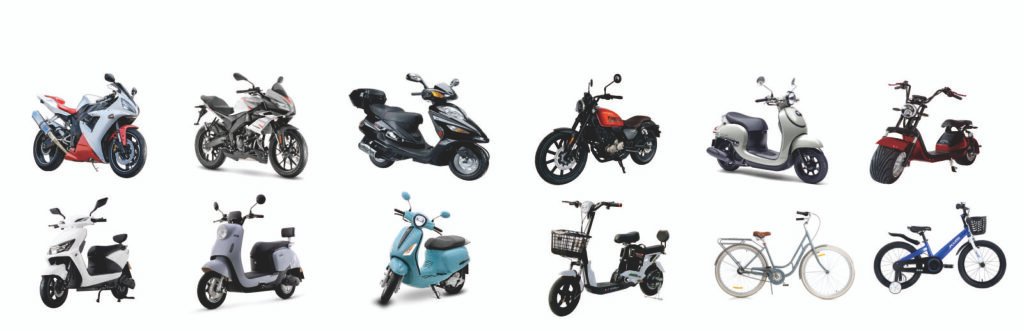
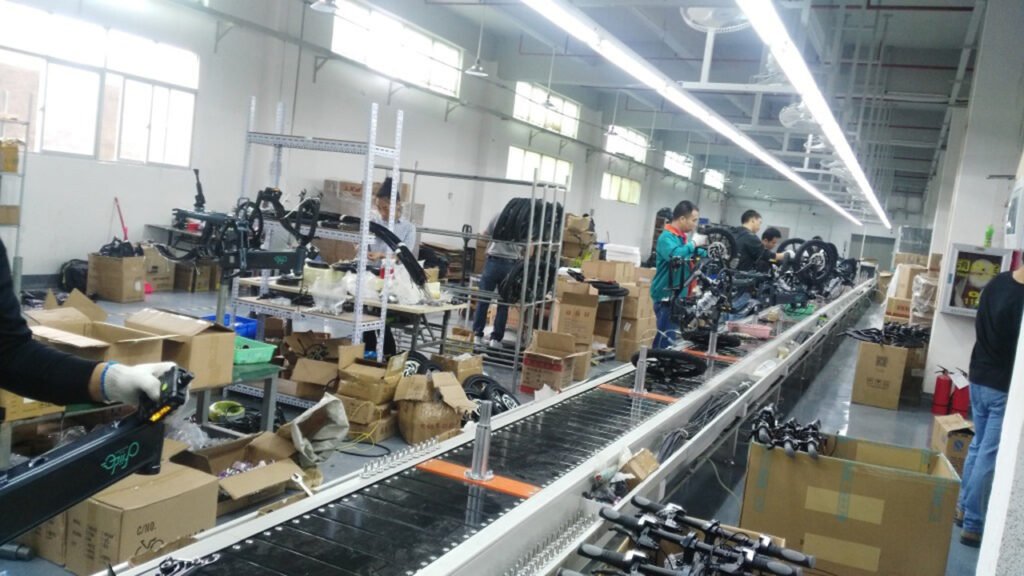
Bike Assembly Lines are suitable to Assemble/Produce Bicycles, Bikes, 2 wheel Motorcycles, 2 wheel Scooters, 2 wheel Electric-cycles, 2 wheel E-Bikes, and so on. (Sometimes, suitable for the production of Tricycles.)
Bicycle assembly lines are typical production lines, with features mainly reflected in the following aspects:
1. Standardization and Modularization
- Standardized Parts: Universal standard components (such as screws, bearings, chains, etc.) are used to ensure interchangeability and simplify the assembly process.
- Modular Design: Components like frames, wheelsets, and drivetrain systems are pre-assembled into modules before entering the final assembly line, improving efficiency and reducing error rates.
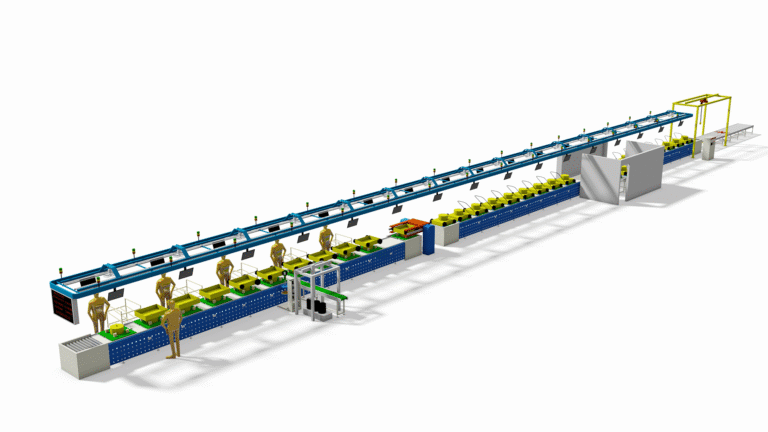
2. Clear Division of Labor on the Assembly Line
- Process Breakdown: The assembly process is divided into multiple detailed steps (e.g., frame pre-assembly, wheelset installation, brake adjustment, quality inspection, etc.), with each station responsible for specific operations.
- Specialized Operations: Workers are trained to focus on repetitive tasks, enhancing proficiency and speed.
3. Flexible Production to Meet Demand
- Multi-Model Coexistence on One Line: Modern assembly lines can be adjusted to assemble different models (e.g., mountain bikes, road bikes, children’s bikes) on the same line.
- Customization Options: Supports personalized customer needs (e.g., colors, component upgrades) through flexible scheduling to achieve “batch customization.”
4. Automation and Human-Machine Collaboration
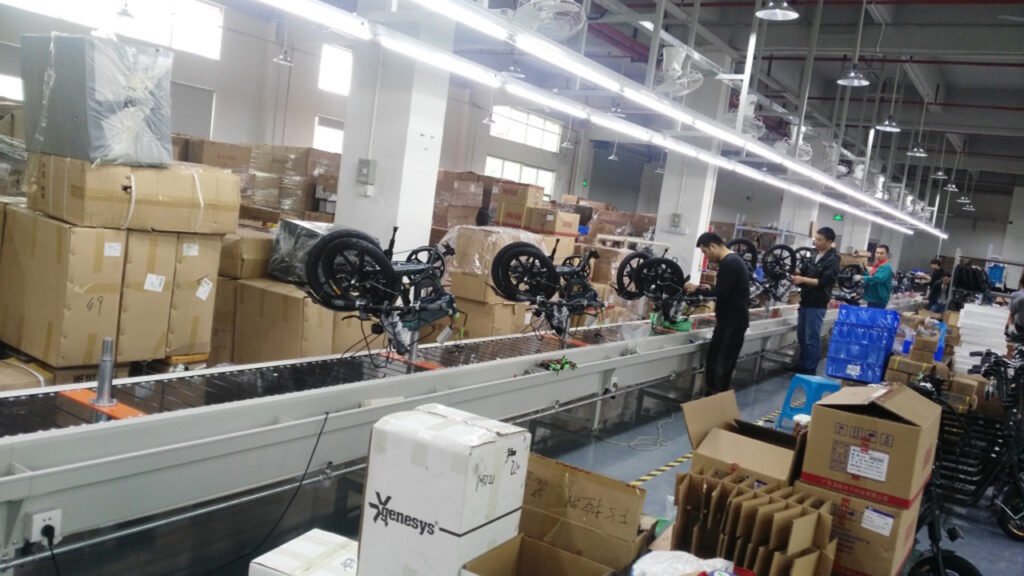
- Application of Automated Tools: Uses automated tightening machines, laser alignment machine, conveyor belts, and other equipment to improve precision and consistency.
- Human Involvement in Critical Steps: Complex tasks (e.g., derailleur adjustment, quality inspection) still require experienced workers to ensure quality.
5. Quality Control Throughout the Process
- Online Inspection Points: Quality checks are set at key stations (e.g., brake testing, wheel truing).
- Final Comprehensive Testing: Each finished product undergoes road tests, safety performance checks, etc., and must meet standards before leaving the factory.
6. Efficiency and Cycle Time Management
- Cycle Time Control: The operation time at each station must match the assembly line’s rhythm to avoid bottlenecks.
- Line Balancing Optimization: Adjusts work station task to reduce waiting time and improve overall efficiency.
7. Tight Supply Chain Coordination
- JIT (Just-In-Time) Supply: Parts are delivered to stations in a timely manner according to the assembly sequence, reducing inventory occupancy.
- Supplier Integration: Some suppliers directly provide pre-assembled modules (e.g., wheelsets with tires mounted), simplifying the assembly process.
8. Environmental Sustainability
- Use of Green Materials: Increasing adoption of renewable materials (e.g., eco-friendly paints, recycled aluminum frames).
- Waste Management: Recycling of packaging materials and professional handling of waste oils and liquids to comply with environmental standards.
9. Adaptation to Technological Trends
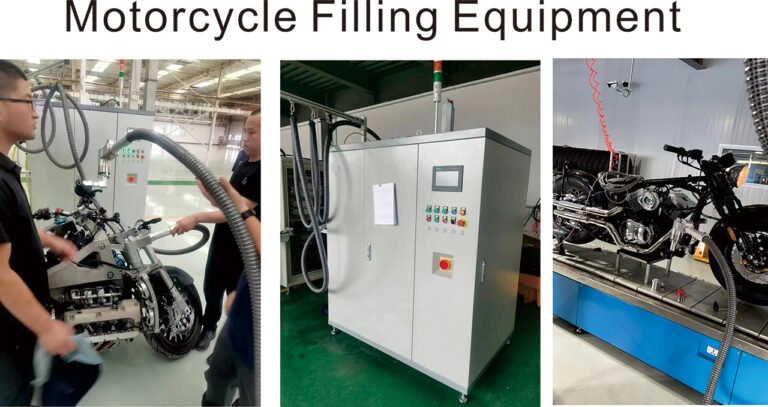
- E-Bike Integration: Assembly lines must accommodate new processes like battery installation, motor commissioning, and circuit testing.
- Smart Upgrades: Uses IoT sensors to track production data, enabling fault detection and efficiency analysis.