

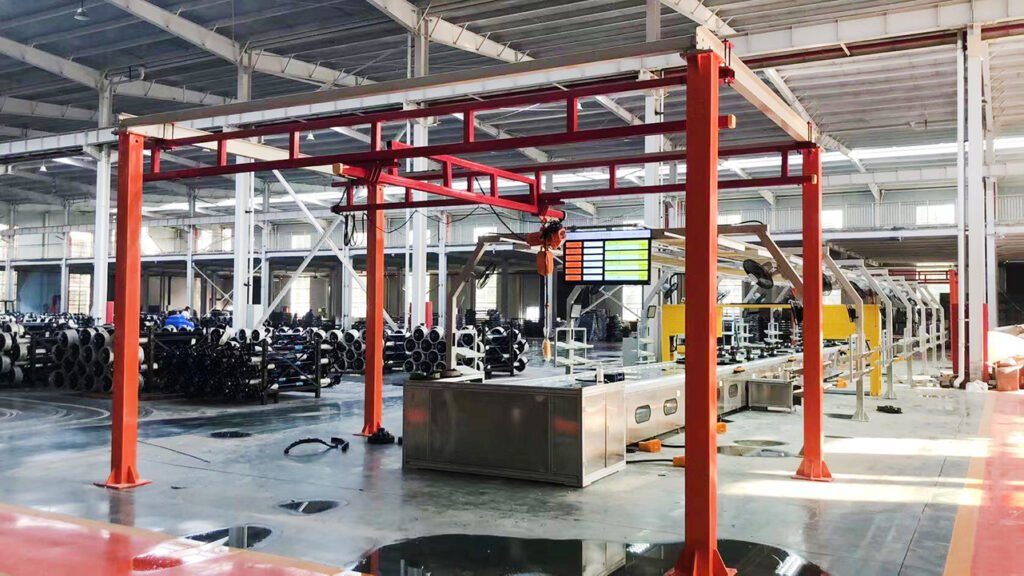
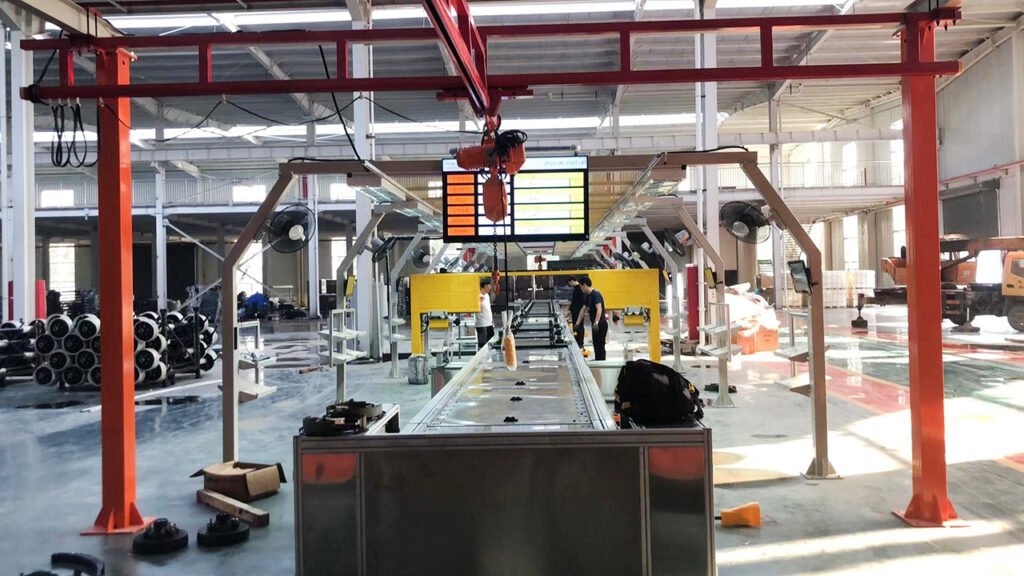
Passenger car axles are categorized by suspension (integral/independent) and driving mode (four types). Assembly involves preparation, component inspection, assembly, mounting, adjustment and final inspection. Inspection includes visual check, dimension measurement, non-destructive testing and balance tests. The axle assembly line is a standardized system for various vehicles, with several stations(according to customers’ capacity and other factors), integrating conveying, assembly, inspection and traceability, featuring high automation, flexibility and efficiency.
Axle Assembly Lines/Production Lines are Suitable to Assemble/Produce Axles.(Welcome to contact us, we will suggest and design the suitable Assembly Lines/Production Lines for your axles.)
Part I. Structure, Assembly and Inspection Procedures of Passenger Car Axles
Structure
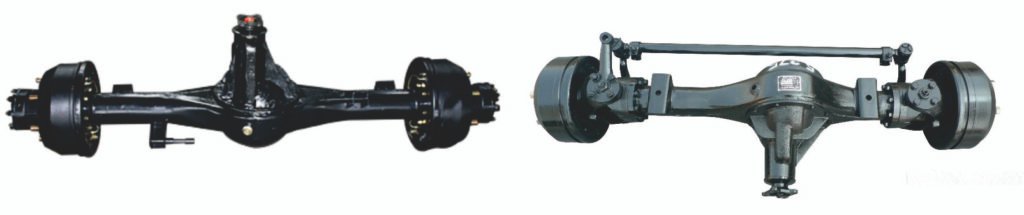
Based on different suspension structures, passenger car axles are divided into two types: integral axles and independent axles. The middle part of an integral axle is a rigid solid or hollow beam, which is mostly matched with non-independent suspensions. An independent axle features an articulated movable structure and is used with independent suspensions.
According to differences in driving modes, axles can be further categorized into four types: steering axles, drive axles, steerable drive axles and support axles.
Assembly Procedures
- Pre-assembly PreparationCollect relevant technical documents and standards, formulate the assembly process flow, prepare tools (such as wrenches, sockets and micrometers) and equipment (such as hydraulic presses and lifting devices). Ensure that all process documents and operation standards are in place, and provide professional training for assembly workers.
- Component InspectionConduct a detailed inspection of all axle components to verify compliance with specification requirements, and replace damaged parts in a timely manner.
- Axle AssemblyAssemble the axle components in strict accordance with the standard sequence to ensure accurate installation of each part.
- Axle Assembly MountingInspect the integrity of the pre-assembled axle assembly, then mount it on the vehicle frame in accordance with technical specifications and secure it firmly with bolts. Conduct inspection and adjustment of the connection points to ensure that all components are installed securely and operate flexibly.
- Axle Assembly AdjustmentUse professional tools to carefully adjust the position and angle of each axle component, ensuring optimal tire-to-ground contact and balanced coordination of the suspension system.
- Final InspectionFocus on inspecting the condition of key components such as bearings, reducers and wheels. Verify that all performance indicators of the entire axle system meet the specified requirements, and confirm that all parts are correctly installed, operate smoothly and show no abnormalities.
Inspection Procedures
- Visual InspectionVisually examine the axle surface for cracks, deformation, wear and other defects, and check whether the connection points are loose or rusted.
- Dimension MeasurementUse measuring tools such as calipers and micrometers to measure the length, width, height of the axle, as well as the diameter of axle journals and wheel hubs, ensuring that all dimensions conform to standard requirements.
- Non-destructive TestingUse non-destructive testing equipment including ultrasonic flaw detectors and magnetic particle flaw detectors to check for internal cracks and other hidden defects in the axle.
- Balance TestingUse a balancing machine to perform static and dynamic balance tests on the axle, detecting whether there is any weight deviation of the axle and unbalance during high-speed rotation.
Part II. Description of Axle Assembly Line
I. Positioning and Application Scope
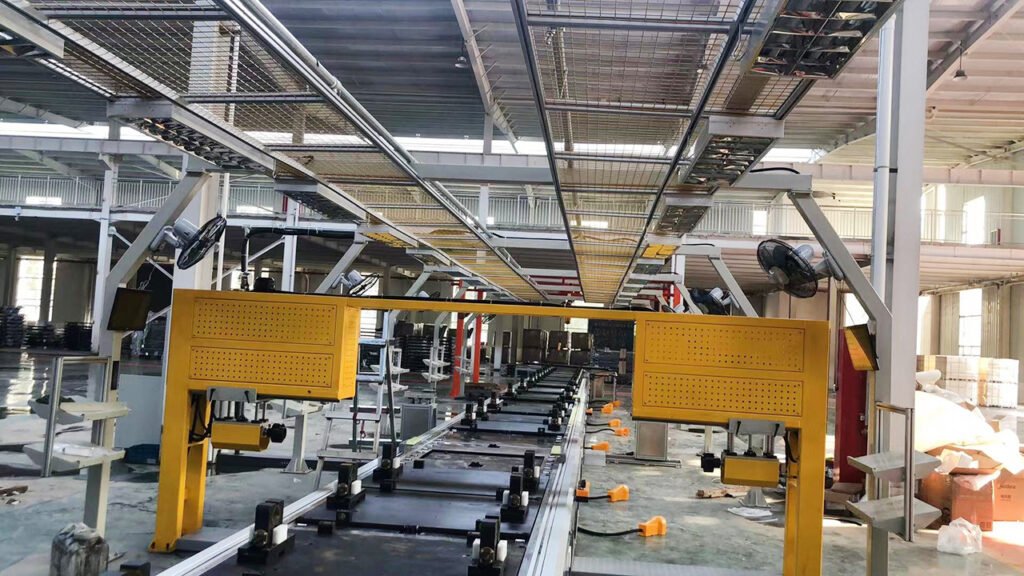
The axle assembly line is a standardized and high-efficiency production system specially designed for axles of various vehicle types such as passenger cars and commercial vehicles (including steering axles, drive axles, steerable drive axles, and support axles). It integrates functions including component conveying, precision assembly, online inspection, and automatic traceability, and is suitable for mass production scenarios. The line can meet the assembly needs of axles with different structures such as integral axles and independent axles, balancing flexible production and capacity optimization.
II. Core Layout and Station Processes
1. Material Distribution Station
Precise delivery of components is realized through AGV trolleys, conveyors, or material racks, covering core parts such as axle housings, half-shafts, reducer assemblies, bearings, brakes, and wheel hubs. Vibratory bowl feeders are equipped to realize orderly supply of small parts such as bolts and seals. All materials are affixed with unique identification codes, which are linked with the traceability system to ensure materials are traceable and controllable.
2. Pre-assembly Station
Preliminary assembly of sub-assemblies is completed here: such as pre-commissioning of reducer assemblies, bearing press-fitting, assembly of brake shoes and brake drums, etc. Special tooling fixtures are used to ensure assembly accuracy, and cleanliness inspection of key components is conducted to avoid impurities affecting assembly quality.
3. Main Assembly Station
Automated operations are carried out in the sequence of “axle housing positioning → reducer installation → half-shaft assembly → brake assembly fixing → wheel hub press-fitting”:
- Robots or hydraulic presses are adopted for precise press-fitting of interference-fit components such as bearings and half-shafts, controlling press-fitting force and displacement accuracy;
- Automatic tightening machines are used to fasten bolts according to preset torque to ensure connection reliability;
- Visual inspection systems are used to real-time calibrate component positions during assembly to avoid deviations.
4. Sealing and Lubrication Station
Automatic gluing is performed on key parts such as the joint surface of the axle housing and half-shaft oil seals to ensure sealing performance; quantitative filling equipment is used to accurately inject lubricating oil, controlling the filling volume error within ±5%. Meanwhile, the tightness of the oil circuit is detected to prevent leakage.
5. Online Inspection Station
Integrated with multiple inspection modules:
- Dimensional accuracy inspection: Verify key dimensions such as journal diameter and mounting distance through laser ranging and coordinate measuring machines;
- Performance testing: Simulate operating conditions to detect reducer transmission efficiency and brake clearance;
- Non-destructive testing: Use ultrasonic and magnetic particle flaw detectors to check for internal cracks;
- Dynamic balance testing: Perform dynamic balance calibration on wheel hub assemblies to ensure rotational stability.
6. Marking and Offline Station
Qualified axles are printed with unique traceability codes (including batch number, production date, and test data) by laser marking machines. After manual re-inspection, they are packaged or directly conveyed to the vehicle assembly line. Unqualified products are automatically diverted to the rework area.
III. Technical Features
- High Degree of Automation: Core processes adopt robots, automatic tightening machines, quantitative filling equipment, etc., reducing manual intervention and improving assembly consistency;
- Flexible Adaptability: Can adapt to the production of axles of different vehicle models and specifications by adjusting tooling fixtures and program parameters, with high switching efficiency;
- Full-process Quality Traceability: Relying on the MES system to record assembly data and test results of each station, realizing the full-life-cycle traceability from materials to finished products;
- High Efficiency and Energy Saving: Adopt frequency-conversion conveyors and energy-saving drive equipment to optimize production rhythm and reduce energy consumption. The single-shift production capacity can reach 500-1000 units (adjusted according to vehicle models, we also can design according to your capacity and budget).
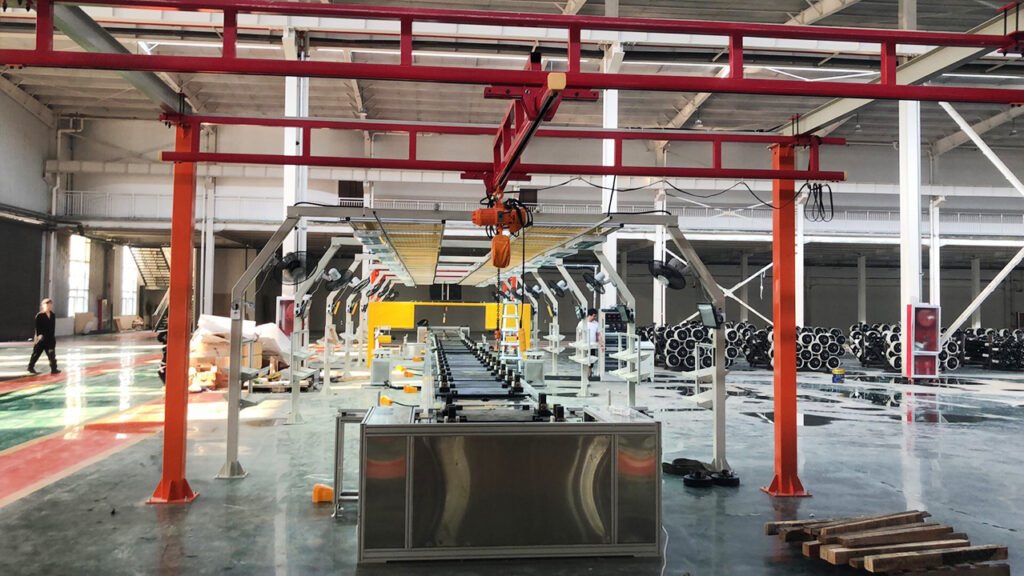
We can customize according to the client’s product specifications, production capacity or other requirements.
We provide comprehensive services including design, production, and installation/commissioning.