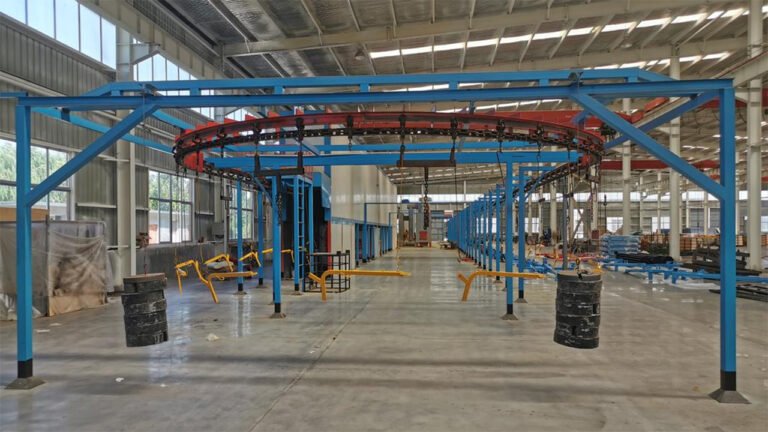
Automotive Coating Line—Automotive Painting Line—Coating Conveyor
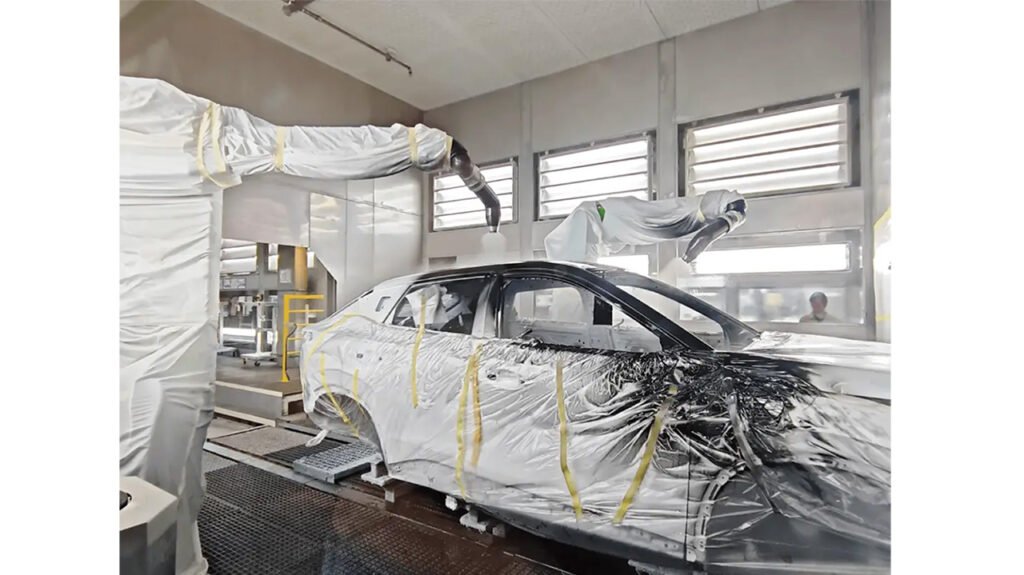
Core Definition
The Automotive Coating Line is a highly automated, multi-stage manufacturing process responsible for applying all protective and decorative layers to a vehicle’s body-in-white (BIW). Its primary goals are corrosion resistance, aesthetic appeal, and long-term durability.
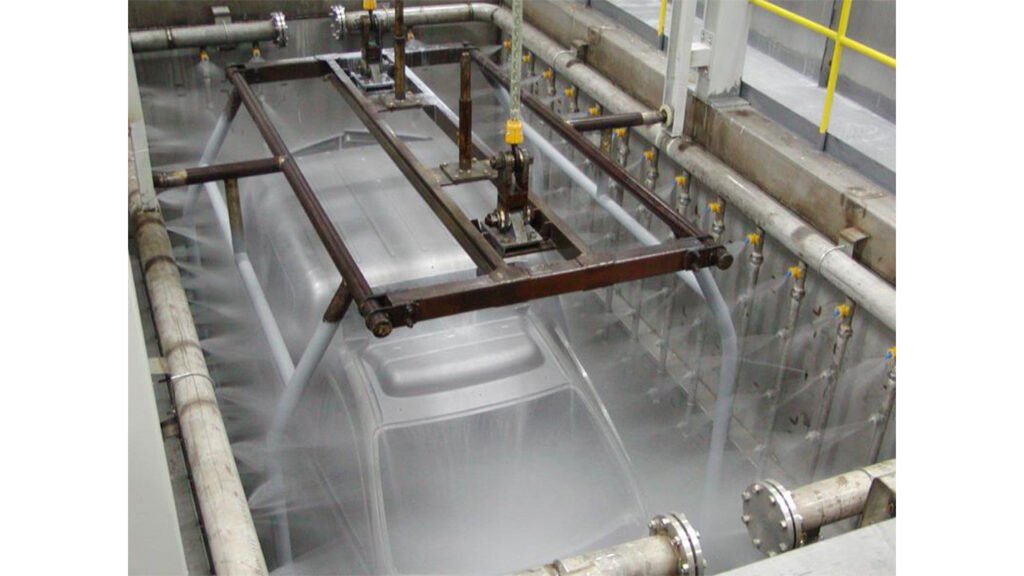
Standard Four-Stage Process
- Pre-Treatment & Electrocoating (E-Coat)
- Purpose: Clean the bare metal and apply the foundational anti-corrosion layer.
- Key Steps: Cleaning, degreasing, phosphating (creating a microcrystalline phosphate layer for adhesion), followed by cathodic electrodeposition (E-Coat). The E-Coat primer is electrically applied, reaching all interior cavities and seams, providing superior rust protection.
- Sealing & Underbody Protection
- Purpose: Seal the body and protect against chips, water, and noise.
- Key Steps: Application of PVC (Polyvinyl Chloride) sealants to welds and seams, and spray-on underbody coatings (stone guard) for acoustic damping and chip resistance.
- Primer Surfacer Application
- Purpose: Create a smooth, uniform substrate for the topcoat and enhance stone-chip resistance.
- Key Steps: Robotic application of a primer layer, which is then sanded or smoothed in some processes, followed by curing. This layer ensures perfect surface quality.
- Topcoat Application (Color & Clear Coat)
- Purpose: Provide the final color, effect, gloss, and environmental protection.
- Key Steps:
- Color Coat: Robotic application of base color (solid, metallic, pearlescent).
- Clear Coat: Application of a transparent, hard polymer layer for gloss, depth, and protection against UV rays and scratches.
- Curing: High-temperature baking to cross-link and harden the layers.
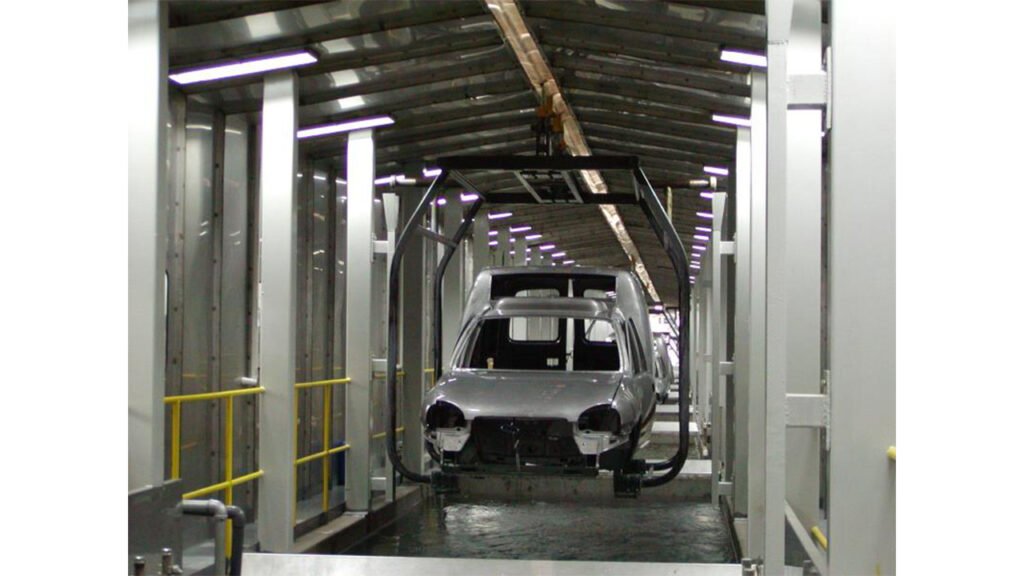
Key Technological Features
- Usage of Robots
- Cleanroom Environments: Topcoat booths operate under strict air filtration to prevent dust defects.
- Sustainability Focus: Widespread use of waterborne basecoats, advanced thermal oxidizers (RTOs) for VOC abatement, and comprehensive water recycling systems.
- Digitalization & AI: Machine vision for quality inspection, IoT sensors for predictive maintenance, and digital color matching across global plants.