

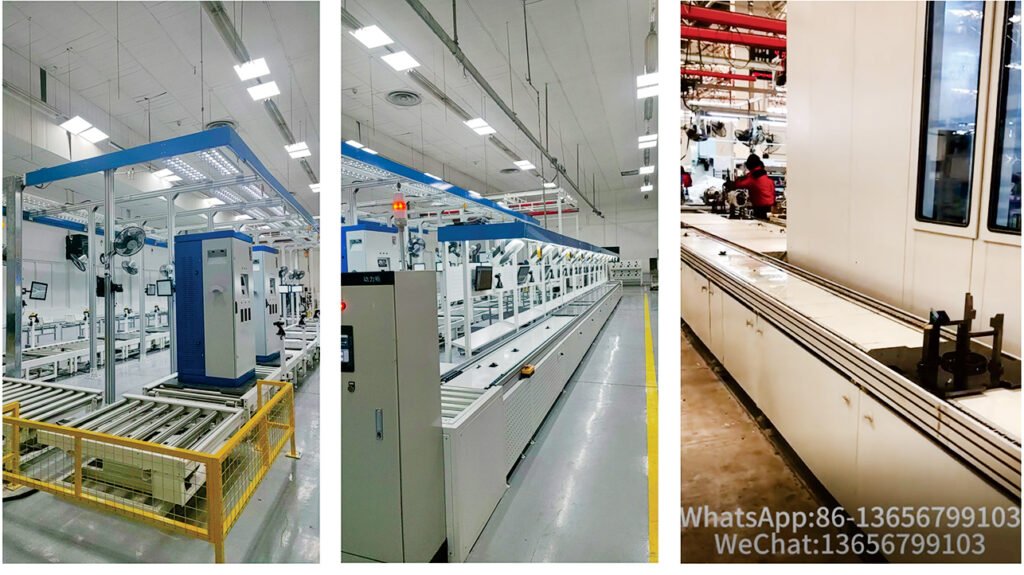
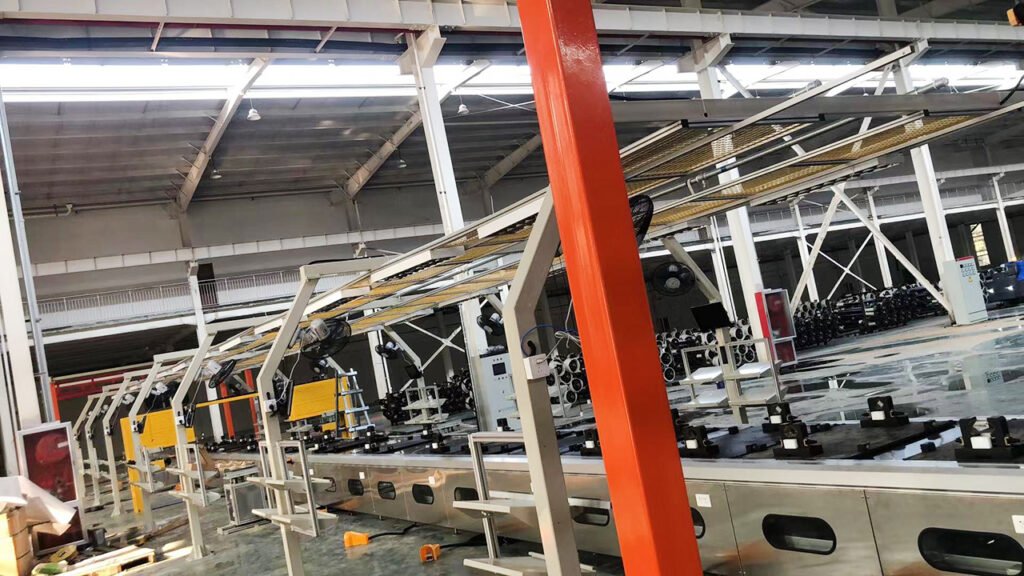
Accumulation conveyor lines are industrial conveying equipment with independent station accumulation, precise workpiece positioning and batch temporary storage, suitable for many workpieces, solving uneven process time and other pain points, widely used in machinery, automotive and new energy industries for heavy machinery, auto parts and other products; they mainly have two types: roller type for some workpieces with low cost, and chain type (most used) for some workpieces with high load and precise positioning.
Accumulation Conveyor Lines are suitable to Assemble/Produce General Machinery/Electromechanical Products, Automotive and Auto Parts Industry, Home Appliance and Furniture Industry, and others. (If clients have more requirements or want to produce products, welcome to contact us.)
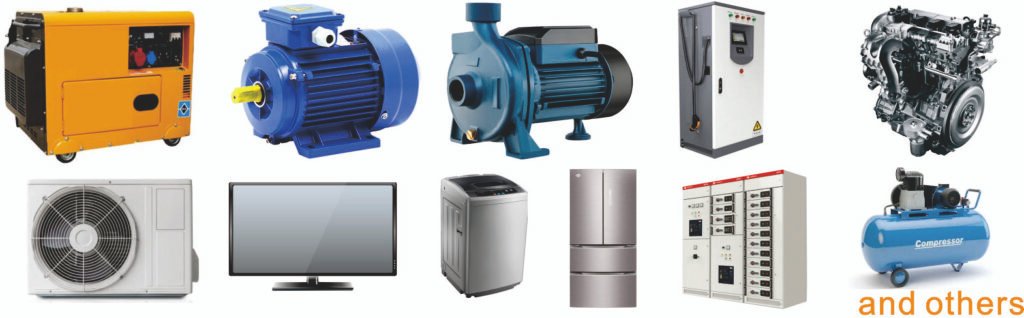
Accumulation Conveyor Line Instructions & Applicable Products for Assembly and Production
I. Core Introduction to Accumulation Conveyor Lines
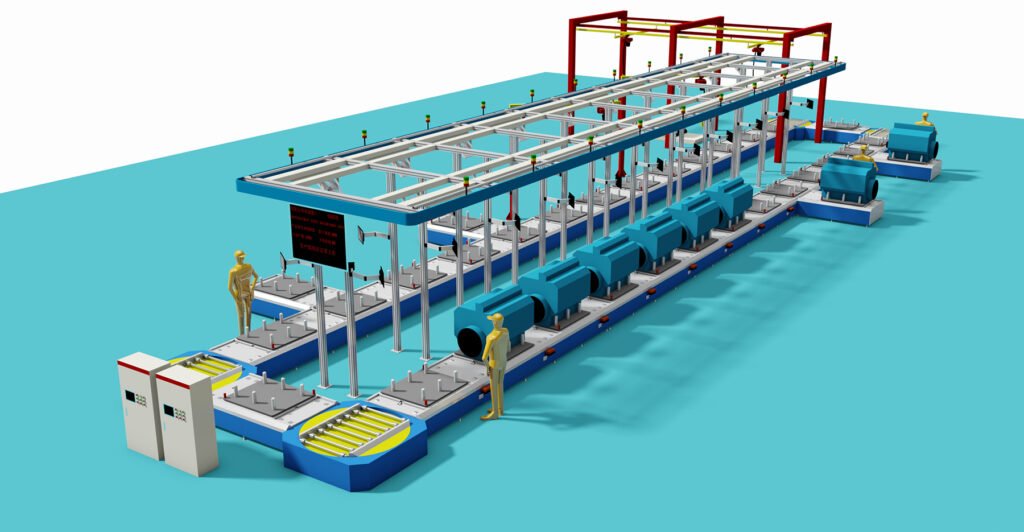
Accumulation conveyor lines are industrial assembly line conveying equipment with the core capabilities of independent station accumulation, precise workpiece positioning, and batch temporary storage. Driven by chains/rollers to pull fixture pallets, they realize on-demand workpiece parking via stoppers at each station. The upstream conveying process is not affected by the operation status of downstream stations, enabling simultaneous material parking and caching at multiple workstations.
With high load capacity (suitable for medium and heavy workpiece conveying) and great production line flexibility (adjustable workstations as needed), these lines corely solve production pain points such as uneven process time consumption, multi-variety and small-batch production, and the need for temporary caching. They are widely applied in non-standard/customized assembly lines in machinery, automotive, new energy and other industries.
II. Core Applicable Products for Assembly and Production
Accumulation conveyor lines are mainly designed for the assembly of complex-process, non-uniform cycle, multi-variety and small-batch products, especially workpieces requiring independent operation and temporary storage at each station. The mainstream applicable categories are as follows:
1. Heavy Machinery/Electromechanical Equipment (Core Application)
- Electrical complete sets: high and low voltage distribution cabinets, switchgear assemblies, frequency conversion control cabinets, etc.;
- General machinery: water pumps, air compressors, reducers, large motors, etc.;
- Hydraulic and pneumatic equipment: hydraulic stations, valve blocks, oil cylinders, etc.;
- Heavy mechanical parts: small machine tools, fans, mining machinery accessories, etc.
2. Automotive and Heavy Auto Parts
- Core large components: engine assemblies, gearboxes, chassis axle housings, etc.;
- Complete vehicle supporting parts: auto frames, door assemblies, pre-assembled center console parts, etc.;
- Heavy auto parts for construction machinery: cabs, hydraulic parts of excavators/loaders, etc.
3. New Energy Heavy Equipment
- Large new energy equipment: energy storage battery cabinets, photovoltaic inverter cabinets, large charging pile complete machines, etc.;
- Heavy new energy components: battery packs for new energy commercial vehicles, motor controllers, etc.;
- Non-standard new energy equipment: battery swap equipment, supporting cabinets for energy storage power stations, etc.
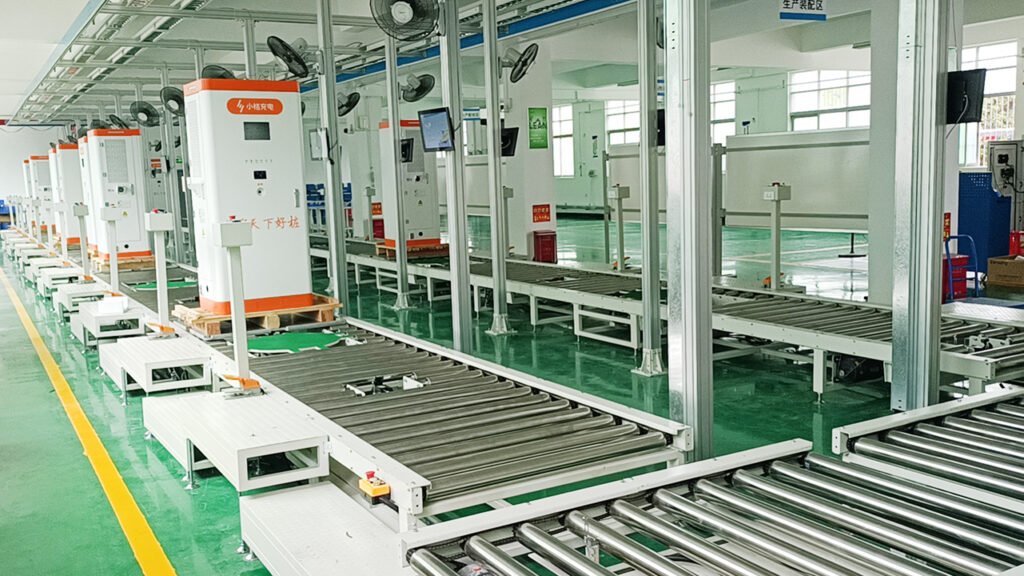
4. Heavy Home Appliances and Kitchen & Bathroom Equipment
- Large household appliances: large-capacity refrigerators, side-by-side freezers, commercial central air conditioning outdoor units, etc.;
- Heavy kitchen & bathroom equipment: integrated stoves, commercial dishwashers, large water heaters, etc.;
- Commercial electrical appliances: industrial dehumidifiers, large air purifiers, etc.
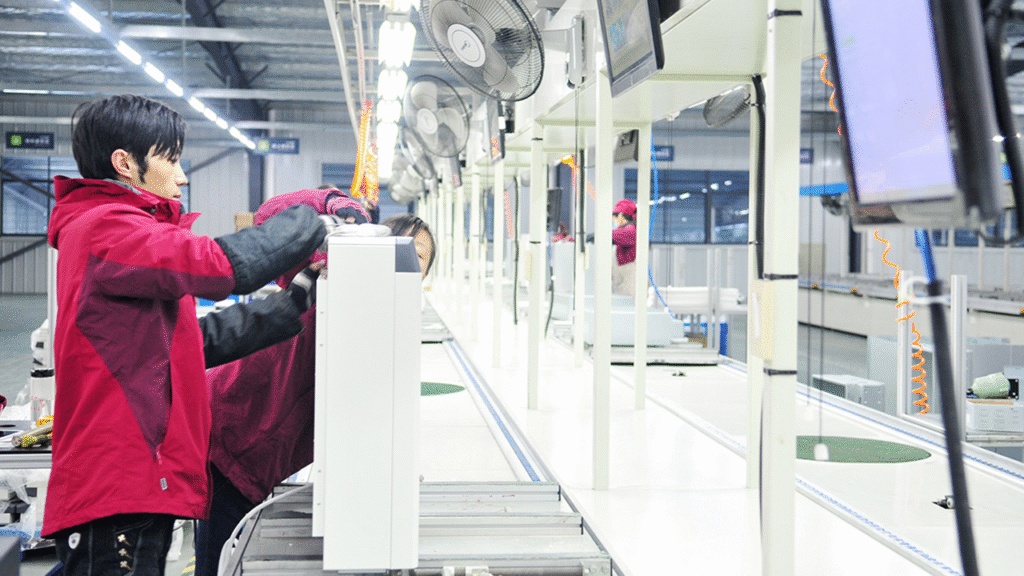
5. Other Heavy Non-Standard Products
- Industrial precision equipment: large laboratory instruments, industrial testing equipment, metering instrument cabinets, etc.;
- Sheet metal and frame parts: non-standard sheet metal cabinets, automation equipment frames, heavy supporting parts for logistics and warehousing, etc.;
- Industrial complete set accessories: heavy supporting parts for chemical and pharmaceutical industry equipment, etc.
III. Core Characteristics of Applicable Production Scenarios
Assembly/production processes meeting the following characteristics are all suitable for accumulation conveyor lines:
- The product has multiple processes with significant differences in operation time at each station, requiring workpieces to stay independently at stations for operation;
- The production mode is multi-variety, small-batch and customized, with the need for flexible adjustment of production line workstations and operation cycles;
- Temporary caching/storage of workpieces is required for intermediate processes such as waiting for inspection, assembly and transfer;
- The workpieces requiring precise positioning without affecting overall conveying;
- Multi-station simultaneous operation is adopted, requiring no mutual interference between stations; upstream feeding and accumulation can be carried out normally when downstream stations are congested.
IV. Unsuitable Scenario Reminder
Accumulation conveyor lines have relatively complex structures and high costs. They are not recommended for the following scenarios to avoid resource waste:
- Mass standardized production of with simple processes and highly uniform cycle at each station;
- Conveying links that only require simple horizontal transportation without the need for workpiece accumulation, caching or precise positioning at stations;
- Simple assembly lines with limited production space and no enough area for arranging accumulation and caching zones.
Main Types of Accumulation Conveyor Lines
Accumulation conveyor lines are mainly classified into three standard types in engineering:
1. Roller Accumulation Conveyor Line
- Driven by powered rollers + stoppers to realize accumulation
- Suitable for: light and medium workpieces, turnover boxes, pallets
- Features: low cost, low noise, high speed
- Not suitable: overweight or oversized workpieces
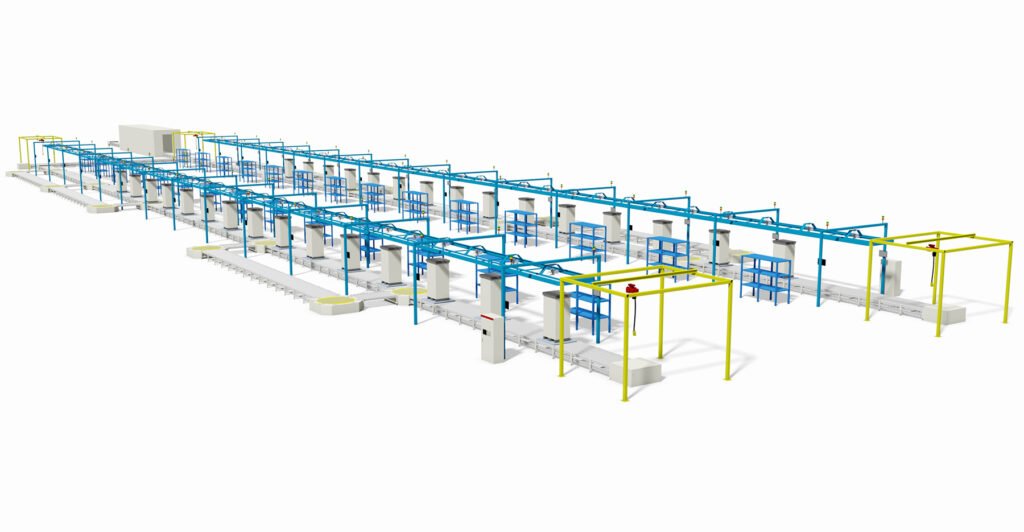
2. Chain Accumulation Conveyor Line (Most Commonly Used)
- Adopts double-speed chain / heavy-duty chain + blocking cylinders
- Suitable for: tooling plate lines, assembly lines
- Features: high load capacity, precise positioning, sectional start/stop
- Widely used for: switch cabinets, charging piles, motors, automotive parts
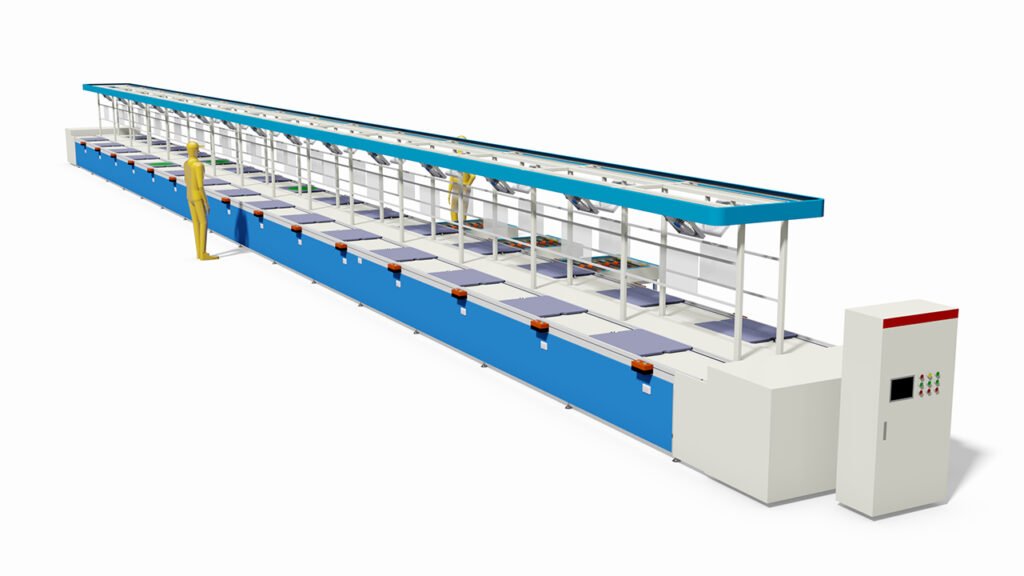
We can customize according to the client’s product specifications, production capacity or other requirements.
We provide comprehensive services including design, production, and installation/commissioning.