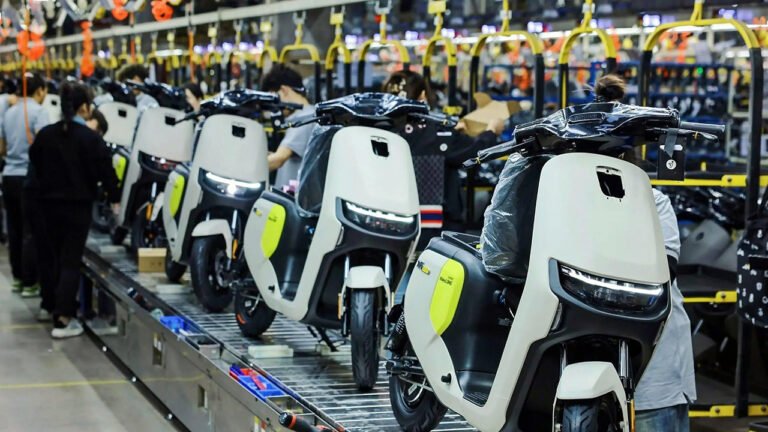
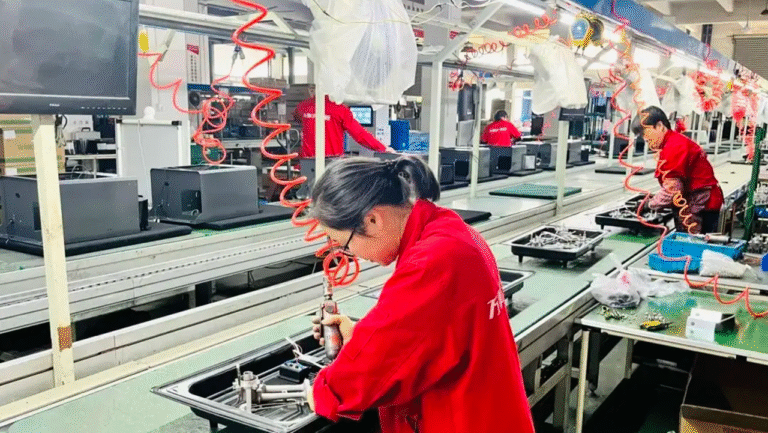
CKD E-scooter Assembly Line—CKD Electric Motorcycle Assembly Line
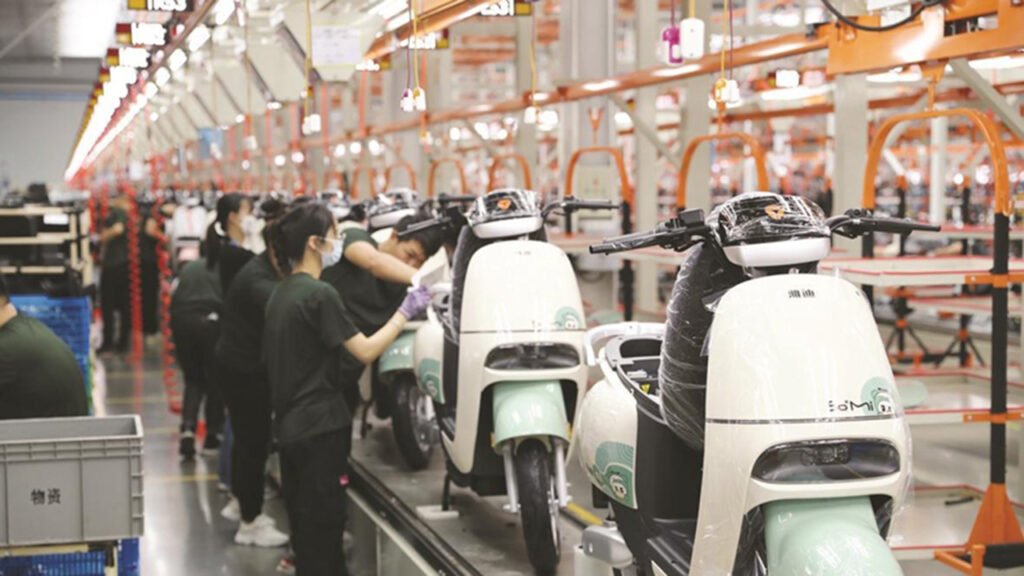
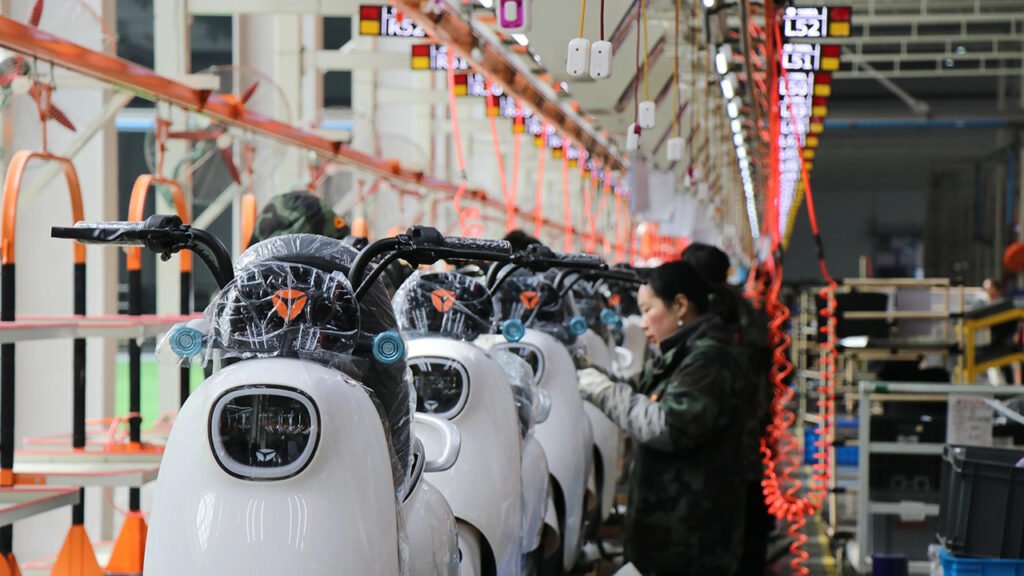
CKD Assembly Line for Two-Wheel Electric Scooters
Below is a comprehensive analysis of a two-wheel electric scooter CKD assembly line:
1. Core Concept and Characteristics
A CKD production line receives “boxes of individual parts” and its core task is to “build a vehicle from the ground up.”
- High Complexity: The number of process steps is 3 to 5 times greater, or even more, compared to SKD.
- High Technical Requirement: Requires more skilled operators and quality control points.
- Complex Supply Chain: Involves managing the procurement, warehousing, and distribution of hundreds of different components.
- High Localization Potential: Lays the groundwork for gradually using local alternative parts and achieving deeper localization.
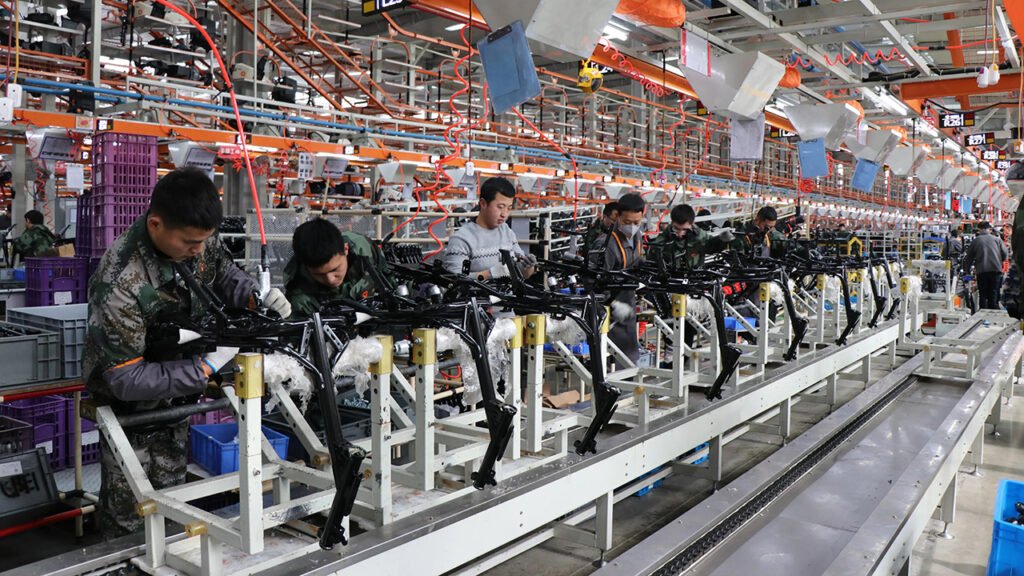
2. Main Stages of a CKD Production Line
A complete CKD line is typically divided into several logical sections:
Stage 1: Body and Chassis Pre-Assembly Area
This is the most fundamental, “manufacturing-like” stage.
- Frame Assembly: Receives the bare welded frame. Installs engine mount bushings, various mounting bolts, wiring harness clips, etc.
- Rear Swingarm Assembly: Assembles rear shock absorbers, chain adjusters (if applicable), brake caliper brackets, etc.
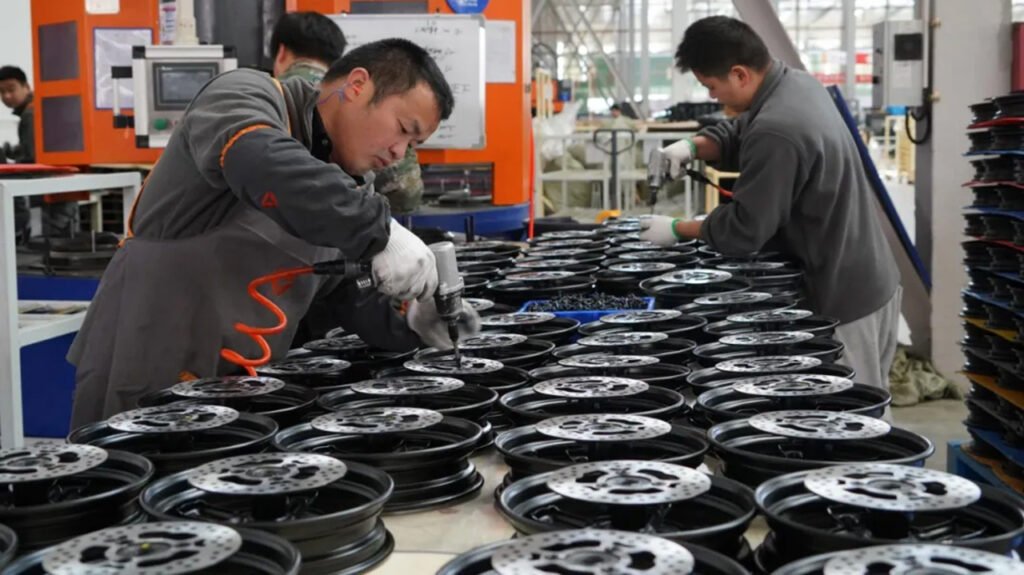
- Front Fork Assembly:
- Inserts inner fork tubes, springs, dampers, etc., into the outer tubes.
- Installs wheel hub bearings and seals.
- Mounts brake discs, installs the wheel hub into the fork legs, and tightens the axle.
- Installs the fender.
Stage 2: Powertrain and Running Gear Assembly Area
- Rear Wheel Assembly:
- Mounts and inflates the tire onto the rim (may require dynamic balancing).
- Installs brake disc/drum, drive sprocket (for chain drive), or motor rotor (for mid-drive motors).
- For Hub Motors: This is a critical component. Requires assembling the motor unit, bearings, and rim together.
- Motor and Controller Installation: Mounts the motor to the frame or swingarm. Installs the controller and heat sink. Performs preliminary wiring.
Stage 3: Controls and Electrical System Integration Area
- Handlebar and Control System:
- Individually installs left/right grips, switch clusters, mirror bases, brake levers, clutch lever (if applicable), and throttle grip onto the handlebar.
- Mounts the instrument cluster, headlight, and turn signals onto the front fairing or handlebar bracket.
- Routes various control and instrument wiring harnesses through the frame—a time-consuming and meticulous process.
- Full Vehicle Wiring Harness Layout and Connection:
- Lays the main wiring harness along the frame’s predefined path and secures it with cable ties.
- Connects all electrical interfaces individually: front/rear lights, turn signals, brake light switches, speed sensors, various control switches, instrument cluster, controller, motor, battery, etc. This is where CKD is most prone to errors, requiring strict inspection.
Stage 4: Final Assembly and Testing Area
- Final Vehicle Assembly:
- Installs the pre-assembled front fork into the frame’s head tube, mounts and adjusts the headset bearings.
- Mounts and tightens the handlebar.
- Installs the rear wheel assembly onto the swingarm, adjusts chain tension or motor axle position.
- Installs the battery box or compartment, inserts the battery, and connects it.
- Fills brake fluid (for hydraulic brakes) or adjusts cables (for mechanical brakes).
- Installs the seat, side covers, footboards, and all other body panels.
- Fluid Filling: For electric motorcycles, gearbox oil or fork oil may need to be added.
- Comprehensive Testing and Adjustment:
- Electrical System Test: Uses a tester to check all circuits for continuity and proper function.
- Powertrain Test: Tests motor operation and controller parameters.
- Brake System Test: Checks braking force and balance.
- Mechanical Adjustment: Adjusts wheel alignment, brake lever free play, clutch (if applicable), and shock preload.
- Road Test: Conducts a short-distance riding test on an in-factory test track.
3. Typical Scenarios for Choosing CKD Mode
- Target Market Has High Tariff Barriers: Tariffs on parts are significantly lower than on complete vehicles, making it the only economical entry strategy.
- Long-term Localization Strategy: Plans to eventually use locally produced frames, plastic parts, wiring harnesses, etc., gradually building a complete ecosystem.
- Multiple and Rapidly Changing Product Models: CKD mode allows more flexible mixed production of models with different configurations.