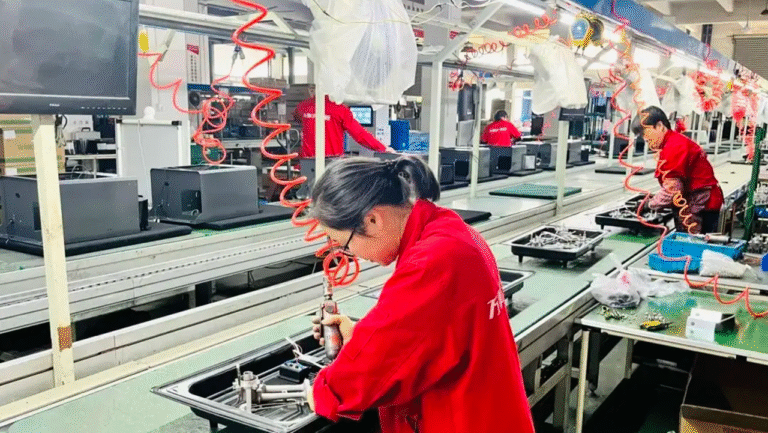
Fridge Assembly Line—How to Set a Fridage Assembly Line Factory?—what is a Fridge Assembly Line?
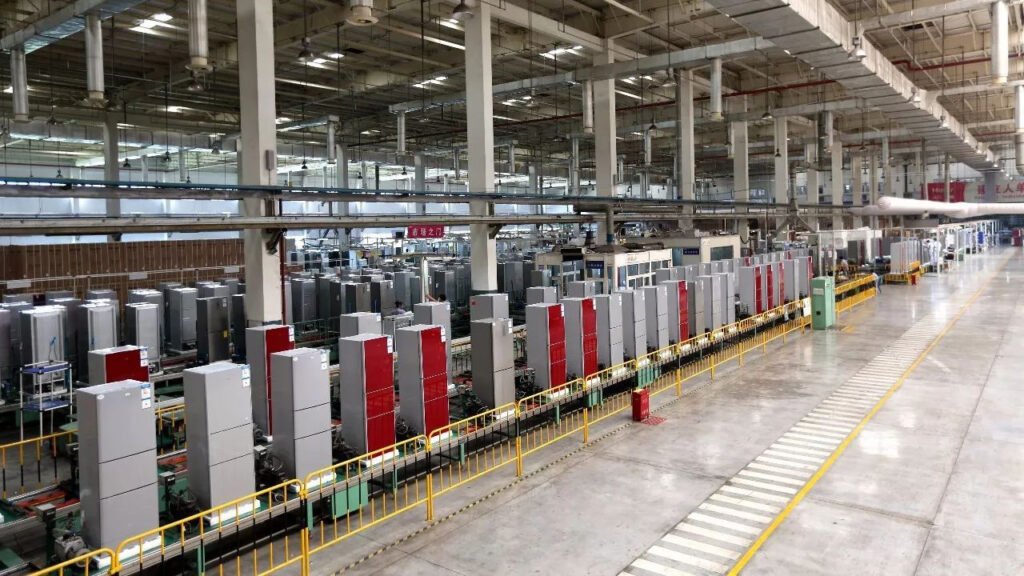
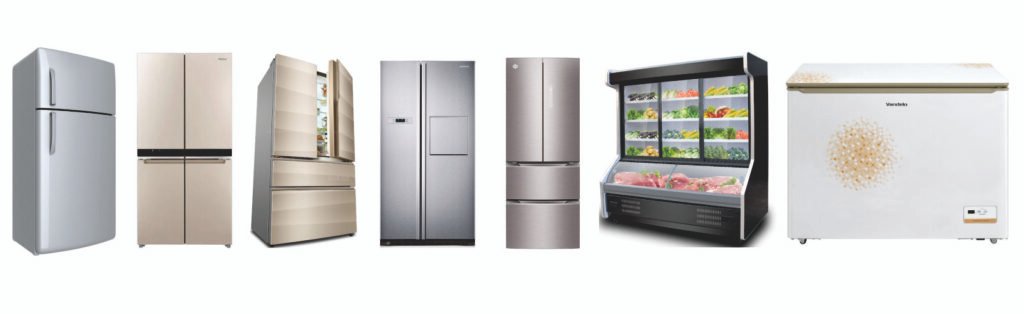
Fridge Assembly Lines/Production Lines are Suitable to Assemble/Produce Fridges.(Welcome to contact us, we will suggest and design the suitable Assembly Lines/Production Lines for you.)
Establishing a modern refrigerator assembly line factory is a systems engineering project, encompassing the entire process from strategic planning to operational implementation. The following is a phased, systematic detailed guide, integrating the core principles of industrial engineering, lean manufacturing, and smart manufacturing.
Phase 1: Top-Level Strategy and Planning (Project Initiation and Design)
This is the foundation that determines the project’s success and requires significant effort in research and design.
- Market and Product Definition
- Product Positioning: Determine which types of refrigerators to produce (French door, multi-door, side-by-side, compact freezers?), target market (premium, mid-range, economy?), and projected annual capacity (e.g., 500,000 units/year).
- Technology Roadmap: Define core technologies, such as compressor suppliers, refrigerant type (e.g., R600a), foaming technology, and level of smart features. This will directly impact equipment selection.
- Factory Role: Is it a final assembly plant (purchasing most components) or an integrated plant (producing doors, cabinets, liners in-house)? The latter requires massive investment but offers greater control.
- Site Selection and Layout Planning
- Site Selection Criteria:
- Supply Chain Proximity: Close to suppliers of sheet metal, plastic parts, compressors, and electronic components.
- Logistics Advantage: Near ports, highways for efficient inbound materials and outbound finished goods.
- Policy and Cost: Consider land, taxes, energy (stable and low-cost electricity), and labor resources.
- Layout Design (Core):
- General Principle: Optimize material flow, minimizing crossovers, backtracking, and waiting.
- Typical Layout: U-shaped or straight-line. The mainstream trend involves several specialized workshops/areas:
- Sheet Metal Stamping and Painting Workshop (if producing cabinets in-house)
- Plastic Parts Molding Workshop (if producing liners, door inners in-house)
- Sub-Assembly Area (door foaming pre-assembly, drawer modules, electrical box pre-assembly)
- Main Final Assembly Line (core)
- Foaming Area (core process, requires isolation)
- Performance Testing and Packaging Area
- Logistics Design: Plan material delivery routes (AGVs, tow trains, conveyors), establish central warehousing and line-side supermarkets.
- Site Selection Criteria:
- Investment Budget and Financial Analysis
- Detailed costing: Land & building, production line equipment, utilities (power distribution, compressed air, chilled water), environmental systems, IT systems, working capital, etc.
- Evaluate the return on investment (ROI) period.
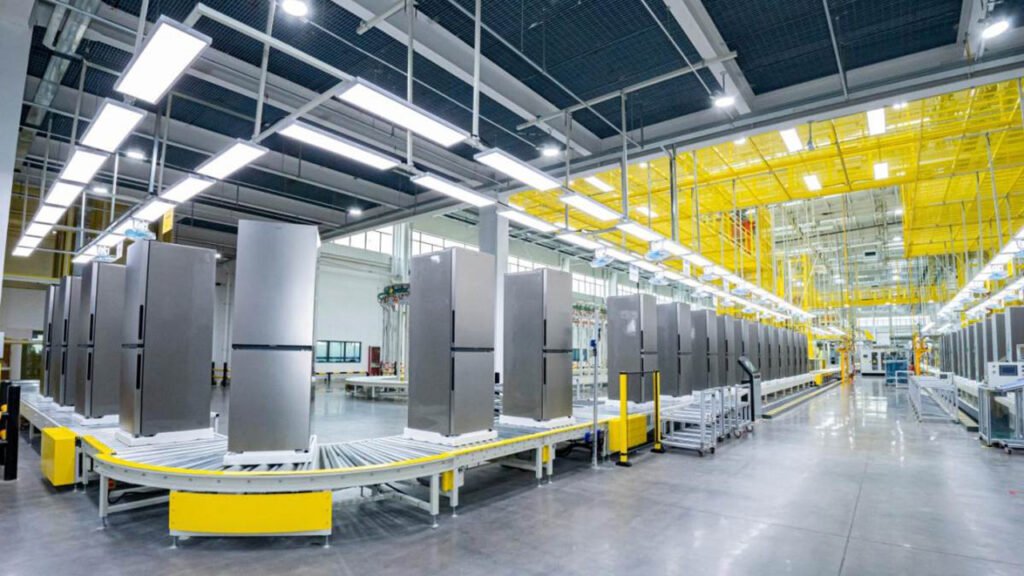
Phase 2: Core Assembly Line Process Design
The core of refrigerator assembly is the sequence: “Cabinet Forming → Liner Installation → Foaming → Final Assembly → Testing.”
- Cabinet Forming and Pre-treatment Line (if produced in-house):
- Process: Steel coil uncoiling → Stamping (cabinet shell, door shell) → Bending → Welding → Pre-treatment (degreasing, phosphating) → Powder coating → Curing.
- Liner Forming Line (if produced in-house):
- Process: Plastic pellets (ABS/HIPS) → Vacuum forming → Trimming → Welding (liner corners) → Punching.
- Door Foaming Sub-Assembly Line:
- Process: Door shell + door liner + handles/other attachments → Load into foaming mold → Inject polyurethane (PU) foam → Curing → Demolding → Install hinges, door gaskets, etc. This is a critical area independent of the main line.
- Main Cabinet Assembly Line (Core Process Flow):
- Station 1: Cabinet Loading. Install feet, rating plate.
- Stations 2-4: Install Internal Components. Mount the evaporator (often a pre-made module), condenser tubing, drain pipe, etc., into the back or interior of the cabinet.
- Station 5: Install Liner. Place the plastic liner into the cabinet shell and secure it.
- Station 6: Key Process – Cabinet Foaming. Push the cabinet into a large foaming mold, inject PU foam to fill the cavity between the shell and liner, forming the insulation layer. Requires strict temperature control, material ratio, and dwell time.
- Station 7: Curing and Cleaning. Post-foaming curing and removal of excess flash (“deflashing”).
- Station 8: Install Compressor. This is the heaviest component, typically using assistive robotic arms.
- Station 9: Install Electrical System. Mount the control board, wiring harnesses, light, thermostat, etc.
- Station 10: Evacuation & Refrigerant Charging. Connect to service ports, evacuate using professional equipment, and charge with precise amount of refrigerant. This is a core quality control point.
- Station 11: Install Rear Panel. Attach the back cover, enclosing internal components.
- Station 12: Install Doors. Mount the pre-assembled doors to the cabinet via hinges and adjust gaps.
- Testing and Packaging Line:
- Performance Testing: Power on for burn-in/baking (typically 12-24 hours), testing cooling capacity, temperature uniformity, noise, energy consumption, etc. This is the most critical quality gate.
- Final Inspection: Visual, functional, and safety checks.
- Cleaning and Packaging: Clean, apply protective film, insert accessories & manual, bag, and carton.
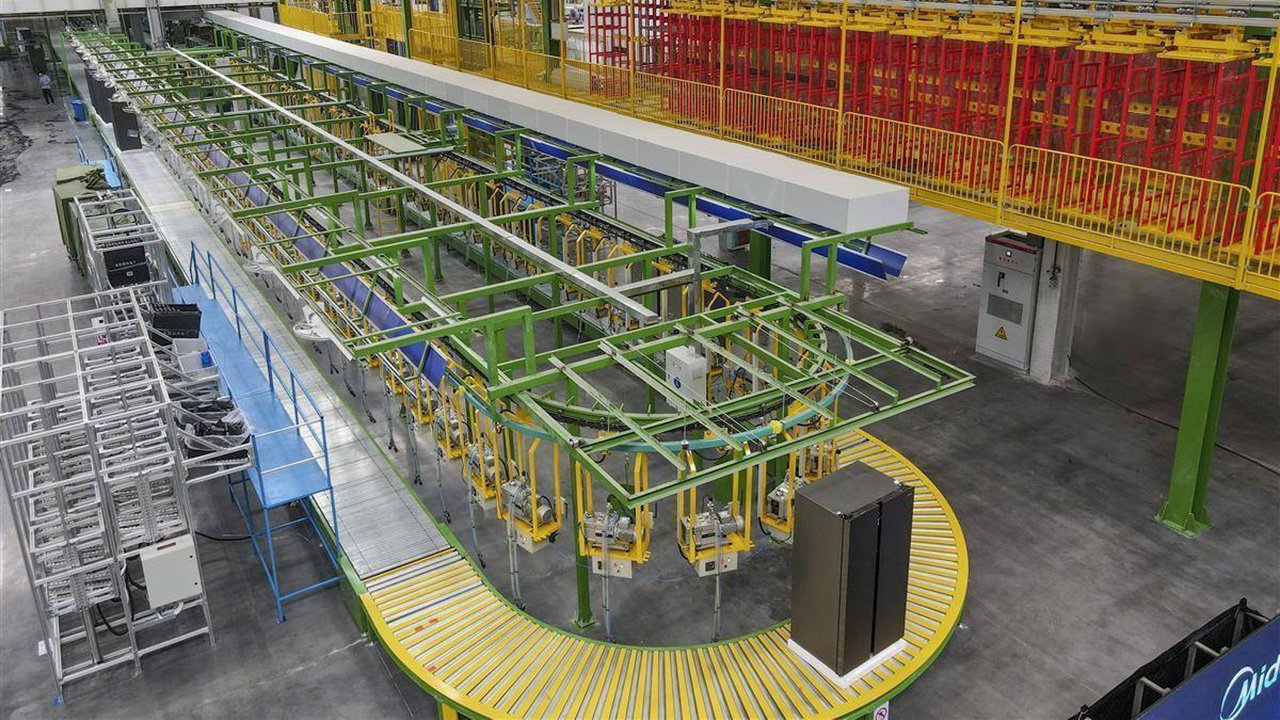
Phase 3: Equipment Selection and Systems Integration
- Core Process Equipment:
- Foaming Equipment: High-pressure foaming machines, foaming molds (cabinet, door), curing conveyors. This is one of the most expensive and technologically intensive investments.
- Refrigerant Charging Equipment: High-precision automatic charging stations.
- Evacuation Equipment: Multi-station automatic vacuum systems.
- Assembly Equipment: Automatic screwdrivers/torque tools (for critical points like compressor, hinges), assistive robotic arms, automatic marking/labeling machines.
- Conveyance Systems: Friction roller conveyors, power & free chains, slat conveyors, lifters, AGVs.
- Testing Equipment: In-line leak detectors, helium mass spectrometer leak detectors (premium), performance test chambers, noise test rooms.
- Information Systems:
- MES (Manufacturing Execution System): The brain. Manages production orders, material traceability (via barcode/RFID), quality data collection, equipment status monitoring.
- ERP: Upper-level resource planning.
- WMS (Warehouse Management System): Manages raw material and finished goods warehousing.
- Andon System: Enables real-time response to line abnormalities.
Phase 4: Construction, Implementation, and Operational Readiness
- Factory Construction and Utilities: Build according to layout, install power, compressed air, chilled water, vacuum lines, environmental (exhaust, wastewater) systems.
- Equipment Installation and Commissioning: Suppliers install equipment, followed by individual and line-wide debugging and testing.
- Team Building and Training: Recruit production, quality, maintenance, logistics management, and line operators. Conduct comprehensive safety, operational, and maintenance training.
- Supply Chain Establishment: Qualify suppliers, establish material procurement and delivery processes, validate with pilot production runs.
- Pilot Production and Ramp-up: Conduct multiple pilot runs to resolve process, equipment, and logistics issues, gradually increasing output to designed capacity.
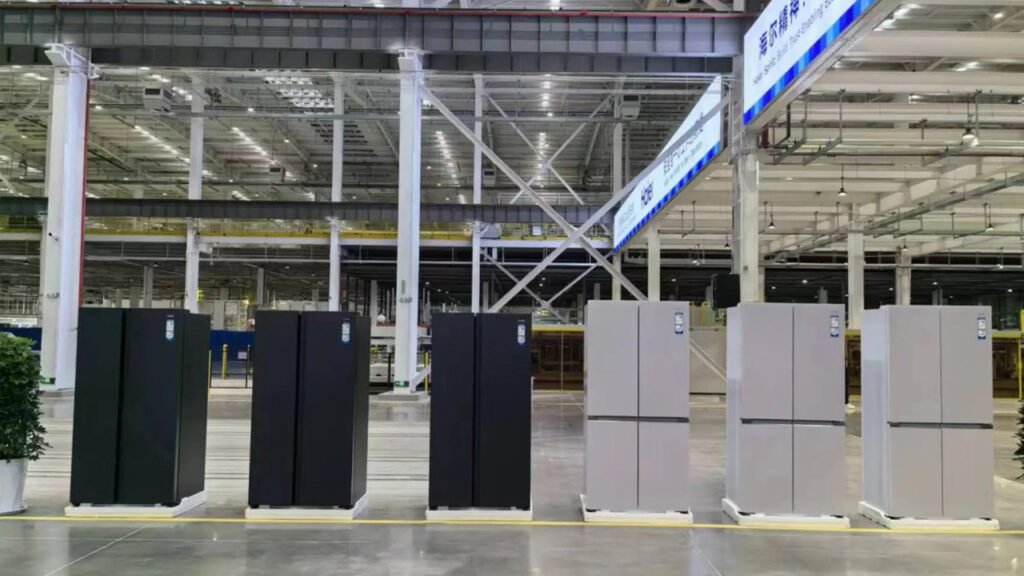
Summary and Recommendations
For new entrants, a phased strategy is highly recommended:
- Start with a Final Assembly Plant First: Purchase major components like cabinets, doors, and liners externally. Focus on the three core processes: foaming, final assembly, and testing. This significantly reduces initial investment and complexity.
- Partner with Experienced Equipment Integrators or Industry Consultants: They can provide turnkey solutions or expert guidance to avoid pitfalls.
- Begin with Low-Volume Pilot Production: Validate the entire process and supply chain before scaling up.
Establishing a refrigerator factory is a capital and technology-intensive investment requiring meticulous planning and a deep understanding of manufacturing details. This guide aims to provide a clear roadmap for your endeavor.
Characteristics of a Refrigerator Assembly Line
How to Choose a Suitable Refrigerator Assembly Line?
Looking for air compressors? Contact us for more information.
Need assembly tools or other auxiliary equipment? Contact us for more information.