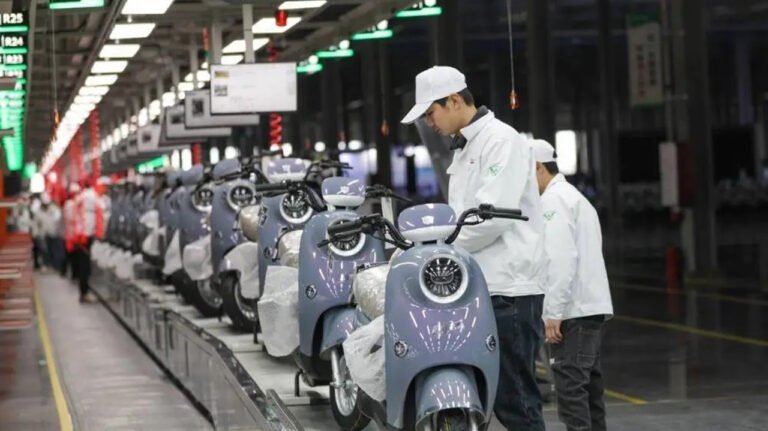
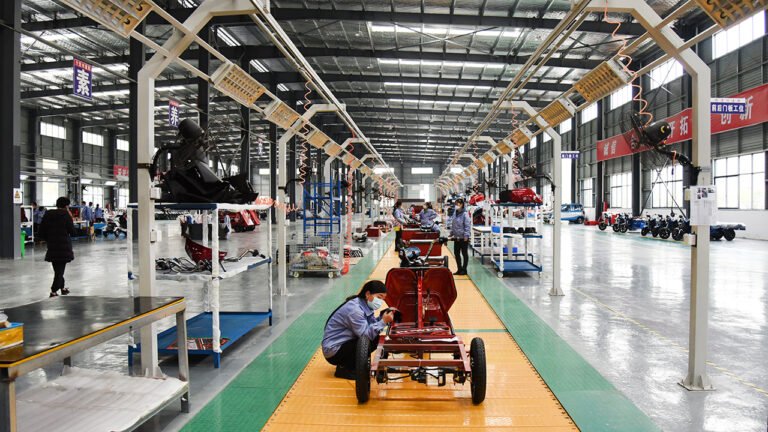
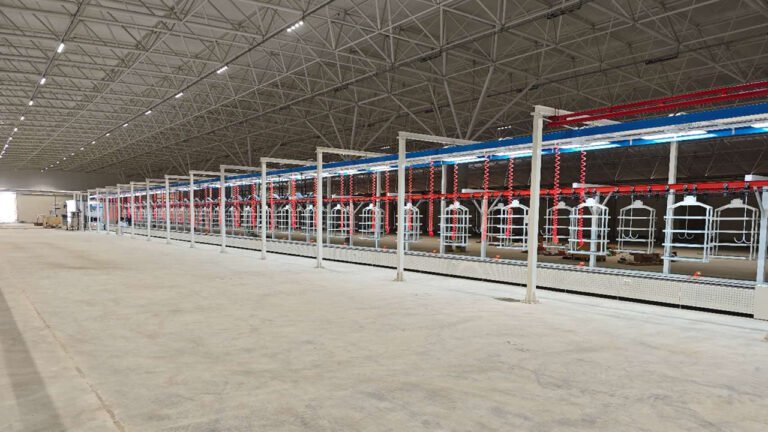
Sedan Final Production Line—for Unibody Vehicle Body Structure Types
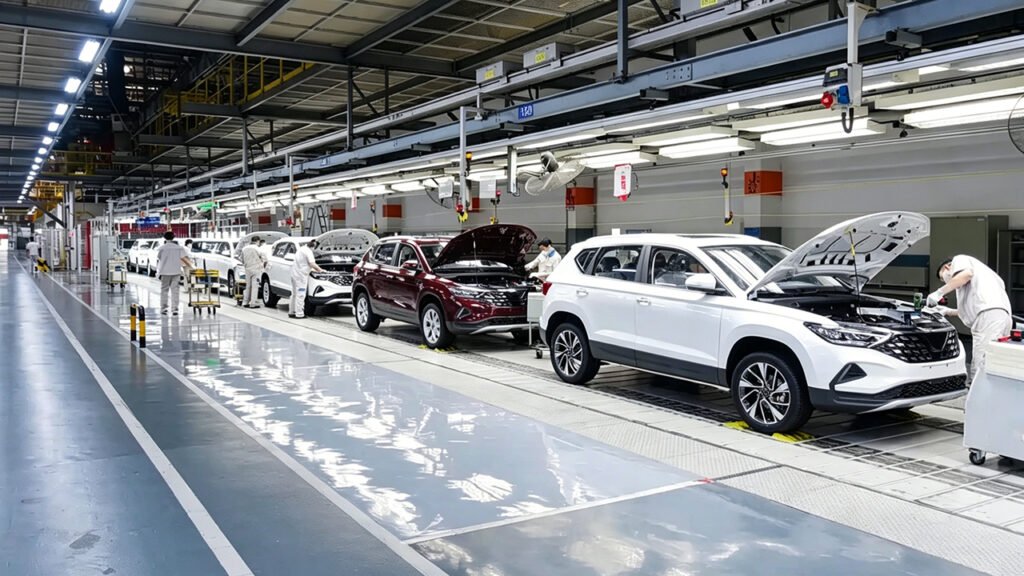
A unibody vehicle body has no separate frame, with all components welded into a whole to bear all loads, serving as the mainstream structure for passenger cars and urban SUVs. The body is divided into a front crumple‑energy‑absorbing zone, a middle high‑strength safety cabin and a rear auxiliary energy‑absorbing zone, balancing crash protection and occupant survival space, while exterior panels only function for decoration and protection.
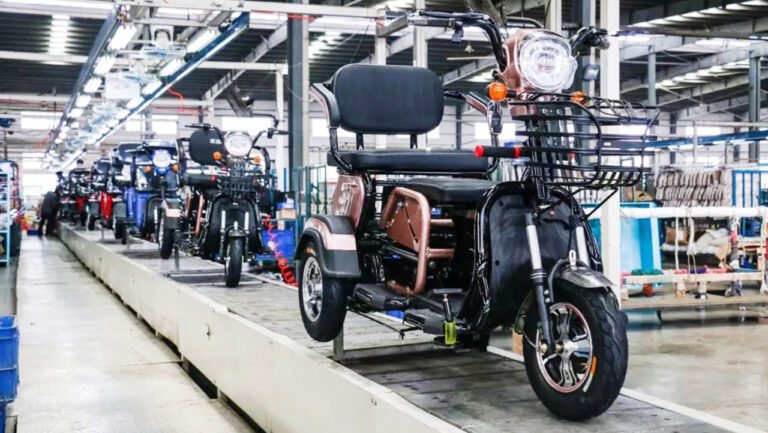
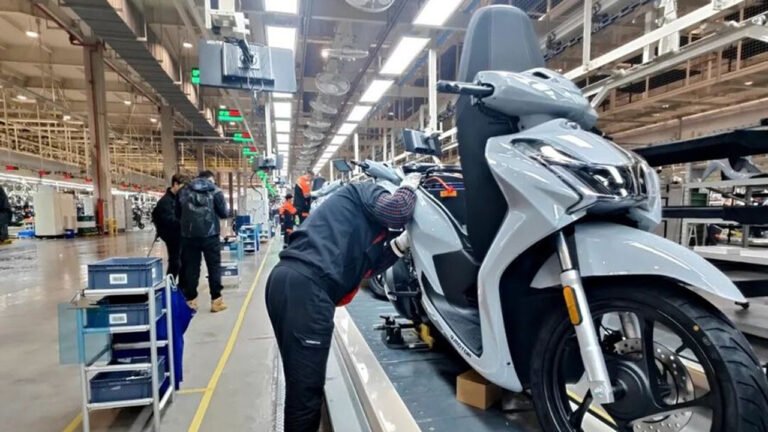
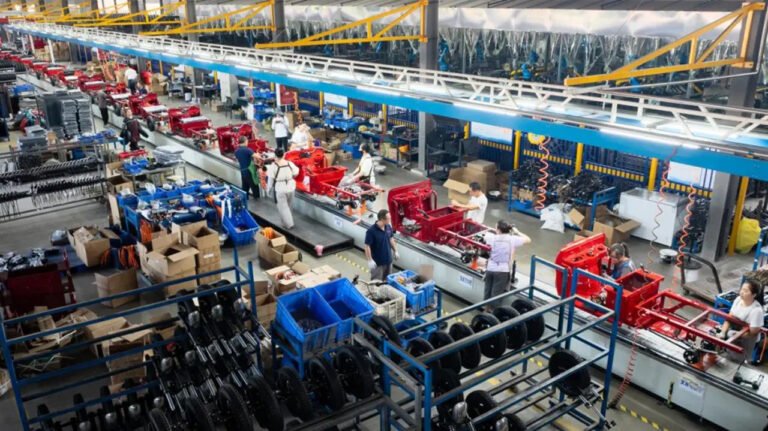
The matching final assembly line features high‑precision and flexible mass production, mainly adopting floor‑mounted slat/skid conveyors and overhead monorail conveyors. Equipped with dedicated chassis marriage stations, it completes chassis integration, interior & exterior assembly, fluid filling, inspection and other processes, enabling mixed‑model production of various unibody passenger vehicles.
Sedan Final Production Lines are suitable to Produce Unibody Vehicle Body Structure Vehicles: 4 wheelers, Cars, Sedans, SUVs, Automobiles, EVs, Mini Vans, Hybrid Models and so on. (Sometimes, suitable for the production of pickups.)

Unibody Vehicle Body Structure
I. Core Definition
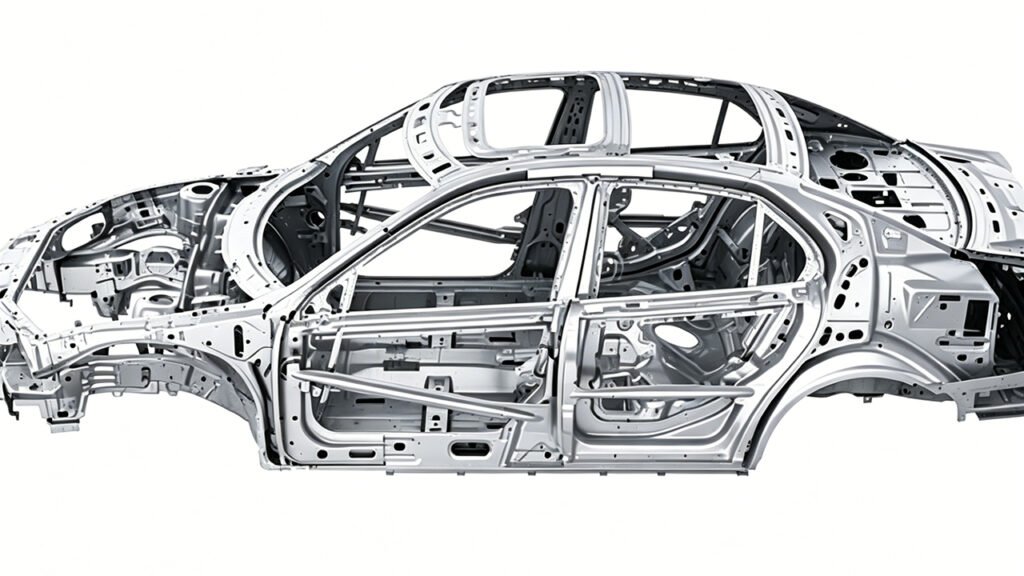
A unibody body has no separate frame. The body shell, floor panels, pillars and longitudinal beams are welded directly into an integrated frame. The engine, suspension and chassis are all mounted onto the body, which bears all loads, impact forces and vehicle weight. It is the mainstream structure for passenger cars and urban SUVs.
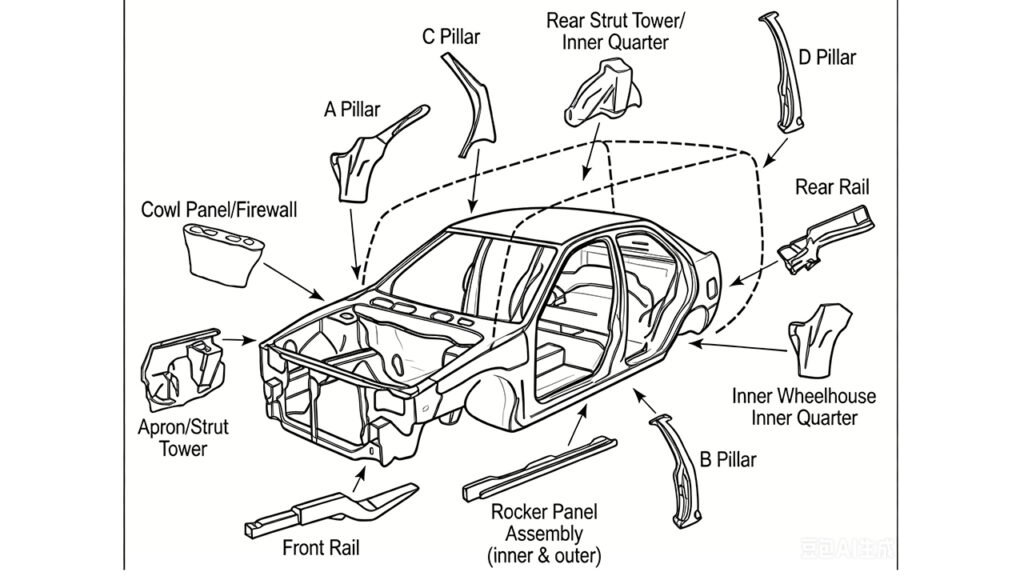
II. Three Overall Structural Zones (Front to Rear)
- Front Body (Engine Compartment): Crumple ZoneKey components: front longitudinal beams, bumper beam, subframe, shock tower, dash panel.The front longitudinal beams feature crumple‑energy‑absorbing structures. They deform and collapse during collisions to dissipate impact energy and protect the passenger compartment.The subframe supports the engine, transmission and front suspension to distribute forces.
- Middle Body (Passenger Compartment): High‑Strength Safety Zone (Sturdiest Part)Key components: A‑pillar, B‑pillar, C‑pillar, rocker beam, floor cross‑member, roof longitudinal beam.A/B/C‑pillars and rocker beams are mostly made of high‑strength boron steel, forming a closed rigid safety cage. It resists deformation in collisions to preserve survival space inside the vehicle.Door impact beams are installed inside doors to withstand side impacts.
- Rear Body (Trunk): Auxiliary Load‑Bearing & Energy AbsorptionKey components: rear longitudinal beams, rear floor, rear wheel arch, rear panel.It supports cargo loads and collapses to absorb energy in rear‑end collisions, protecting rear‑seat passengers.
III. Main Component Structures (Body‑in‑White Frame)
- Lower Body: Front compartment, front floor and rear floor with intersecting longitudinal and cross beams, serving as the primary load‑bearing base.
- Upper Body: A/B/C‑pillars, roof and side panels forming the passenger compartment.
- Exterior Panels: Hood, doors, fenders and trunk lid, used only for appearance and protection, not load‑bearing.
- Connection Method: Stamped steel plates are joined by spot welding or laser welding for lightweight design and high rigidity.
Introduction to Final Assembly Production Lines Suitable for Unibody Vehicles
I. Core Adaptation Principle
Unibody vehicles have no separate frame and feature an integrated cage‑type body structure. The chassis, powertrain and suspension are directly assembled onto the body floor and longitudinal beams. With unified assembly references, high positioning accuracy requirements and concentrated working procedures, the final assembly production lines must adopt flexible, high‑precision and stable‑cycle assembly lines to support mass mixed‑model production of passenger cars and urban SUVs with unibody structures.
II. Main Types of Production Lines
1. Floor‑mounted Slat Conveyor / Skid Conveyor (Most Commonly Used)
Unibody vehicles are lightweight without chassis frames, making them suitable for the skid‑based accumulating conveying mode. After the body‑in‑white is off‑line, it is fixed on special skids and flows along the whole line. Positioning pins precisely align with pre‑reserved positioning holes on the body floor to ensure coaxiality during the assembly of engines, suspensions and wheels, meeting the integrated assembly requirements of unibody bodies.
2. Overhead Monorail Conveyor
Hangers clamp high‑strength parts such as rocker beams and A/B‑pillars for transportation, saving floor space. This facilitates the marriage assembly of chassis and body, where the engine, front axle and rear axle are lifted and assembled as a whole. It features fast production cycle and high automation for integrated chassis assembly of unibody vehicles.
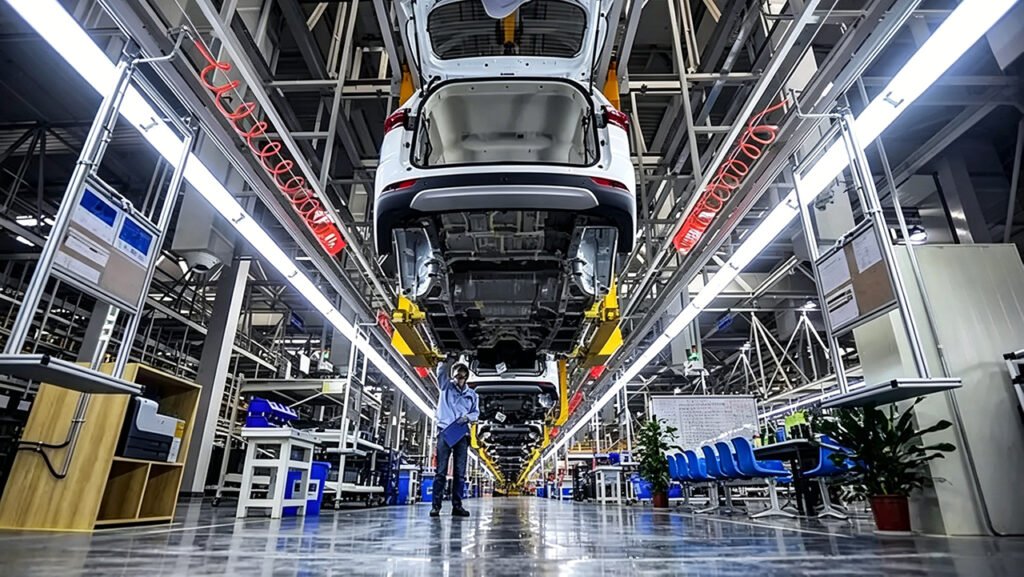
3. Special Chassis Marriage Station
Since unibody vehicles have no frames, suspensions and subframes are mounted directly on the body floor. The production line must be equipped with automatic lifters, chassis positioning jigs and tightening robots to achieve precise alignment between chassis modules and the body, completing the integrated assembly of powertrain, suspension and braking systems, and avoiding body deformation caused by assembly stress.
III. Main Production Processes for Unibody Vehicles
- Body pretreatment: Unibody bodies enter the assembly line for cleaning, pre‑assembly of wiring harnesses and interior trims.
- Chassis marriage: Subframes, engines, transmissions and suspension assemblies are lifted and integrally assembled to the longitudinal beams of the body floor.
- Interior and exterior assembly: Instrument panels, seats, door assemblies, sunroofs, bumpers and lights are installed in sequence.
- Fluid filling: Central filling of brake fluid, coolant, engine oil and windshield washer fluid.
- Four‑wheel alignment and inspection: Four‑wheel alignment, lamp inspection, air tightness test and road test are carried out for the flexible chassis of unibody vehicles.
- Off‑line inspection and warehousing.
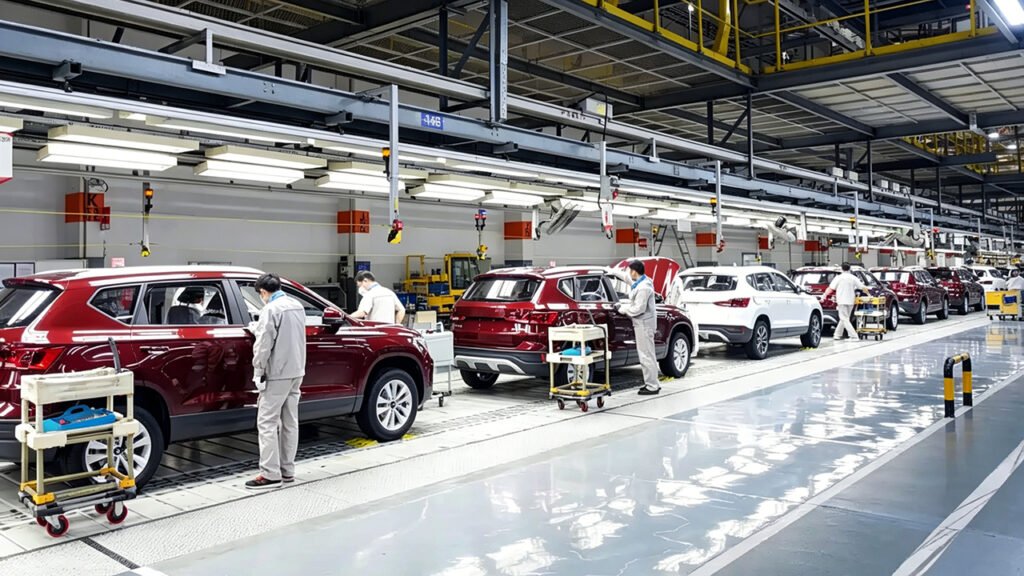
IV. Key Design Features of Production Lines
- High‑precision positioning jigs: Rely on positioning holes on the body floor to unify assembly references and prevent body distortion.
- Flexible mixed‑model production: Support simultaneous production of unibody passenger cars and SUVs with different wheelbases and sizes.
- Automatic tightening system: Torque‑controlled bolt tighteners accurately control bolt torque of suspensions and subframes to avoid excessive local stress on the body.
- Lightweight conveying design: Adapt to the light weight of unibody bodies with moderate load capacity, stable operation and low noise.
V. Application Scenarios
Widely used in the complete vehicle final assembly of passenger cars, hatchbacks, sedans, urban SUVs, MPVs and all other unibody‑structure models, it is the mainstream final assembly mode in the passenger vehicle industry.
Looking for VIN marking machines? Contact us for more information.
Need Filling Machines? Get expert support—request a quote or let’s talk about your project.
Looking for air compressors? Contact us for more information.