Passenger Tricycle: Structure Description & Production Line Description
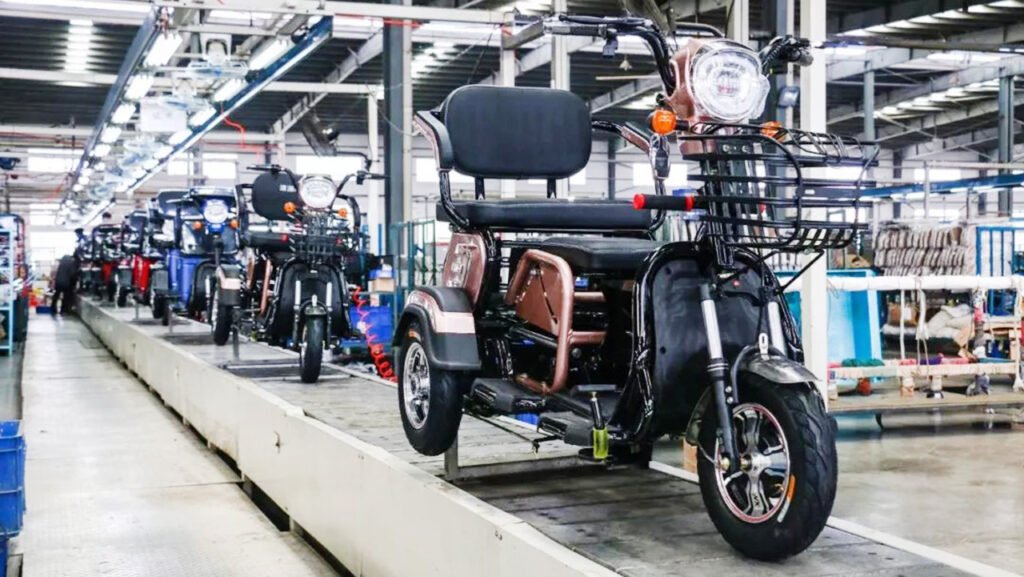
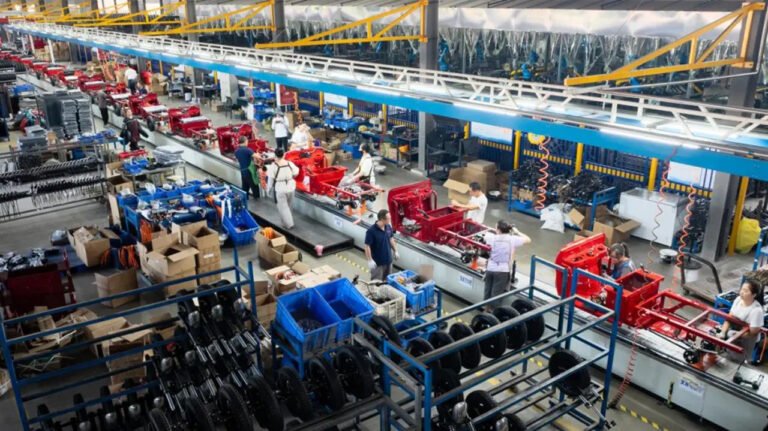
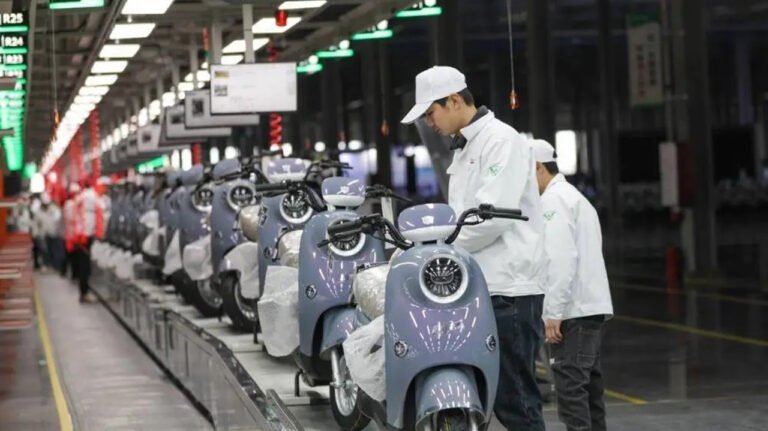
A passenger tricycle consists of frame, body, running, power and control systems. It uses high-strength steel frames with closed or open bodies, matched with shock absorbers and wheels. Electric models are equipped with 48V/60V batteries and brushless motors. The production line includes frame welding, painting, general assembly and inspection. Processes cover cutting, welding, painting, chassis, electrical and body assembly, followed by braking and road testing.
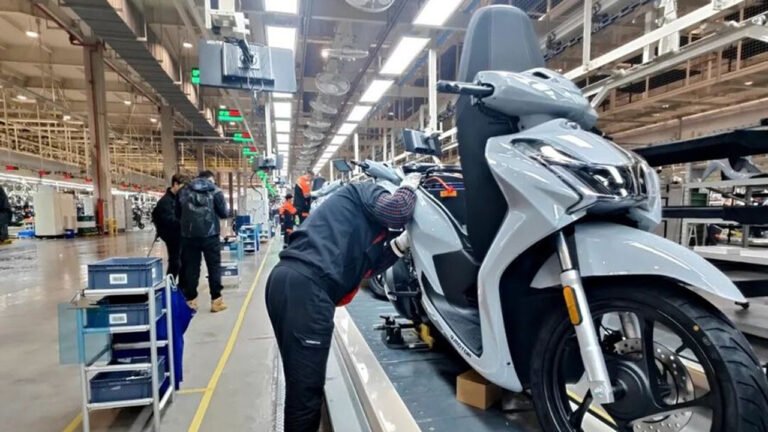
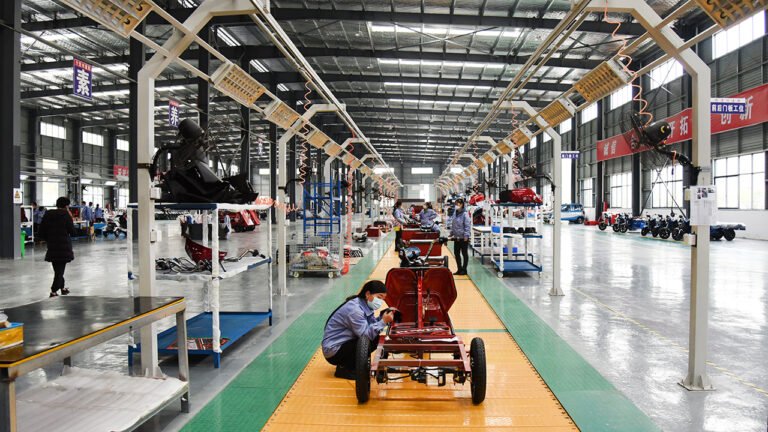
Tricycle Assembly Lines/Production Lines are Suitable to Produce/Assemble 3 wheeler, tricycles, and so on.(If customers request, we also can design the Production Line/Assembly Line suitable for 2 wheeler and 3 wheeler depends on exact vehicle models.)
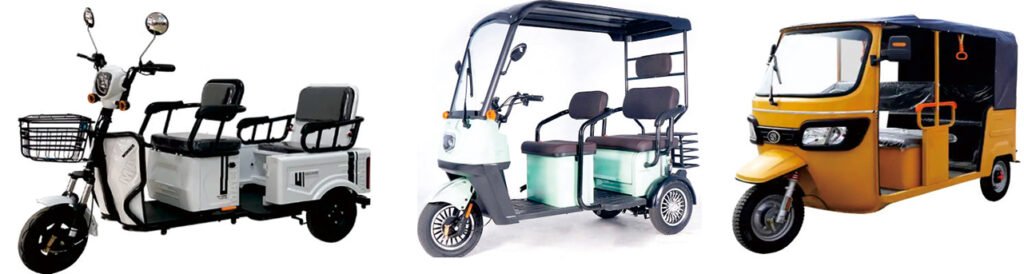
1. Passenger Tricycle Structure Description (Electric Type)
A typical electric passenger tricycle consists of six major systems: frame, body, running, power, electrical & control, and accessories.
1.1 Frame System
- Main frame: Welded with high-strength rectangular steel tubes, serving as the load-bearing skeleton.
- Chassis & rear axle: Connect rear wheels, motor and suspension, for power transmission and load support.
1.2 Body System
- Driver & passenger compartment: Open, semi-closed (with rain curtain) or fully closed (metal/plastic doors).
- Roof & doors: Hard top (metal/FRP) or soft top (canvas); 2-door or 4-door design.
- Interior: Foam seats, dashboard, carpet, sunshade and ventilation devices.
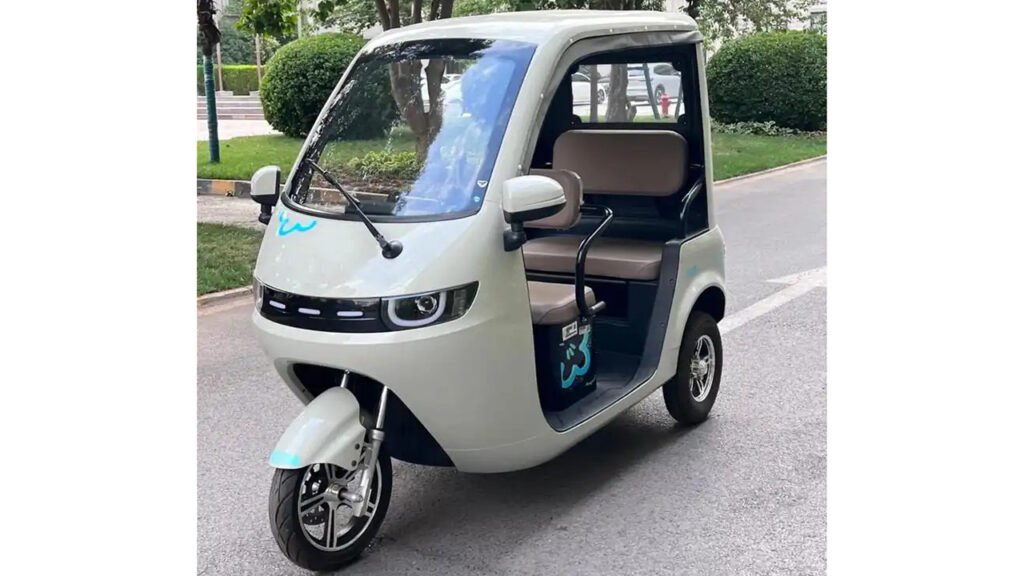
1.3 Running System
- Front wheel: Single wheel with front fork, hydraulic shock absorber and steering mechanism.
- Rear wheels: Dual wheels with leaf spring or hydraulic suspension and differential axle.
- Tires: Mostly 4.0–10 vacuum tires with steel or aluminum wheels.
1.4 Power System
- Motor: 400–1000W brushless DC motor, rear-mounted or mid-mounted drive.
- Battery: 48V/60V lead-acid or lithium battery, 45–120Ah, range 50–100km.
- Controller: Speed regulation, current limiting, reverse and protection functions.
1.5 Electrical & Control System
- Instrument: Voltage, power, speed and odometer display.
- Control: Handlebar (throttle/brake/steering), hand/foot brake, lights and horn.
- Braking: Front disc brake + rear drum brake, some with CBS combined braking system.
1.6 Accessories
Wiper, heater/fan, audio, reverse camera, spare tire, bumper.
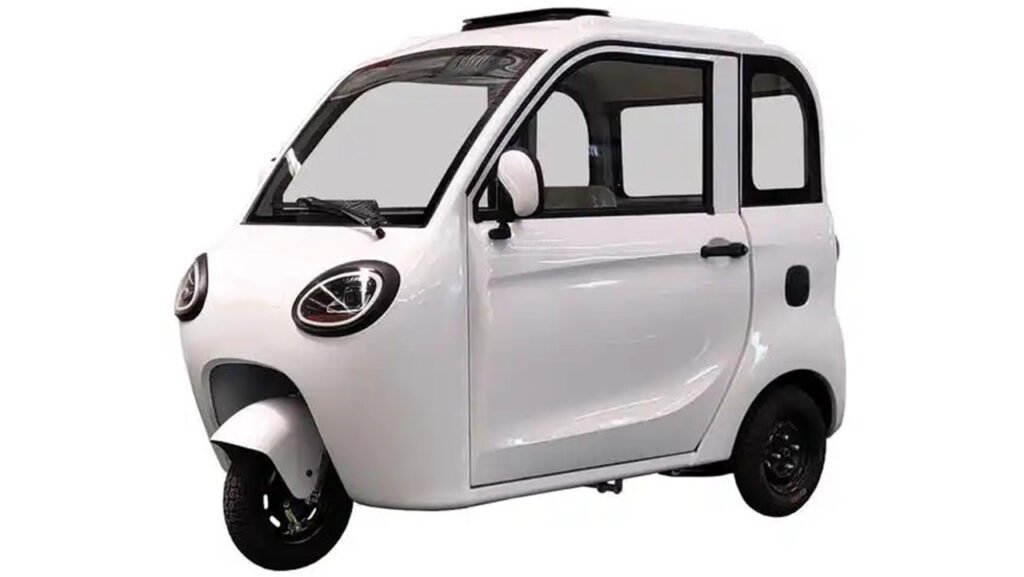
2. Production Line Description
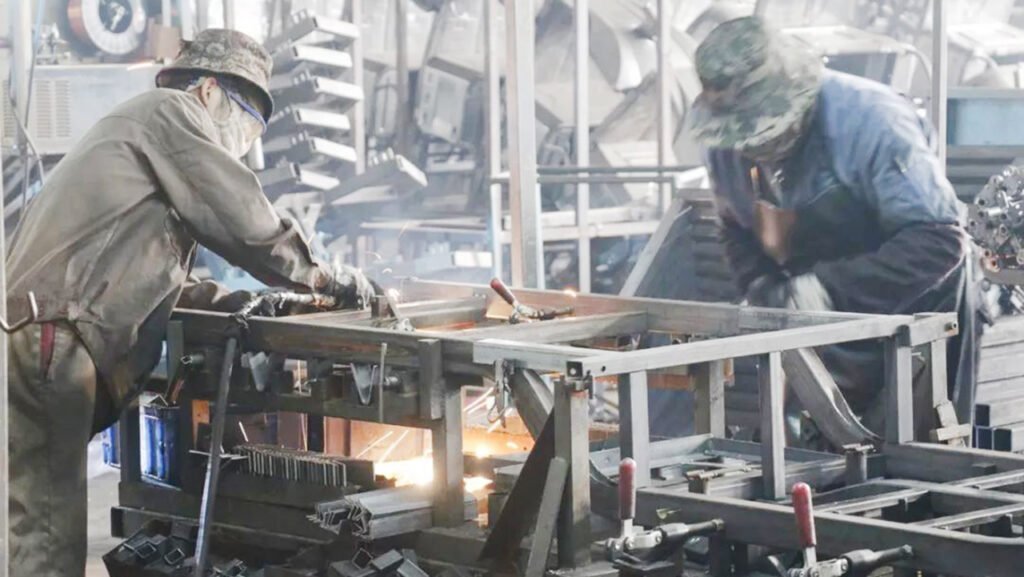
2.1 Frame Welding Line
- Processes: Pipe cutting → bending → manual/robotic welding → correction.
- Equipment: Pipe cutter, bender, welding robots, fixtures.
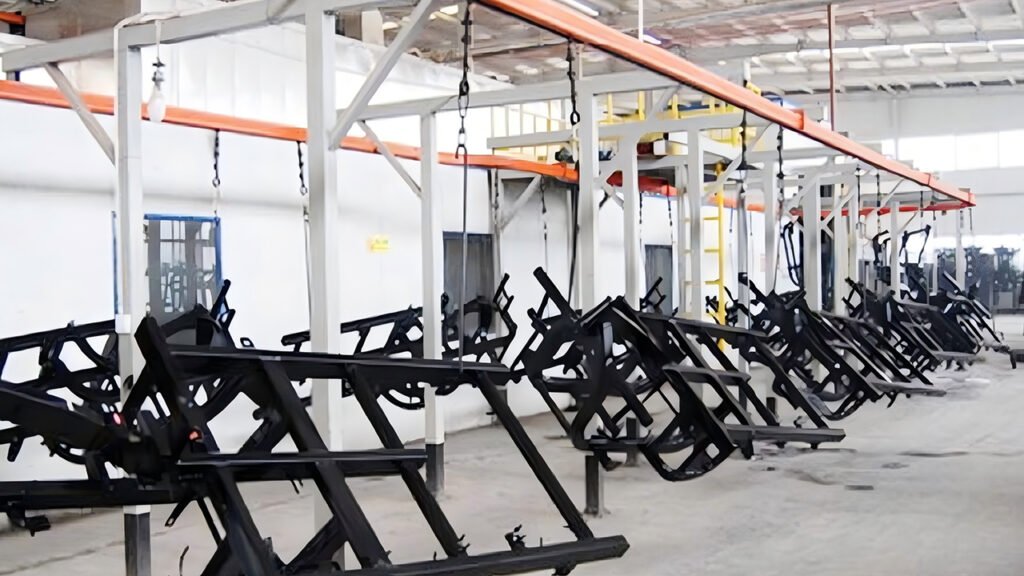
2.2 Painting Line
- Pretreatment: Degreasing → phosphating → cathodic electrodeposition.
- Spraying: Primer → topcoat → high-temperature curing.
- Environmental protection: Waste gas and wastewater treatment systems.
2.3 General Assembly Line
Mainly Sequential Assembly(or as customized assembly process):
- Chassis assembly: rear axle, motor, shock absorbers, suspension.
- Frame integration: chassis and frame connection.
- Body assembly: doors, roof, glass, interior parts.
- Electrical assembly: wiring, instruments, lights, controller.
- Battery & accessories: battery pack, seats, wiper, rearview mirrors.
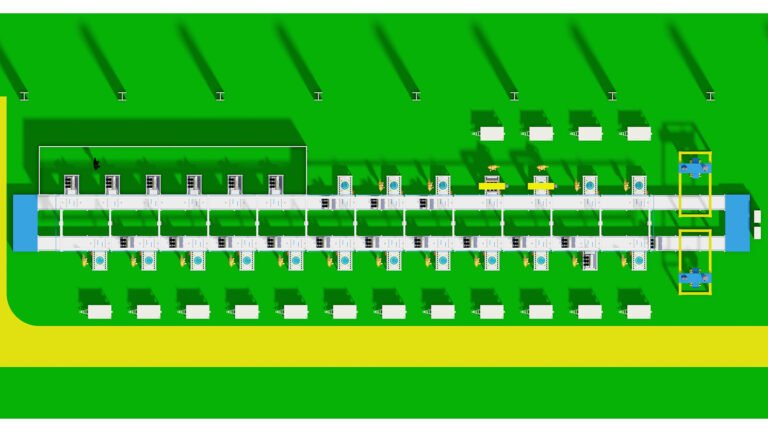
Slat Conveyor Line on the ground
Slat Conveyor Line under the ground
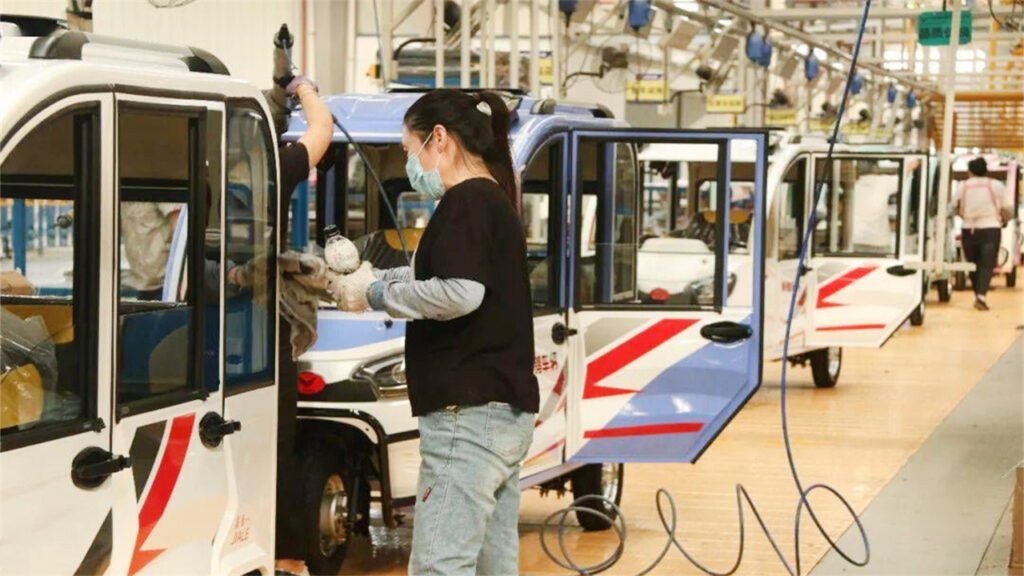
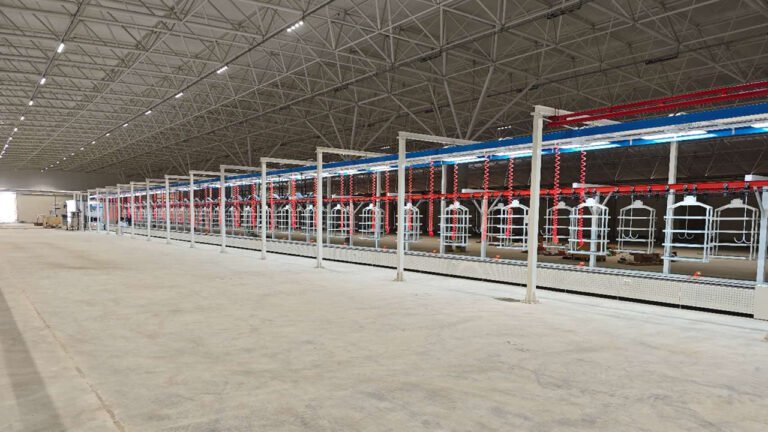
Overhead Conveyor
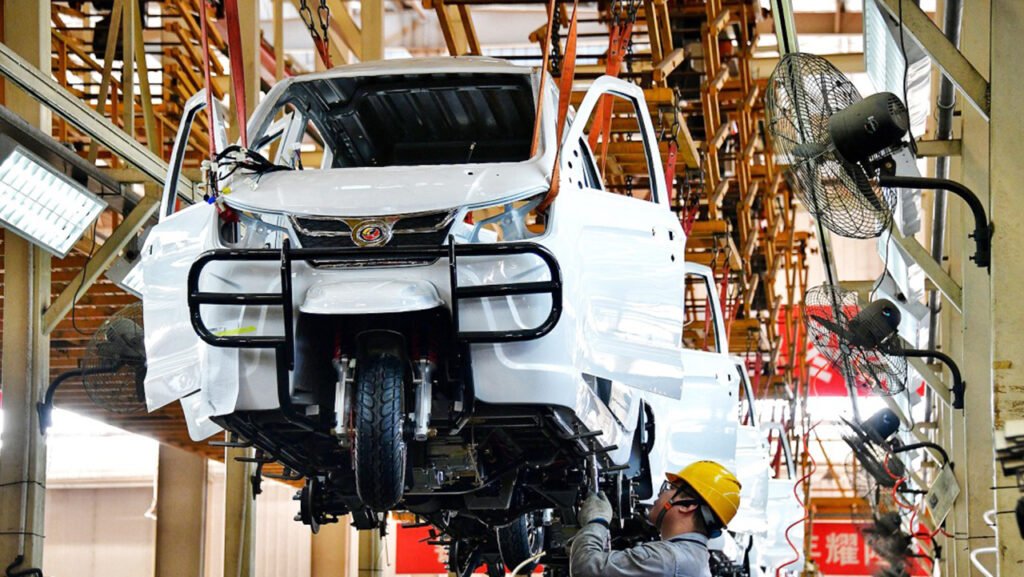
2.4 Inspection Line
- Performance test: Braking, lighting, speed, leakage test.
- Road test: Road simulation, abnormal noise, sealing, range sampling.

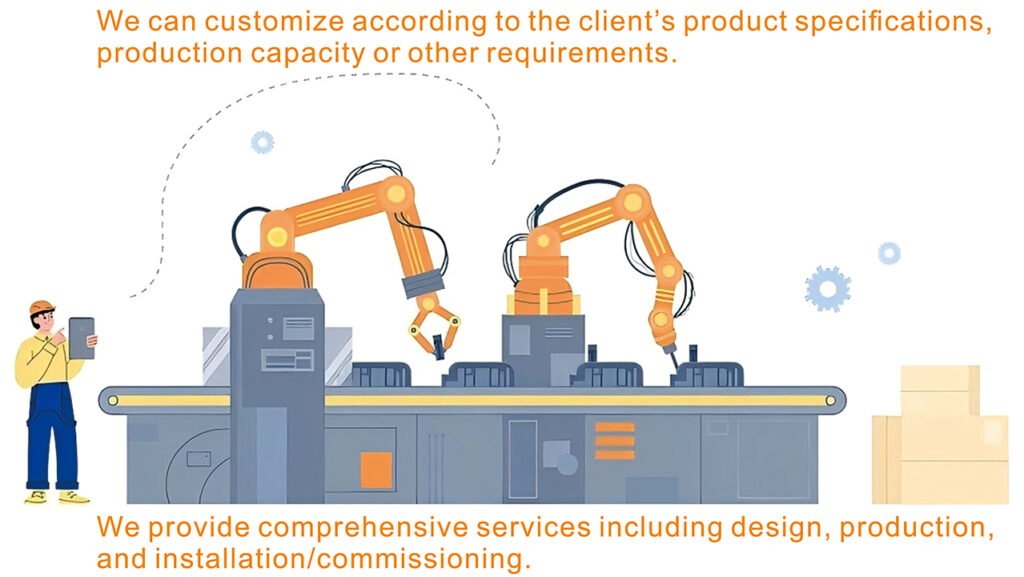
Please provide us with your vehicle models, annual production capacity and other relevant requirements. We will recommend the most suitable production line and complete solutions tailored to your needs.