E-bike Semi-Automatic Production Line—E-bike Production Lines
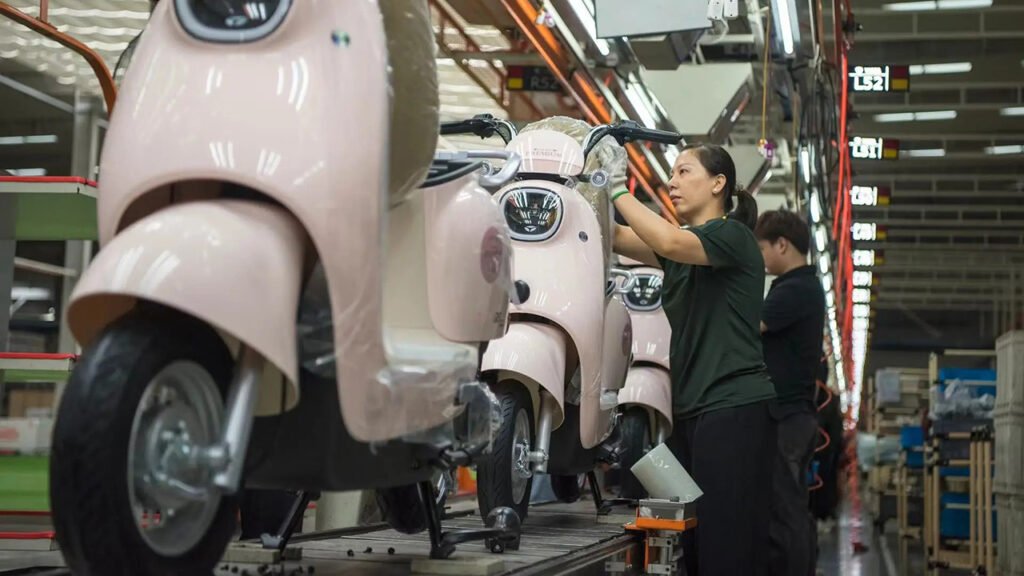
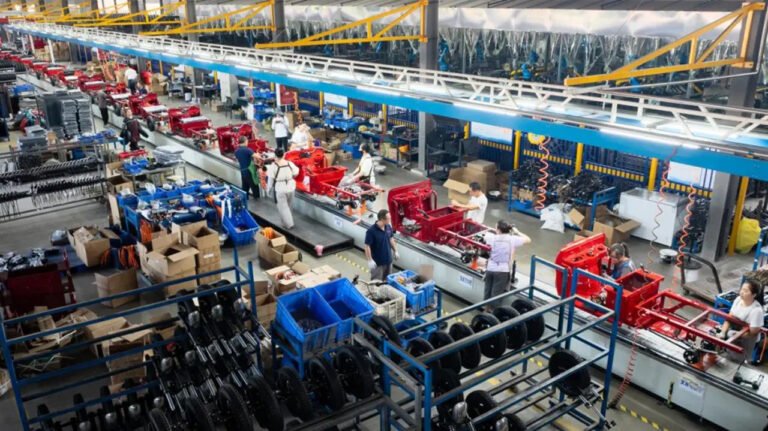
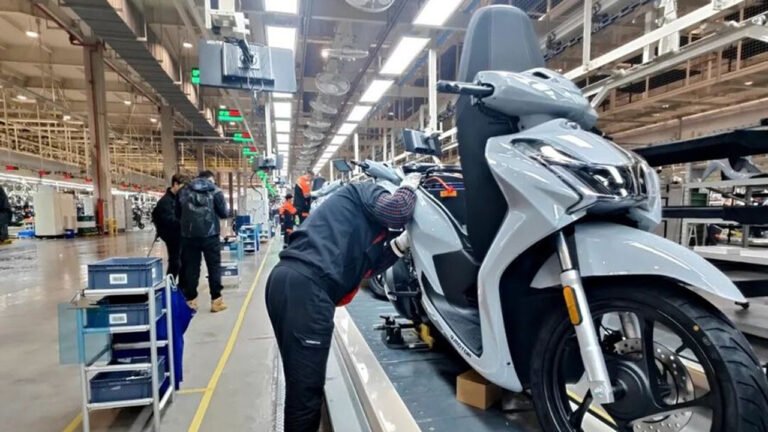
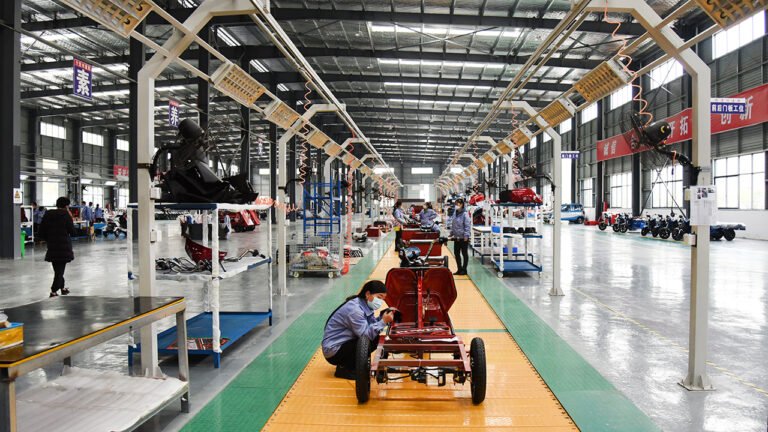
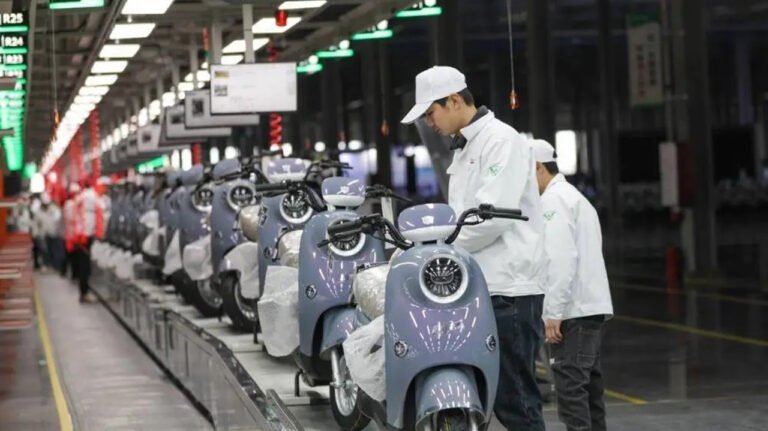
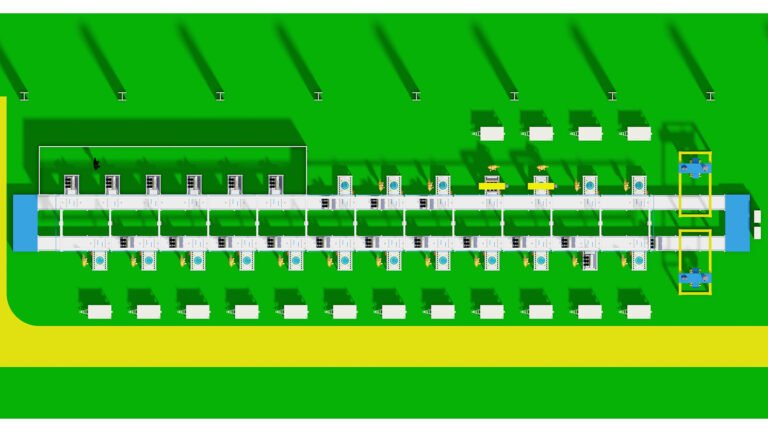
An E-bike semi-automatic line blends automation with manual labor for balanced efficiency. It uses machines for heavy, precise tasks (critical fastening) and humans for complex work (cabling, fitting covers). Key features include hybrid workstations, flexible components conveying , modular design, and limited data traceability. This “goldilocks” solution ensures quality and safety while retaining the flexibility to handle diverse models and market changes cost-effectively.
E-bike Production Lines are suitable to Assemble/Produce Electric 2-wheelers, 2 wheel Electric Motorcycles, 2 wheel Electric Scooters, 2 wheel Electric-cycles, 2 wheel E-Bikes, Electric bikes, Bicycles, Bikes, and so on. (Sometimes, suitable for the production of Tricycles.)
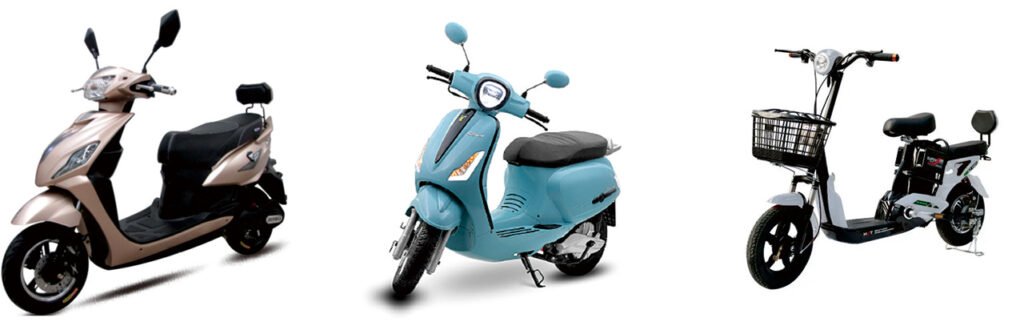
An E-bike semi-automatic production line is a mixed-mode assembly system that combines automated machinery with manual labor to assemble electric bicycles. It is designed to balance efficiency, flexibility, and cost, making it ideal for medium-volume production or factories with diverse product models.
Below is a detailed introduction and its key characteristics:
I. Introduction
In a semi-automatic line, the core philosophy is “machine-assisted, human-centered.” Heavy, repetitive, or precision-critical tasks (like pressing bearings or tightening crucial nuts) are handled by automated equipment. Complex tasks requiring dexterity, judgment, or flexibility (like routing cables or installing plastic covers) are performed by skilled workers. The line typically uses a slat chain conveyor to move the bicycle frames between workstations at a controlled pace.
II. Core Characteristics
1. Hybrid Workstation Configuration
- Description: The line is not fully automated; instead, it features a mix of manual benches and automated stations.
- Example: A worker manually installs the wiring harness at one station, then pushes the frame to the next station where an automatic pressing machine inserts the headset bearings without any manual force.
2. Automated Critical Fastening
- Description: While general assembly is manual, safety-critical bolts (brake discs, motor mounting bolts, stem bolts) are tightened using smart torque tools or single-axis automatic screwdrivers.
- Benefit: These tools provide real-time torque feedback and can be connected to a system to prevent missing or under-tightened bolts, ensuring safety compliance without full automation.
3. Flexible Material Handling
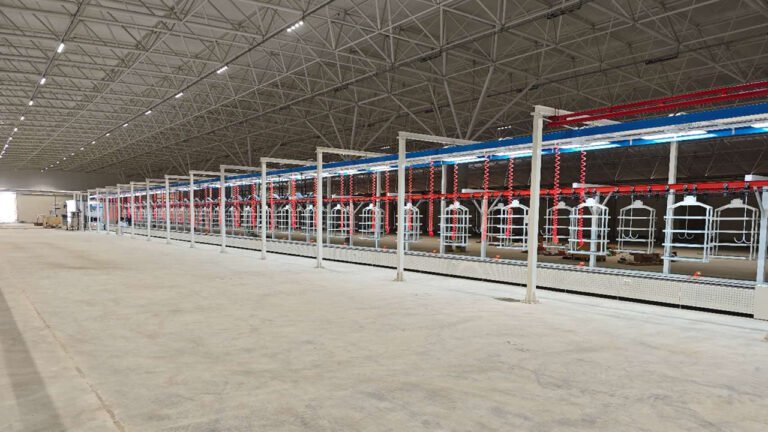
- Description: Material logistics are a mix of automated and manual. Components like covers or wheels are delivered to the line side by components overhead conveyors.
- Benefit: Reduces worker fatigue from walking to fetch parts while avoiding the high cost of a fully automated warehouse.
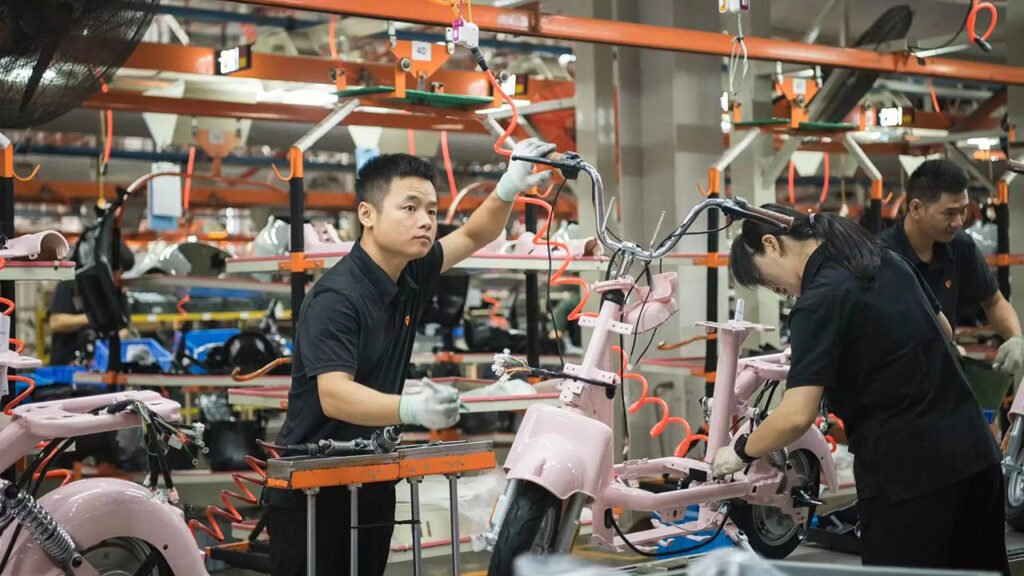
4. Human-Centric Complex Assembly
- Description: Tasks that require high flexibility are left to humans. This includes cable routing (threading brake lines through the frame), grease application, and fitting plastic body panels where fragile parts need a “soft touch” to avoid scratches.
- Benefit: Utilizes human dexterity where robots would be too expensive or difficult to program.
5. Modular and Scalable Design
- Description: The line is often built in modular sections. If a new model (e.g., a fat tire bike or a folding bike) is introduced, a new modular station can be added or existing fixtures can be quickly swapped out.
- Benefit: Offers the flexibility to adapt to market changes without overhauling the entire line.
6. Limited Data Acquisition (Quality Traceability)
- Description: Unlike fully automated Industry 4.0 lines that record every move, semi-automatic lines typically only record data from critical automatic stations.
- Example: When the automatic bearing press operates, it records the “pressure-displacement curve” for that frame and stores it with the frame’s barcode. Manual steps are often verified by scanning a barcode to confirm completion.
7. Balanced Production Takt
- Description: The line speed is usually set by the slowest manual station. Accumulation rollers or buffers are placed between automated and manual sections to absorb slight timing differences.
- Benefit: Prevents the machine from running too fast for the workers, maintaining a smooth, stress-free workflow.
III. Summary
The E-bike semi-automatic production line is the “goldilocks” solution for many mid-tier manufacturers. It invests in automation where it matters most for safety and quality (tightening, pressing), while retaining human flexibility for the ever-changing design and complex assembly tasks that define the modern E-bike market.
How to set up an E-scooter Assembly Line factory?
Looking for VIN marking machines? Contact us for more information.
Looking for air compressors? Contact us for more information.
Need assembly tools or auxiliary equipment? Contact us for more information.
Looking for E-scooter components? Contact us for more information.