Structure of 12kV Indoor Vacuum Circuit Breaker:
It consists of three main parts: the vacuum interrupter (core), the embedded pole (insulation), and the spring operating mechanism (power). The interrupter uses CuCr contacts in a vacuum to extinguish arcs. The pole encapsulates the interrupter in epoxy resin for protection and insulation.
Production Line:
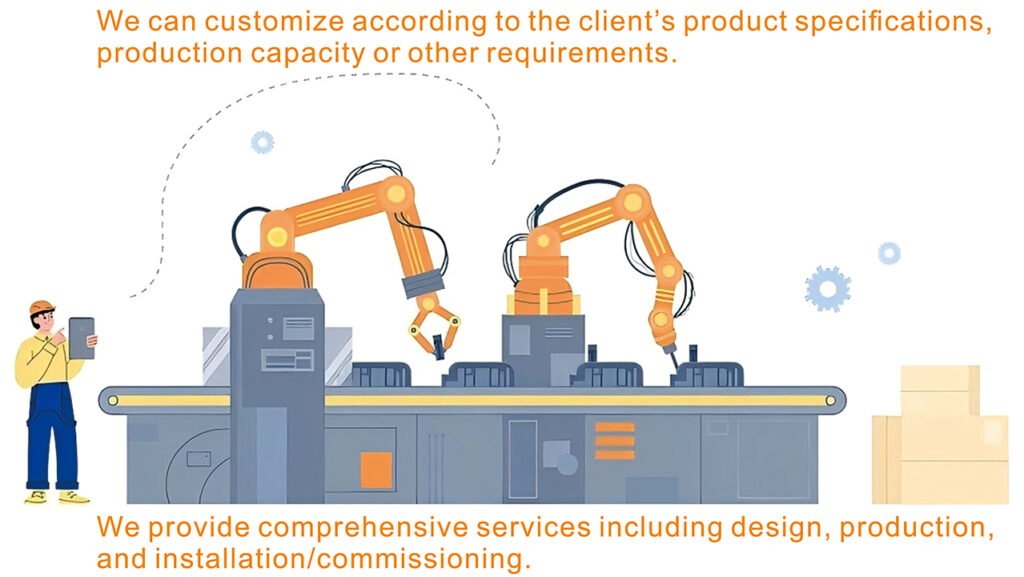
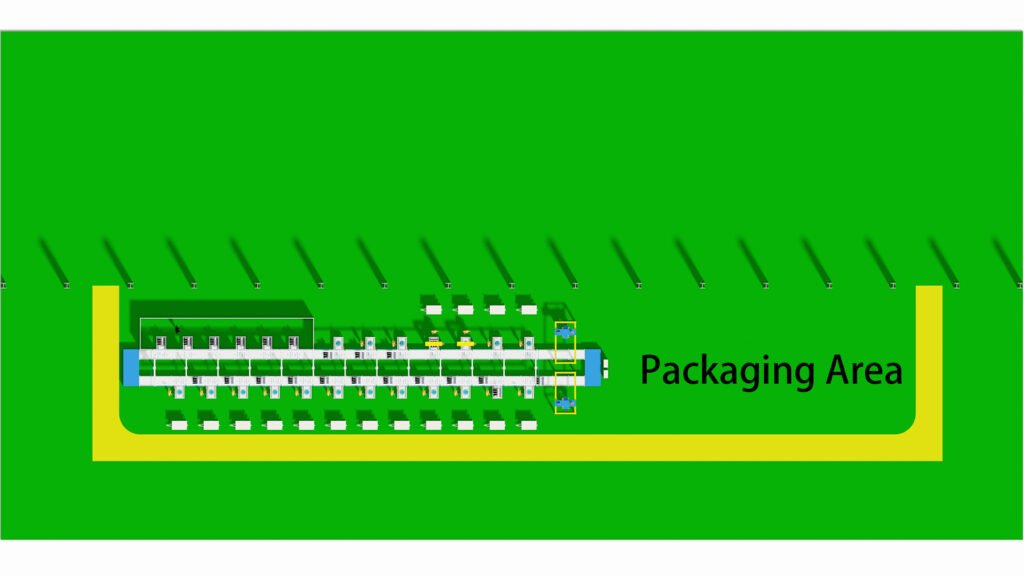
The modern line is automated and flexible. Processes include robotic assembly, automatic burn-in, and in-line testing (mechanical characteristics, resistance, high voltage). An MES system manages quality traceability and data in real-time.
Vacuum Circuit Breaker Assembly Lines are suitable to Assemble/Produce Vacuum Circuit Breakers. (If clients have more requirements or want to produce the other Circuit Breakers, welcome to contact us.)
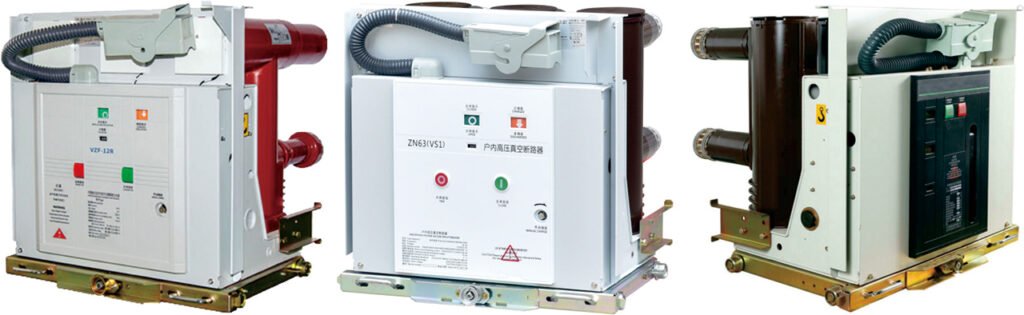
Structure of Indoor Vacuum Circuit Breaker (take 12kV type as an example)
The 12kV indoor vacuum circuit breaker typically adopts an integrated design, where the operating mechanism and the arc extinguishing chamber are arranged front and back in one unit. This design is compact and has high transmission efficiency. Its core structure mainly consists of the following three parts:
1. Vacuum Interrupter (The Core Component)
This is the core of the circuit breaker, used to make and break the current.
- Housing and Sealing: It uses a ceramic or glass vacuum interrupter with a middle seal, maintaining a high vacuum inside.
- Contact Structure: It commonly uses Copper-Chromium (CuCr) contact materials and a cup-shaped axial magnetic field contact structure. This design offers strong breaking capacity, low current chopping level, long electrical life, and fast dielectric strength recovery after arcing.
- Key Parameters: For the 12kV level, the typical contact gap is 11±1mm, and the overtravel is 3.3±0.6mm.
2. Embedded Pole and Main Circuit (Insulation and Conductive Parts)
This is the mainstream design in recent years, integrating the primary circuit into one unit.
- Embedded Pole Technology: It uses the APG (Automatic Pressure Gelation) process to integrally cast the vacuum interrupter and the main conductive circuit in epoxy resin, forming an integrated embedded pole. This structure effectively prevents external impact and environmental pollution from affecting the interrupter, achieving maintenance-free operation for the primary circuit.
- Main Circuit Layout: The main circuit is usually a three-phase, floor-standing structure arranged longitudinally. The interrupter is fixed within the insulation part via the upper and lower terminals, and the moving conductive rod is connected to the lower terminal through a flexible connection.
3. Spring Operating Mechanism (The Power Component)
It provides the power for opening and closing the breaker and ensures the specified operating speed.
- Structure Type: It uses a planar spring energy storage operating mechanism, arranged front-to-back with the breaker body in one unit. This reduces intermediate transmission parts, lowering energy consumption and noise.
- Operation Mode: It features both electric energy storage and manual energy storage functions. The mechanism box panel is equipped with open and close buttons, a manual energy storage operation hole, and an energy storage status indicator.
- Intelligent Expansion: Modern intelligent breakers also integrate online monitoring functions to monitor the open/close coil current and mechanical characteristics. They also feature wireless temperature measurement, a Human-Machine Interface (HMI), and IEC61850 communication protocol.
| Core Component | Key Technology & Material | Main Function & Advantage |
|---|---|---|
| Vacuum Interrupter | Ceramic housing, CuCr contacts, cup-shaped axial magnetic field structure | High insulation, strong arc extinguishing, long life, low chopping current |
| Embedded Pole | APG process, integral epoxy resin casting | Impact resistant, pollution resistant, maintenance-free primary circuit |
| Spring Operating Mechanism | Planar spring energy storage, front-back integrated design | High transmission efficiency, low energy consumption, supports intelligent monitoring |
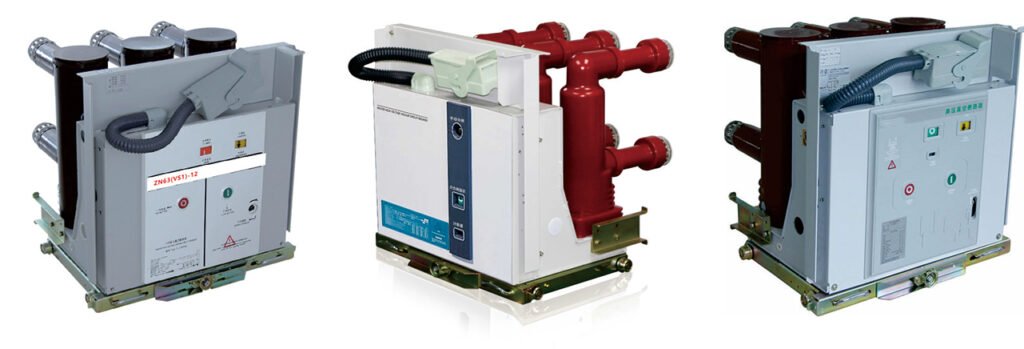
Detailed Explanation of the 12kV Vacuum Circuit Breaker Modern Production Line
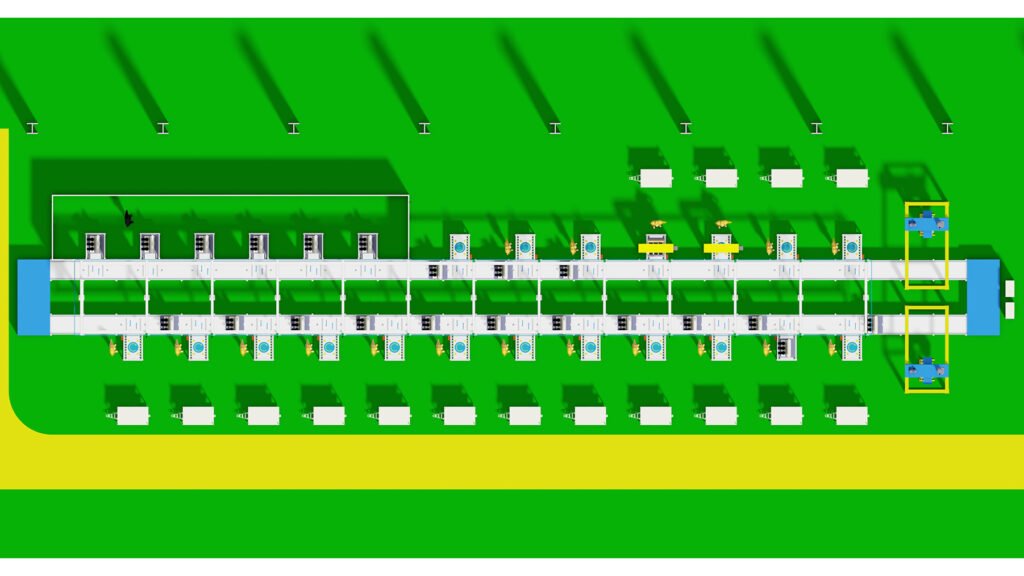
The modern production line for 12kV vacuum circuit breakers has evolved into an automated, flexible, and information-based intelligent line. Its goal is to improve production efficiency, ensure product consistency, and enable quality traceability.
1. Overall Production Line Design Concept
The production line adopts a modular and flexible design concept. It can handle the mixed production of multiple specifications and models, supporting one-click switching or QR code switching to produce different products.
2. Main Production Process Flow
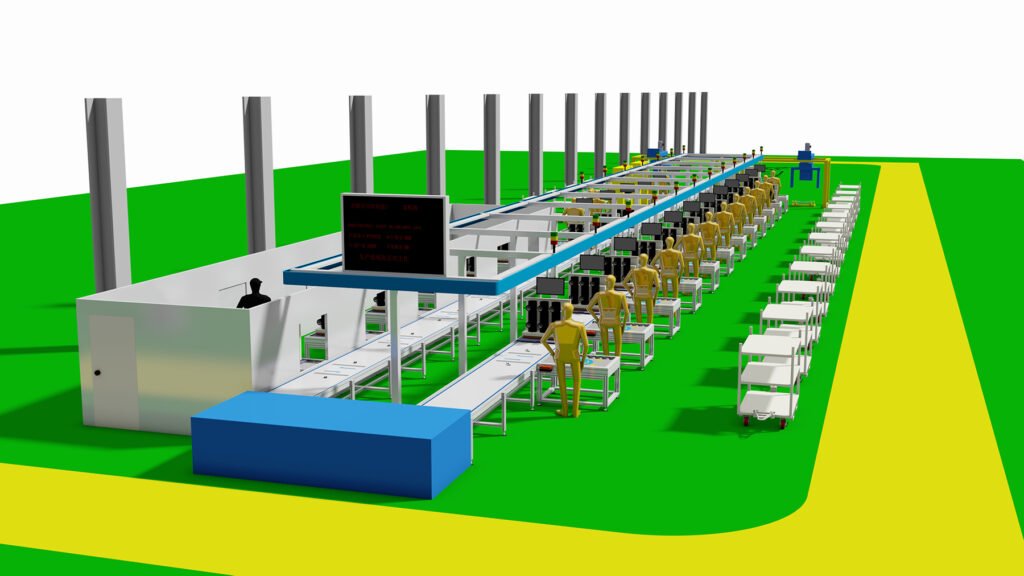
A complete 12kV vacuum circuit breaker automatic assembly and testing line usually includes the following functional areas in sequence:
- Automatic Feeding Area: AGV (Automated Guided Vehicle) logistics and gantry-type automatic feeding are used to transport parts to the starting point of the line; Or manual feeding.
- Main Body Assembly Area:
- Insulation Cylinder Assembly: Assemble the epoxy resin insulation parts.
- Interrupter Assembly: Install the vacuum interrupter into the embedded pole or insulation cylinder.
- Robotic Screwing: Multi-axis robots automatically tighten bolts in critical areas to ensure precise torque.
- Mechanical Parameter Initial Adjustment Area:
- Perform initial adjustments on key mechanical parameters like contact gap, overtravel, and total travel for the assembled breaker.
- Automatic Burn-in/Exercise Area:
- The newly assembled breaker undergoes a certain number of no-load operations (burn-in) to stabilize mechanical fit and detect early failures.
- In-line Testing Area:
- Mechanical Characteristics Test: Automatically measures key parameters like open/close speed, time, synchronism, and contact bounce.
- Circuit Resistance Test: Measures the resistance of the main conductive circuit to ensure good contact.
- Power Frequency Withstand Voltage Test: Applies high voltage to verify insulation level and vacuum integrity.
- Contact Arm and Chassis Assembly Area (for withdrawable breakers):
- Install the contact arms/fingers, assemble the chassis, and complete the wiring.
- Comprehensive Testing and Offline Area:
- Perform comprehensive testing of the secondary circuit, and assemble the external covers.
- Automatic offline and packaging via gantry system, then transported to the finished goods warehouse.
3. Intelligent Control System
- MES System Connected to ERP: Production data is synchronized in real-time to the central control platform, enabling quality traceability, barcode identification, component life monitoring, and material shortage alerts.
- Big Data Cloud Platform: Optional features include intelligent energy analysis and energy-saving management systems, as well as big data cloud platforms for smart equipment services, enabling remote equipment maintenance and automatic optimization of process parameters.
4. Production Line Capacity and Parameters
- Production Takt/Cycle: The daily capacity of a typical automated line can reach 30 units/day or 50 units/day OR as customized.
- Compatibility: It is compatible with various current/breaking capacity specifications.