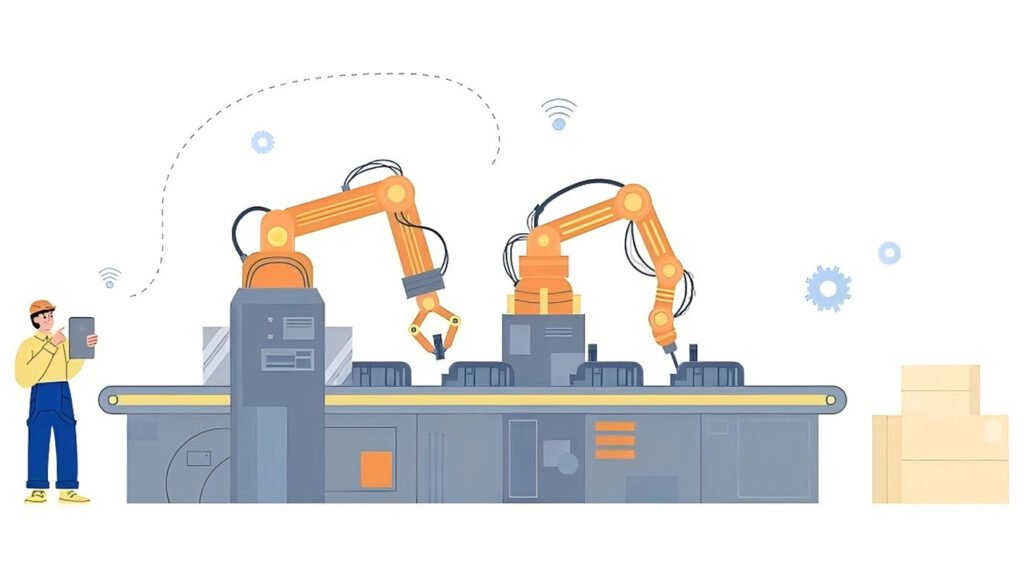
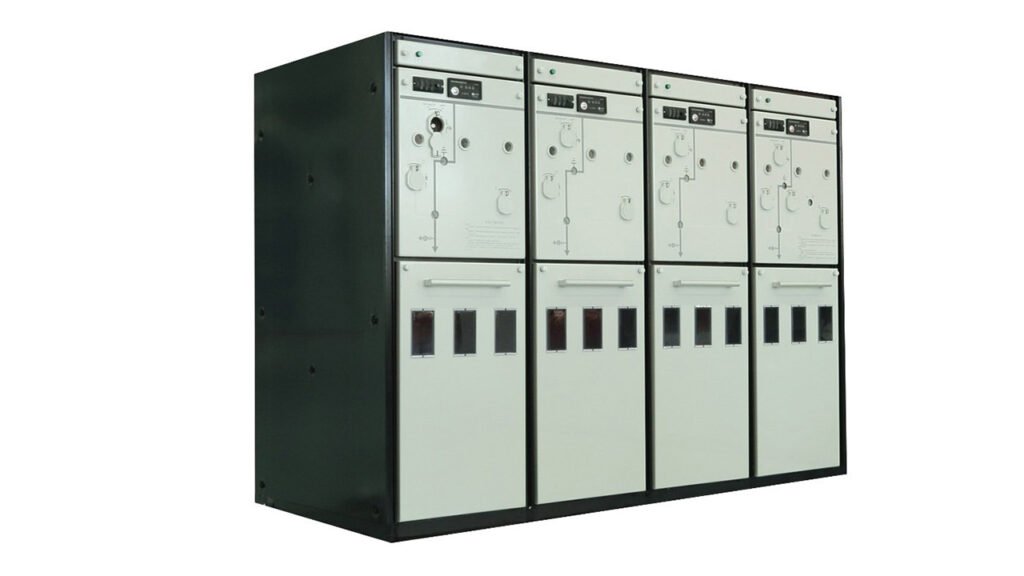
A ring main unit is a compact, metal-enclosed switchgear for 10–24kV distribution networks. It consists of switch, fuse, mechanism and cable compartments, with load break switches, earthing switches, fuses and busbars. It features small size, high safety, long maintenance-free life and flexible networking.
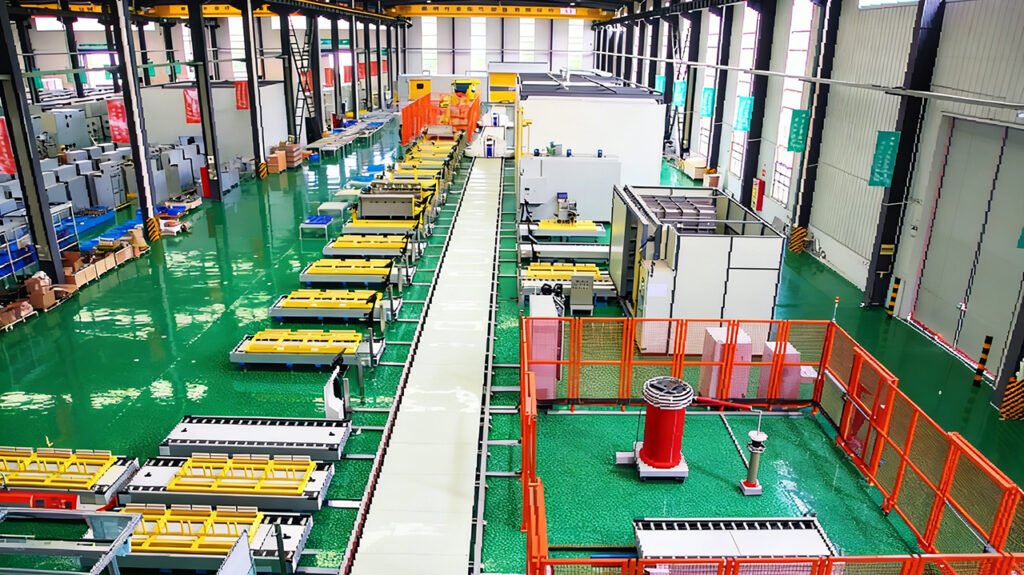
The production line covers sheet metal processing, assembly, insulation treatment, gas charging, electrical testing and packaging. Key processes include welding, leak detection, withstand voltage and partial discharge tests, ensuring reliability and quality.
Ring Main Unit Assembly Lines are suitable to Assemble/Produce Ring Main Units(RMUs). (If clients have more requirements or want to produce the other Ring Main Units, welcome to contact us.)
I. Structure of Ring Main Unit (RMU)
Ring Main Unit (RMU) is a metal-enclosed switchgear used in 10–24kV ring distribution networks, mostly adopting a modular compartment design, usually divided into four compartments:
- Switch Compartment (including Busbar Area)Sealed metal shell (3mm cold-rolled steel plate / stainless steel), built-in load break switch, earthing switch, main / branch busbars. SF6 RMU has a sealed gas compartment, while air-insulated RMU adopts air insulation with partitions. An explosion-proof pressure relief channel is usually set at the rear.
- Fuse CompartmentForms an F-C combination protection with the load break switch (mainly for transformer circuits). High-voltage current-limiting fuses are installed in epoxy cast insulation cylinders. After fusing, the striker triggers the load break switch to open, preventing fault expansion.
- Operating Mechanism CompartmentLocated on the front, equipped with a spring energy storage mechanism (manual / electric), with complete mechanical interlocks (prevent misoperation, live earthing, closing onto earthing). An observation window shows the switch position.
- Cable Compartment (Base Frame)Installs cable terminals, earthing bars, current / voltage transformers. The bottom has a removable cover plate for cable access, with protection grade IP3X or above.
Core components: load break switch, earthing switch, current-limiting fuse, copper busbar, CT/VT, interlock device, insulation medium (air/SF6/dry nitrogen).
II. Core Characteristics of RMU
- Compact size, small footprintModular design saves more than 50% space compared with traditional switchgears, suitable for residential areas, power distribution rooms and box-type substations.
- High reliability and safetyFully enclosed structure, dustproof and moisture-proof; forced anti-misoperation mechanical interlocks; excellent insulation and arc-extinguishing performance of SF6; directional pressure relief in case of failure to protect personnel and equipment.
- Long maintenance-free periodUnder normal working conditions, the gas sealing life of SF6 RMU can reach 15–20 years without frequent maintenance; air-insulated RMU also has less maintenance than oil-immersed equipment.
- Easy operation, flexible networkManual / electric operation available, fast switching; standard inlet/outlet interfaces, convenient to form ring or radial network, easy expansion.
- Balanced cost and energy efficiencyLower cost than circuit breaker cabinets, suitable for branch and distribution transformer protection; low loss, energy-saving in long-term operation.
III. Detailed Description of RMU Production Line
1. Overall Composition of the Production Line
- Line body: rails + RGV shuttles for automatic workpiece transfer;
- Station modules: shell processing, circuit assembly, mechanism installation, gas charging/sealing, comprehensive testing;
- Control system: MES + PLC for production scheduling, parameter monitoring and traceability;
- Environment: clean workshop (air RMU), high-air-tightness assembly room (SF6 RMU, humidity <60%).
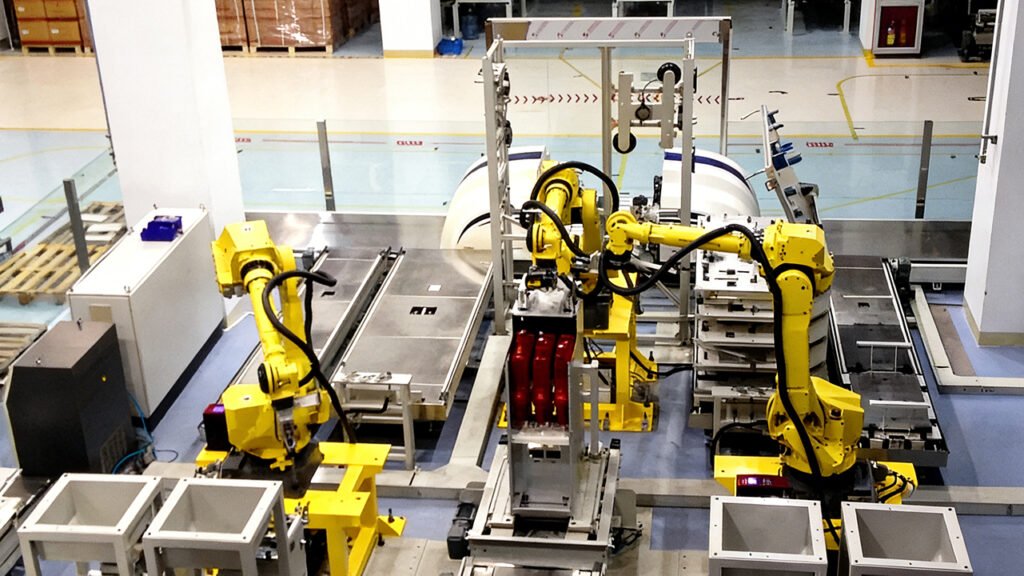
2. Complete Production Process
- Raw material & sheet metal processingLaser cutting of cold-rolled steel / stainless steel → CNC bending → robotic welding / riveting; air-tightness test (helium leak detection) after welding; surface spraying for corrosion protection.
- Functional circuit pre-assemblyAssembly of load break switch, earthing switch and contact system; copper busbar processing, tin coating and insulation covering; installation of transformers.
- Operating mechanism installation & commissioningFixing spring mechanism, connecting transmission rods; adjusting stroke and synchronism; 100% valid mechanical interlock test.
- Insulation treatment & sealingInsulation withstand voltage pretreatment for air RMU; SF6 RMU: vacuum pumping → SF6 charging to rated pressure (e.g. 0.04–0.05MPa gauge pressure) → standing leak detection.
- Electrical secondary assemblyInstallation of meters, relays, intelligent terminals and aviation plugs; wiring and checking.
- Comprehensive performance testing
- Mechanical characteristics: opening/closing speed, stroke, synchronism, mechanical life;
- Electrical: power frequency withstand voltage (42kV/1min), lightning impulse, partial discharge (PD<10pC);
- Gas: SF6 moisture test, leakage rate (annual leakage <0.5%);
- 100% verification of interlock functions.
- Factory inspection, marking & packagingAppearance inspection, nameplate printing, protective packaging; with certificate and test report.
3. Key Equipment & Automation Configuration
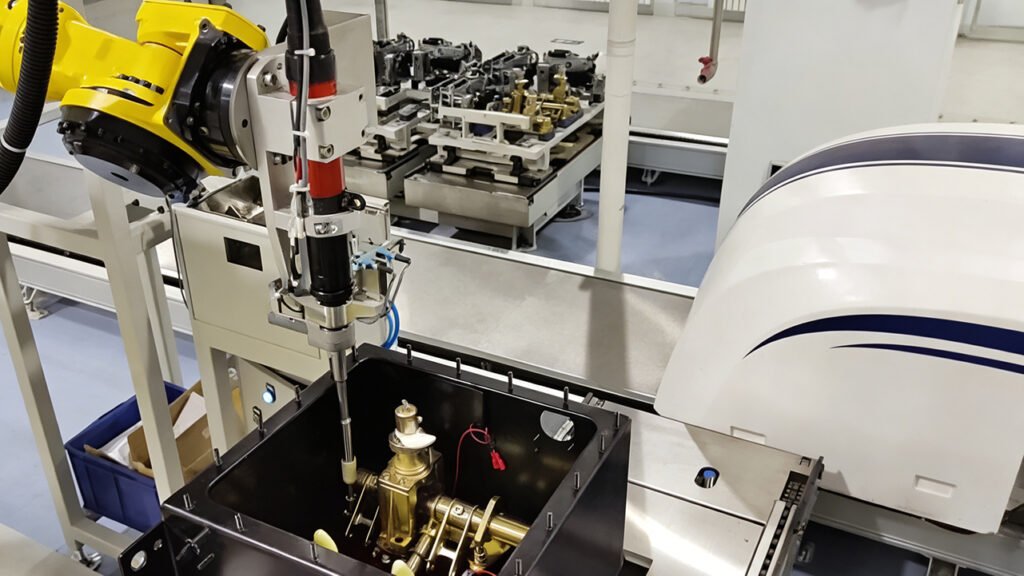
- Shell: laser cutting machine, CNC bending machine, robotic welding system, helium mass spectrometer leak detector;
- Assembly: RGV, servo positioner, torque wrench (data upload);
- Testing: comprehensive characteristic test bench, power frequency withstand voltage tester, partial discharge tester, SF6 density relay calibrator;
- Information: MES system records process, parameters, personnel and equipment for full life cycle traceability.
4. Flexibility & Quality Control Key Points
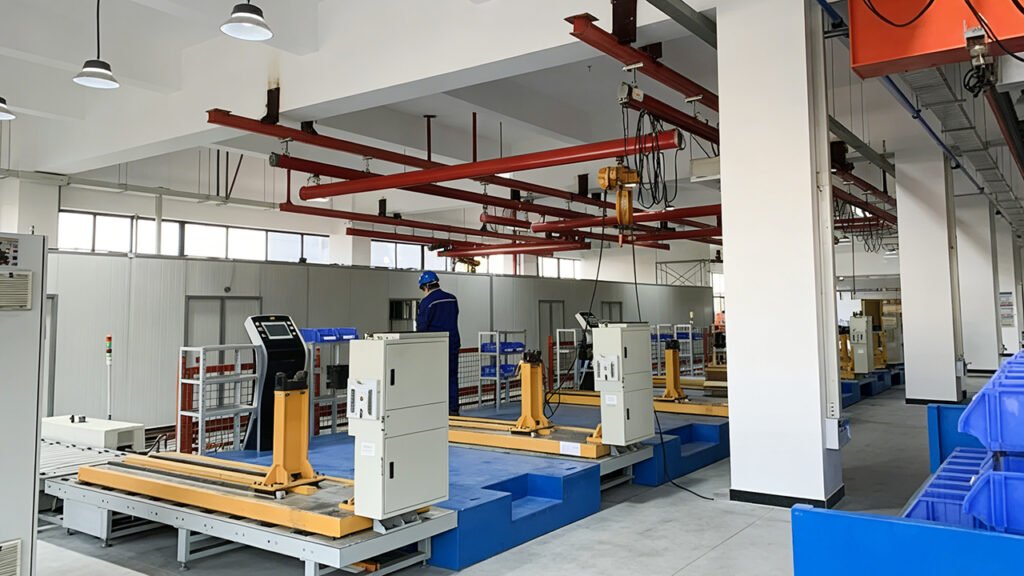
- The production line is compatible with different cabinet types (load switch cabinet, F-C cabinet, metering cabinet) with quick changeover;
- Error-proofing at key stations: workpieces cannot proceed without interlock test;
- 100% helium leak detection for gas RMU;
- Withstand voltage and partial discharge tests conducted in shielding room to avoid external interference.

We can customize according to the client’s product specifications, production capacity or other requirements.
We provide comprehensive services including design, production, and installation/commissioning.