

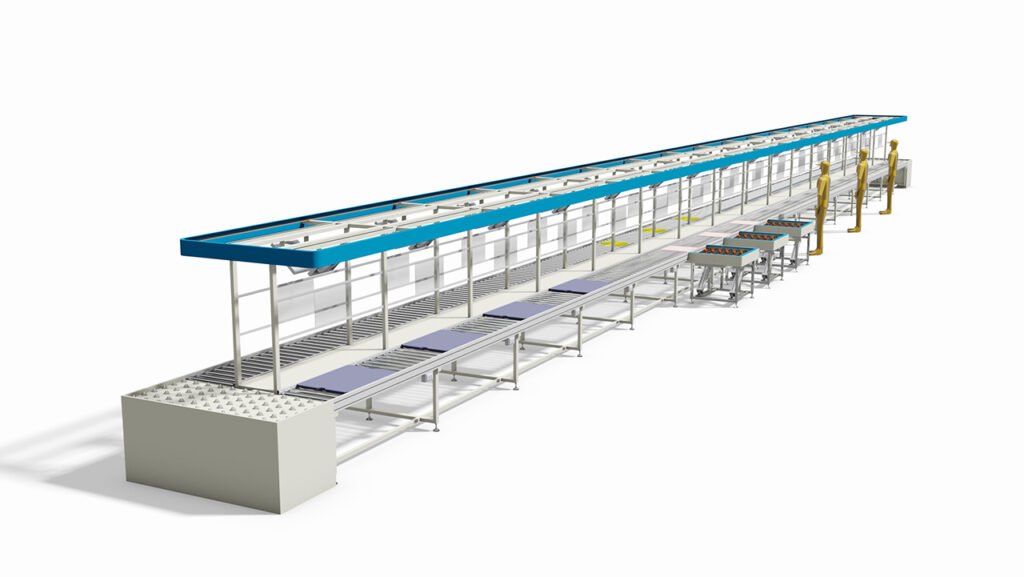
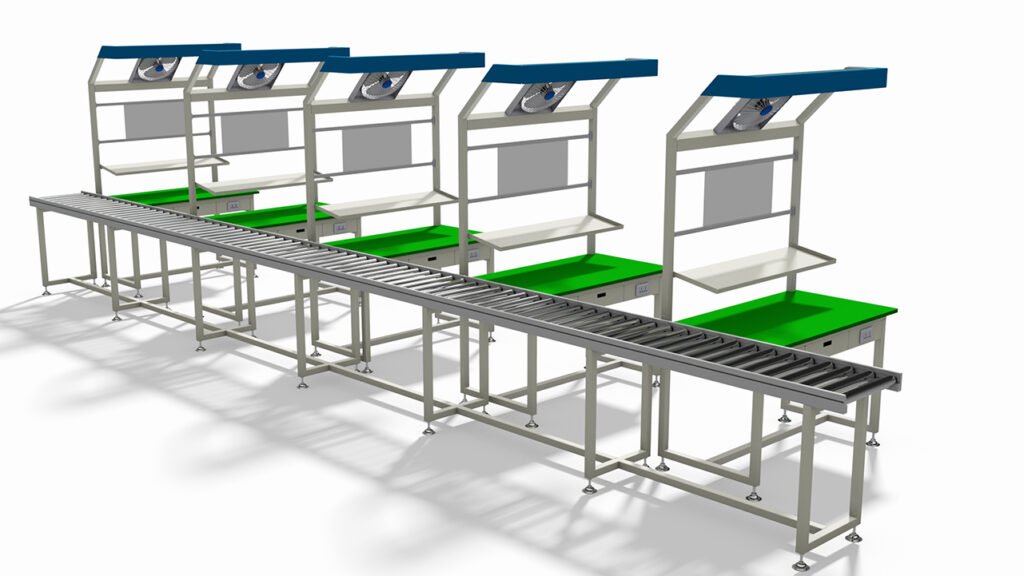
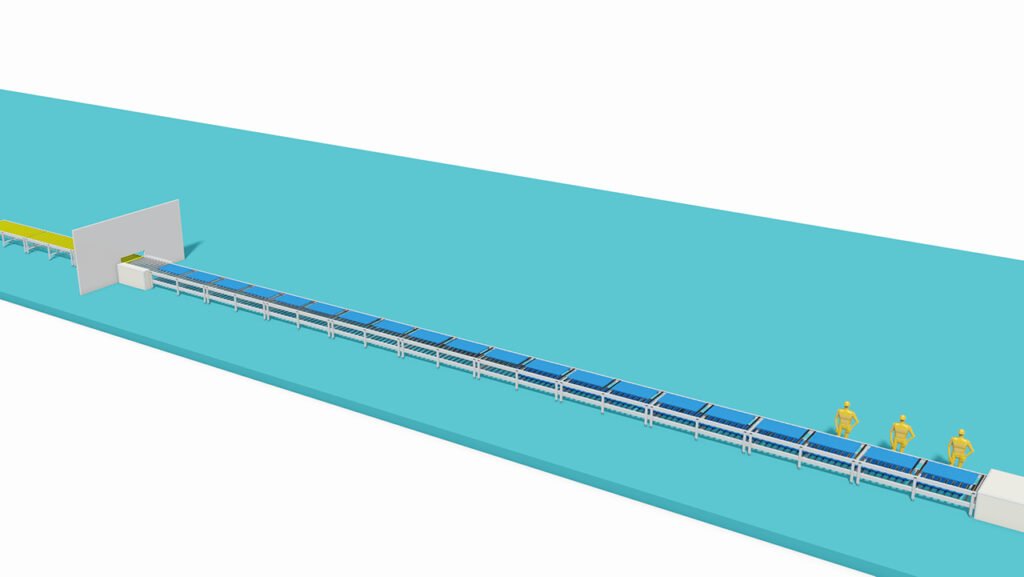
Roller conveyors are suitable for horizontal conveying of workpieces with rigid and flat bases, mainly adapting to products such as machinery and electromechanics, auto parts, home appliances and furniture. They are divided into light, medium and heavy types; by drive mode, they can be unpowered and powered; by material, there are three types: carbon steel, stainless steel and plastic. Operation requires equipment inspection and standardized workpiece placement; daily maintenance needs lubrication and cleaning. Avoid conveying unsuitable products such as soft packages and irregular small parts; stop the machine for inspection when faults occur during operation to ensure safety and stability.
Roller Conveyor Lines are suitable to Assemble/Produce General Machinery/Electromechanical Products, Automotive and Auto Parts Industry, Home Appliance and Furniture Industry, Logistics/Packaging/Warehousing Supporting and others. (If clients have more requirements or want to produce products, welcome to contact us.)
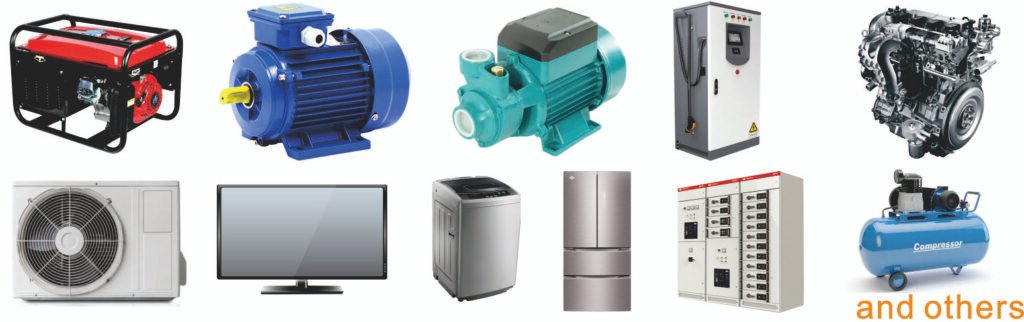
What Products Are Suitable for Assembly on Roller Conveyors?
Roller conveyors are highly versatile conveying equipment in production and assembly, primarily suitable for products with rigid bases that can be placed and conveyed horizontally, especially heavy, regularly sized workpieces. Their applicable scenarios are clearly defined by product type and industry. Below are the mainstream applicable product categories, core features, as well as unsuitable scenarios for selection reference:
I. General Machinery/Electromechanical Products (Core Application)
Most of these products feature rigid metal structures with flat bases, and can be adapted for weights ranging from tens of kilograms to several tons (on heavy-duty roller conveyors), making them the main application in assembly lines:
- Small and medium-sized equipment: water pumps, motors, reducers, air compressors, small machine tools, fans, distribution boxes/switchgear, charging piles, frequency converters;
- Hardware machinery: gearboxes, bearing blocks, hydraulic stations, small construction machinery parts (valve blocks, oil cylinders for excavators/loaders);
- Tools: large electric tools (cutting machines, electric hammers), industrial bench drills, grinders.
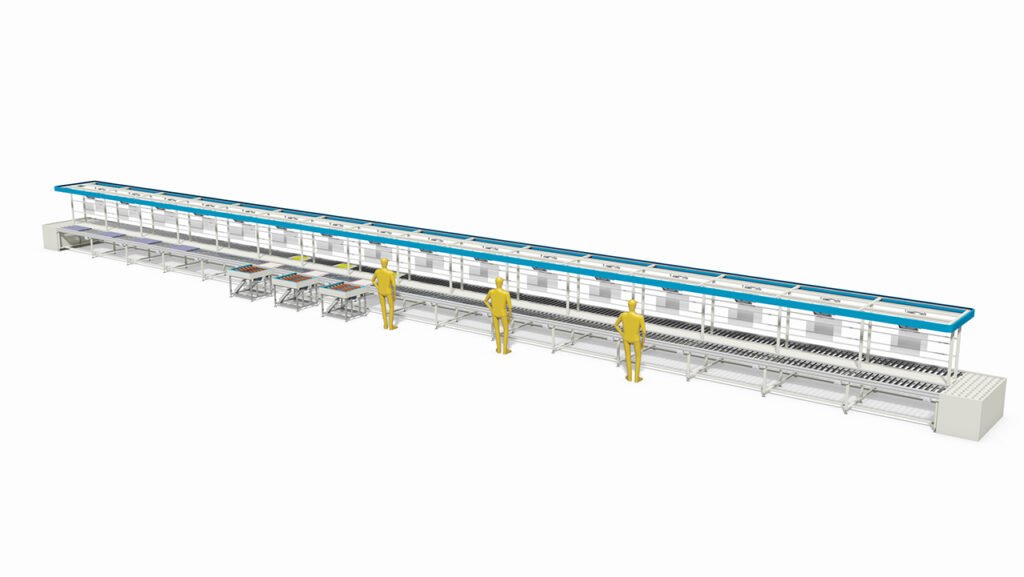
II. Automotive and Auto Parts Industry (High-Frequency Application)
Roller conveyors are the core conveying carrier in automotive production lines, applicable for everything from parts to pre-assembly of complete vehicles:
- Auto parts: engine assemblies, gearboxes, chassis parts (suspensions, axle housings), car doors/frames, wheel hubs, rigid bumpers, battery packs;
- Complete vehicle-related: assembly of small electric vehicles/low-speed vehicles, pre-assembly of automotive interiors (instrument panels, seats), workpiece transfer in auto maintenance workshops.
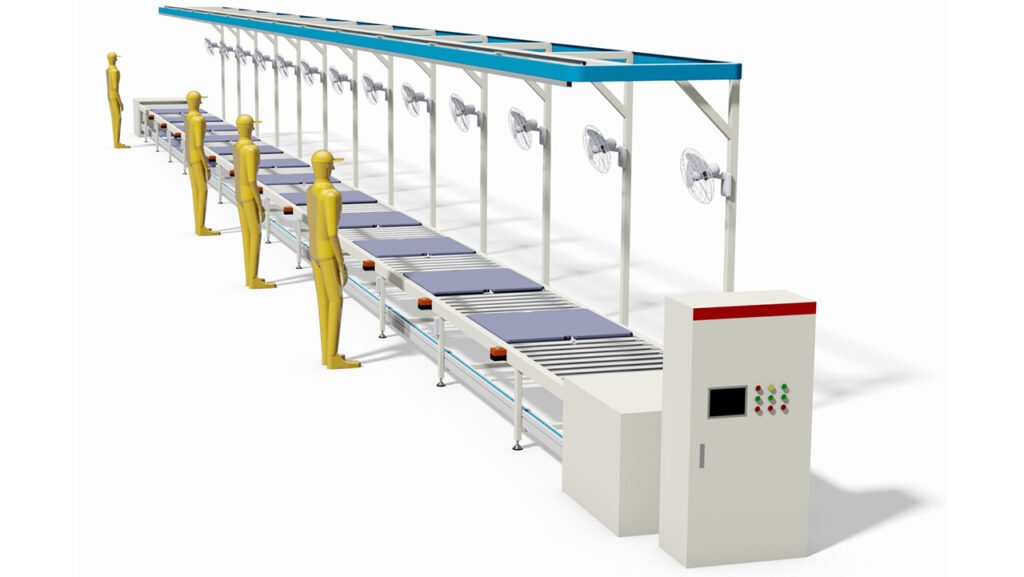
III. Home Appliance and Furniture Industry (Mainstream in Civil Manufacturing)
Suitable for large home appliances and rigid furniture with flat bases, moderate weight, and mass assembly conveying:
- Large home appliances: refrigerators, washing machines, air conditioners (outdoor/indoor units), TVs (complete units/backplanes), water heaters, disinfection cabinets, ovens;
- Furniture and building materials: cabinet bodies, wardrobes, wooden doors, stone countertops, metal furniture, integrated ceiling modules, sanitary ware (bathroom cabinets, toilet bases).
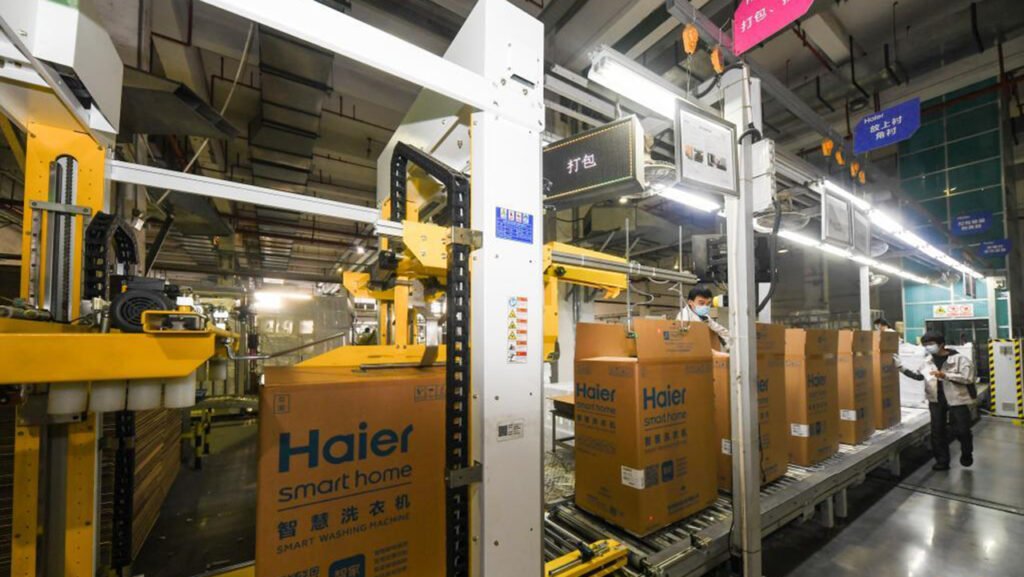
IV. Logistics/Packaging/Warehousing Supporting (High-Frequency Use, Non-Assembly)
In addition to production and assembly, roller conveyors are also used for the transfer, palletizing and pre-packaging conveying of finished/semi-finished products:
- Standard packaged items: cartons, wooden cases, plastic turnover boxes (for parts/accessories), light bulk bags;
- Palletized goods: all palletized cargo (e.g., part pallets, finished product pallets), serving as the core connection between warehouses and assembly lines.
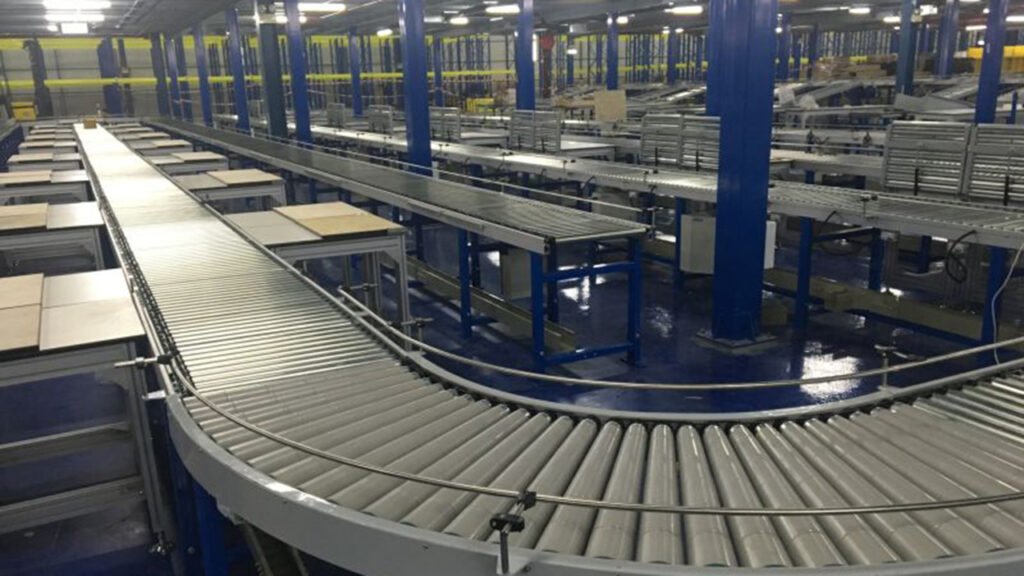
V. Other Industrial Products
- New energy category: photovoltaic modules, energy storage battery cabinets, small charging piles, inverters;
- Food/chemical industry (industrial grade): stainless steel roller conveyors for chemical barrels (plastic/metal), food processing equipment, large storage tanks;
- Instruments and meters: large laboratory equipment, industrial testing instruments, metering instruments.
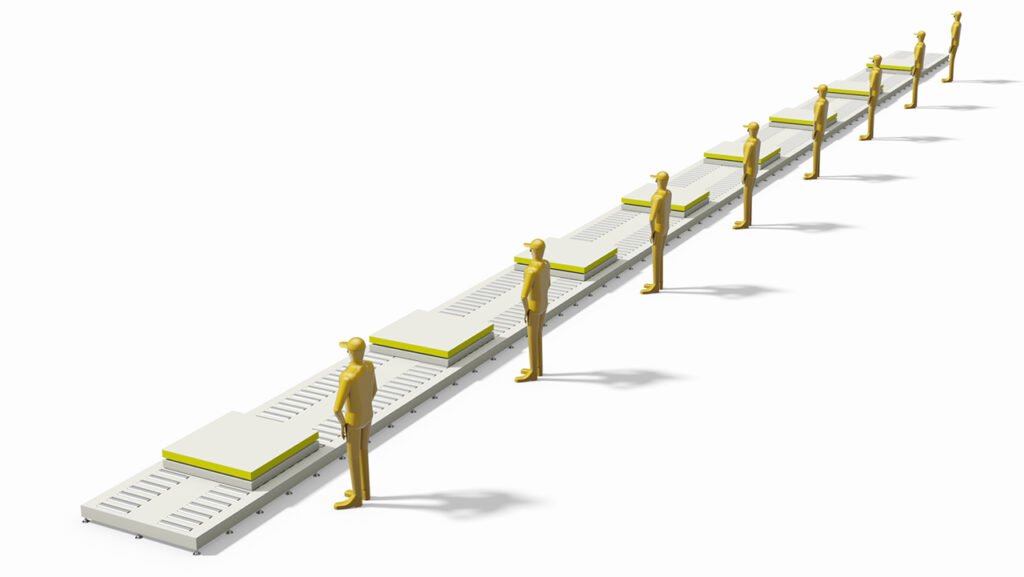
❗ Products Not Suitable for Assembly on Roller Conveyors (Key Pitfalls to Avoid)
- Products without rigid bases: soft packages (cloth bags, plastic bags), irregular small parts (screws, nuts, small hardware), easy-rolling round parts (steel pipes, steel balls, without positioning);
- Products with irregular bases/easy to topple: slender rods (without support positioning), high-center-of-gravity thin-walled parts, unboxed fragile glass parts;
- Lightweight soft products: small plastic parts, fabrics, foam parts (prone to jamming in roller gaps and slipping during conveyance).
Supplementary: Applicable Product Weights for Different Types of Roller Conveyors
- Light-duty roller conveyors (plastic/thin steel rollers): single piece ≤ 50kg, suitable for small home appliances, small distribution boxes;
- Medium-duty roller conveyors (thick steel rollers): single piece 50–500kg, suitable for motors, refrigerators, auto parts;
- Heavy-duty roller conveyors (thickened steel/cast iron rollers with supports): single piece ≥ 500kg, suitable for construction machinery, large machine tools, pre-assembly of complete vehicles.
Roller Conveyor Instructions
1. Overview
Roller conveyors are a common type of continuous conveying equipment for industrial production and logistics handling, which rely on the rotation of rollers to drive the horizontal movement of workpieces with rigid flat bases. They feature simple structure, stable operation, easy maintenance and strong adaptability, and are widely used in assembly lines, warehousing transfer, loading and unloading of various industries such as machinery, automobile, home appliance and new energy.
2. Main Classification & Applicable Scenarios
2.1 By Load Capacity
- Light-duty roller conveyor: Adopts plastic or thin steel rollers, single workpiece load ≤50kg. Suitable for conveying small and light products such as small distribution boxes, small home appliances and plastic turnover boxes.
- Medium-duty roller conveyor: Adopts thick steel rollers with reinforced frame, single workpiece load 50~500kg. The core type for production assembly lines, suitable for motors, refrigerators, auto parts and other medium-sized products.
- Heavy-duty roller conveyor: Adopts thickened steel/cast iron rollers with heavy-duty support frame, single workpiece load ≥500kg. Suitable for conveying heavy products such as construction machinery parts, large machine tools, energy storage battery cabinets and vehicle pre-assembly workpieces.
2.2 By Driving Mode
- Gravity roller conveyor: No power drive, relying on gravity or manual pushing to realize workpiece movement. Simple in structure and low in cost, suitable for short-distance transfer, manual assembly stations and downhill conveying sections.
- Powered roller conveyor: Driven by motor and chain/belt, with stable conveying speed and adjustable speed. Suitable for long-distance continuous conveying, automatic assembly lines and unmanned logistics transfer sections.
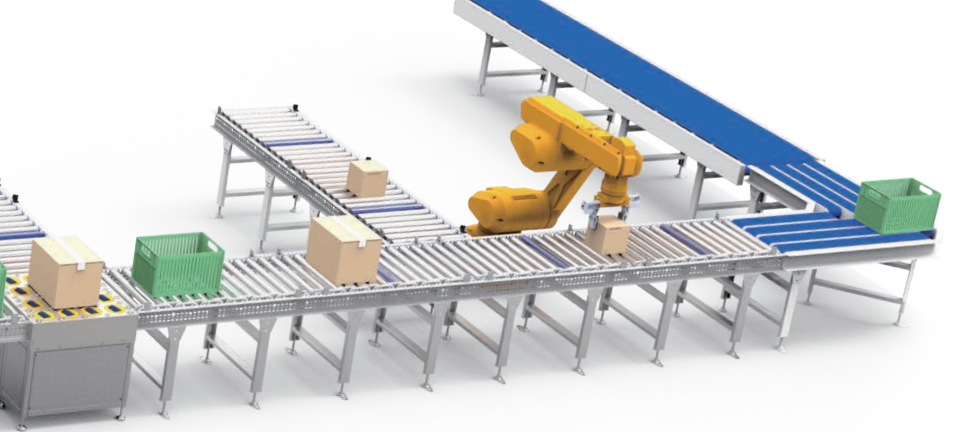
2.3 By Material
- Carbon steel roller conveyor: Economical and practical, with high strength, suitable for general industrial scenes without corrosion requirements.
- Stainless steel roller conveyor: Corrosion and rust resistance, suitable for food processing, chemical industry, pharmaceutical and other scenes with hygiene or anti-corrosion requirements.
- Plastic roller conveyor: Light weight, low noise, anti-collision and wear resistance, suitable for conveying precision instruments, surface-coated workpieces and other products that require anti-scratch.
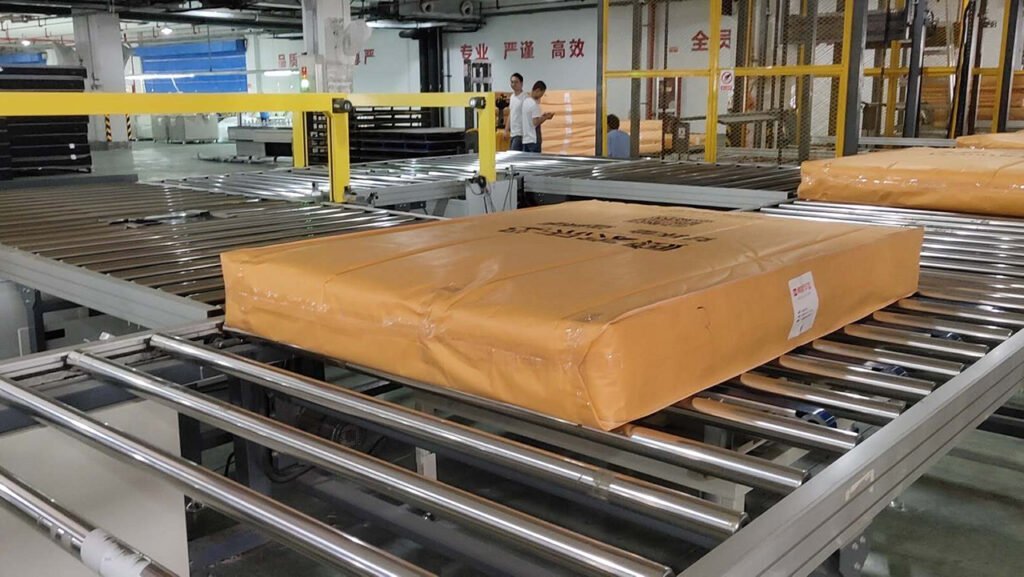
3. Basic Operation Requirements
3.1 Pre-operation Check
- Check the appearance of the conveyor: no deformation of the frame, no looseness of bolts and fasteners, and the connection between rollers and brackets is firm.
- Check the roller state: all rollers rotate flexibly without jamming, deformation or severe wear; no foreign matters such as iron filings and plastic residues in the roller gaps.
- Power check (for powered type): the power supply is connected normally, the motor and transmission parts run without abnormal noise, and the speed control device is sensitive and effective.
3.2 Operation Norms
- Only convey products with rigid flat bases that match the conveyor width and load capacity; it is strictly forbidden to place overloaded, ultra-wide, irregular bottom or soft packaged products.
- Place the workpiece stably in the middle of the conveyor, ensure uniform stress on the rollers, and prevent the workpiece from tilting, slipping or getting stuck during conveying.
- For batch conveying, keep a safe distance between workpieces to avoid collision and accumulation; stop feeding in time when the subsequent station is blocked.
- It is strictly forbidden to put hands, feet or other sundries into the running roller gap; it is forbidden to climb or stand on the conveyor frame during operation.
- The gravity roller conveyor shall control the conveying speed to prevent the workpiece from sliding too fast and causing collision or falling due to excessive slope.
3.3 Shutdown Operation
- For powered type, stop feeding first, and shut down the power supply only after all workpieces on the conveyor are transported to the designated position.
- After shutdown, clean the surface of the conveyor and roller gaps, remove foreign matters and sundries in time, and keep the equipment clean.
- Cut off the main power supply for long-term shutdown, and do a good job of dustproof and moistureproof protection for the equipment.

4. Daily Maintenance & Upkeep
4.1 Routine Maintenance (Daily/Weekly)
- Wipe the surface of rollers and frame with a clean cloth to remove dust, oil and debris.
- Check the rotation of each roller, and timely remove foreign matters causing jamming; replace severely worn or non-rotating rollers.
- Tighten the loose bolts, nuts and transmission chain fasteners to ensure the structural stability of the equipment.
- Add lubricating oil to the roller bearings, transmission chains and sprockets (weekly), and ensure uniform lubrication without oil accumulation.
4.2 Regular Maintenance (Monthly/Quarterly)
- Inspect the motor and reducer (for powered type): check the running temperature and noise, and supplement the lubricating oil of the reducer in time according to the oil level mark.
- Check the wear condition of transmission belt/chain, adjust the tightness of belt/chain, and replace the severely worn belt/chain.
- Inspect the frame and support for deformation, rust and corrosion; derust and paint the rusted parts in time (for carbon steel type).
- Calibrate the levelness of the conveyor frame to prevent the workpiece from deviating during conveying due to uneven frame.
4.3 Key Maintenance Notes
- Use special lubricating oil that meets the equipment requirements; it is strictly forbidden to mix different types of lubricating oil.
- For stainless steel type, avoid using corrosive cleaning agents, and use neutral detergent for cleaning to prevent surface corrosion.
- The plastic roller is forbidden to contact with high temperature and sharp hard objects to prevent melting or scratching.
5. Safety Precautions
- The equipment shall be operated by special personnel; untrained personnel are strictly forbidden to operate the conveyor without permission.
- Set up obvious safety warning signs at both ends and side edges of the conveyor, and install anti-falling baffle plates for the conveying section with a height difference.
- During the operation of the powered conveyor, if abnormal noise, jamming, workpiece deviation and other faults are found, stop the machine for inspection immediately, and it is strictly forbidden to handle the fault with the machine running.
- When carrying out maintenance, repair and roller replacement, the power supply must be cut off first and a “no operation” warning sign must be hung to prevent accidental startup.
- It is strictly forbidden to stack heavy objects on the conveyor frame, and avoid impact on the rollers and frame during workpiece handling to prevent equipment damage.
- Keep the surrounding area of the conveyor unobstructed, and there is no accumulation of sundries in the operation and maintenance space to ensure safe operation and convenient maintenance.
6. Common Faults & Troubleshooting
| Common Fault | Causes | Troubleshooting Methods |
|---|---|---|
| Roller jamming/non-rotating | 1. Foreign matters in roller gaps; 2. Bearing jamming due to lack of lubrication; 3. Deformation of roller shaft | 1. Remove foreign matters in time; 2. Add lubricating oil to bearings; 3. Straighten or replace the deformed roller shaft |
| Workpiece slipping during conveying (powered type) | 1. Excessive workpiece load; 2. Severe roller wear; 3. Loose transmission chain/belt | 1. Reduce the load to meet the rated standard; 2. Replace worn rollers; 3. Tighten or replace the transmission chain/belt |
| Workpiece deviation during conveying | 1. Uneven conveyor frame; 2. Uneven roller height; 3. Unreasonable workpiece placement | 1. Calibrate the frame levelness; 2. Adjust the roller height to keep it consistent; 3. Standardize the workpiece placement position |
| Abnormal noise of powered conveyor | 1. Lack of lubrication in transmission parts; 2. Loose sprocket/gear; 3. Motor bearing wear | 1. Add lubricating oil to transmission parts; 2. Tighten the sprocket/gear fasteners; 3. Inspect and replace the motor bearing |
| Motor overheating | 1. Long-term overload operation; 2. Poor heat dissipation of motor; 3. Faulty power supply | 1. Stop the machine and cool down, reduce the load; 2. Clear the sundries around the motor to ensure heat dissipation; 3. Check and repair the power supply circuit |
We can customize according to the client’s product specifications, production capacity or other requirements.
We provide comprehensive services including design, production, and installation/commissioning.