

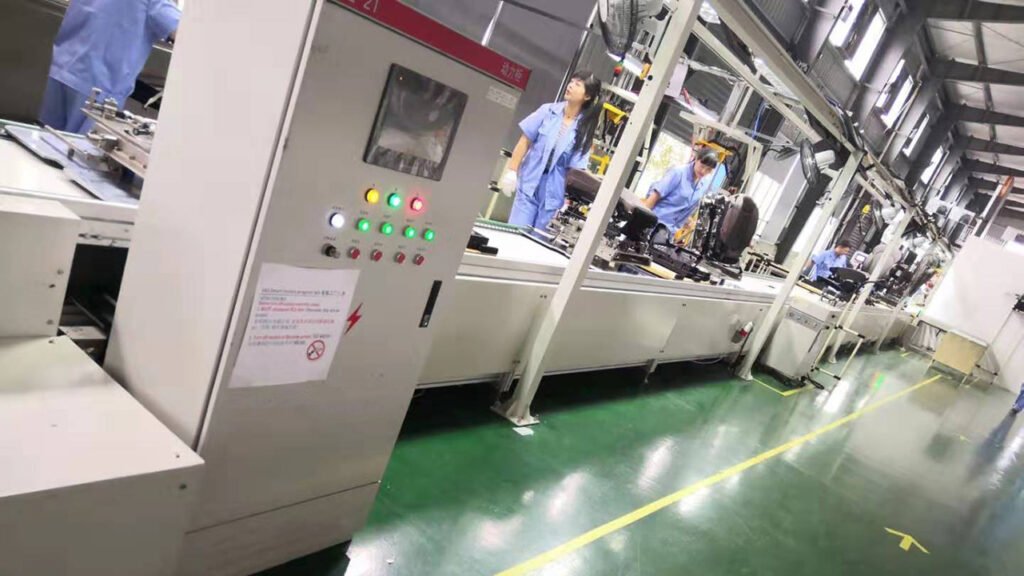
This article systematically elaborates on the structure, assembly, and inspection processes of automotive seats. A seat consists of four core components: the frame, foam pad, trim cover, and electronic systems. Assembly follows a process of sub-assembly pre-build followed by main line integration, utilizing efficient conveying systems such as differential chains, and extensively incorporates automation and information technology. Inspection spans the entire product lifecycle, including design validation, incoming material checks, in-process monitoring, and final inspection. Functions such as torque monitoring and vision inspection ensure quality and traceability. With its dual-speed control, high stability, and flexible production capacity, the differential chain assembly line has become the industry standard, enabling high-quality and efficient seat manufacturing.
Seat Assembly Lines are suitable to Assemble/Produce seats. (If clients have more requirements or want to produce the other seats, welcome to contact us.)
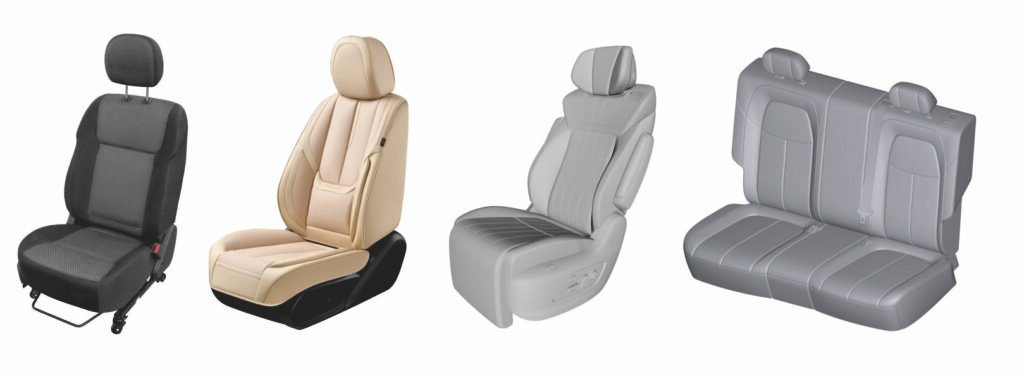
Part I: Structure, Assembly, and Inspection Processes of Automotive Seats
I. Automotive Seat Structure
A typical automotive seat consists of four core structural layers, resembling an “onion” with successive layers:
1. Frame Assembly
- Function: Acts as the seat’s “skeleton,” bearing all weight and impact forces. It is the foundation of safety.
- Composition:
- Backrest Frame: Usually welded from high-strength steel (HSS) or aluminum alloy tubes/stampings. It integrates components like the seat belt height adjuster and side airbag openings.
- Cushion Frame: Also a high-strength steel structure, including mounting points for the slide rails and the recliner mechanism.
- Key Motion Components: Slide Rails (for fore-aft adjustment), Recliners (for backrest angle adjustment, typically one on each side, serving as the core safety locking mechanism), Lifters (for height adjustment, using scissor or four-bar linkage types, etc.).
2. Foam Pad Assembly
- Function: Acts as the seat’s “muscle,” providing support, cushioning, and the basic shape.
- Composition:
- Material: Primarily polyurethane foam. Hardness (density) is adjusted via formulation to meet support requirements for different zones (e.g., firmer bolsters, softer center cushion).
- Process: Formed by chemical reaction in molds. Wires, inserts, and hog rings can be integrated to enhance connection with the frame and trim cover.
3. Trim Cover Assembly
- Function: Acts as the seat’s “skin,” directly affecting appearance, tactile feel, durability, and partial comfort.
- Composition:
- Materials: Genuine leather, synthetic leather (PVC/PU), fabric (mainstream), suede, etc.
- Structure: Multi-layer composite, typically including surface material, a soft padding layer (thin foam), non-woven backing, etc. It involves complex processes like cutting, sewing, and assembly, including pattern making, embroidery, and embossing.
4. Functional & Electronic Systems
- Function: Provides additional features and intelligent experiences.
- Composition:
- Adjustment Motors: For power fore-aft, height, backrest, and lumbar support adjustment.
- Heating/Ventilation Systems: Heating wires/mats; ventilation fans and air guide layers.
- Pneumatic Massage Systems: Air pumps, airbags, and solenoid valves integrated into the foam or trim.
- Sensors: Occupant detection sensors, seat belt reminder sensors, memory module for seat position, etc.
- Wiring Harness & Controller: The “nervous system” connecting all electronic components.
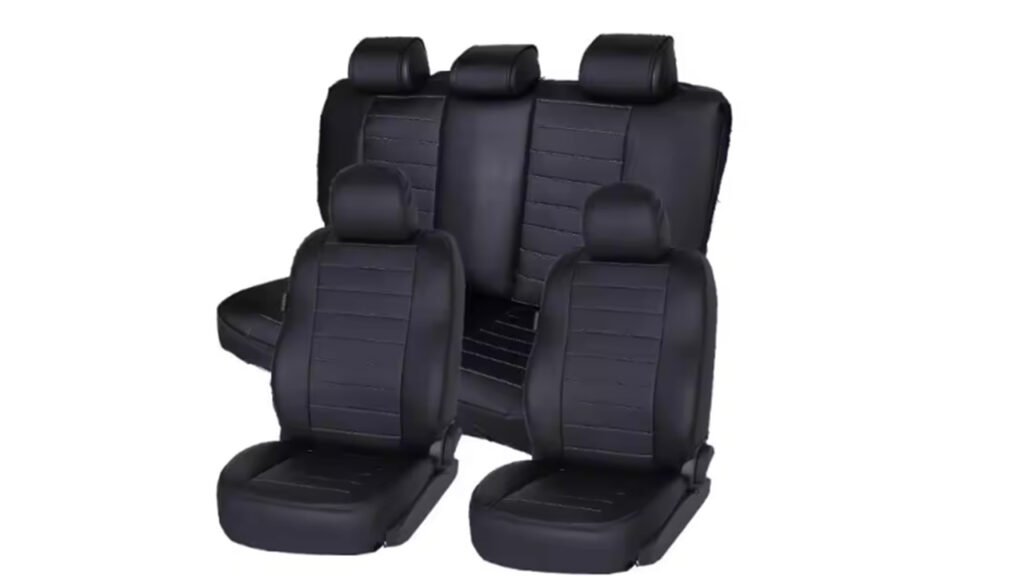
II. Automotive Seat Assembly Process
The assembly follows an inside-out logic, from sub-assembly pre-build to the main line, typically using assembly line flow.
1. Sub-Assembly Lines
- Frame Sub-Assembly: Installing slide rails, recliners, lifters, motors, etc., onto the frame, followed by preliminary functional checks (e.g., smoothness of adjustment).
- Foam Pre-Assembly: Attaching or embedding electronic components (heating pads, sensors), wiring harnesses, hog rings, etc., onto the foam pad.
- Trim Cover Sub-Assembly: Pre-assembling the sewn trim cover with support wires, clips, and other aids to facilitate later “trim cover installation.”
2. Main Assembly Line
- Station 1: Frame Loading.
- Station 2: Trim Cover Installation: “Dressing” the foam with the trim cover. This is a labor-intensive station and a challenge for automation. Common methods include:
- “Christmas Tree” Method: The trim cover is reversed onto a contour fixture, then closed onto the foam.
- “Clamp & Stretch” Method: Robotic arms clamp the edges of the trim cover and stretch it over the foam.
- Station 3: Foam-to-Frame Marriage: Joining the foam pad (with trim cover) to the frame assembly, securing it with clips, wires, cable ties, etc.
- Station 4: Electronic Component Installation: Connecting all wiring harness connectors, installing side covers, switch panels, etc.
- Station 5: Headrest/Armrest Installation: Inserting headrest rods into backrest guides, installing armrests and other accessories.
- Station 6: Final Inspection & Adjustment: Manual checks for appearance, gaps, followed by final functional testing.
Trend: Increasing use of collaborative robots for assisting assembly tasks like adhesive application, bolt tightening, and handling heavy seats.
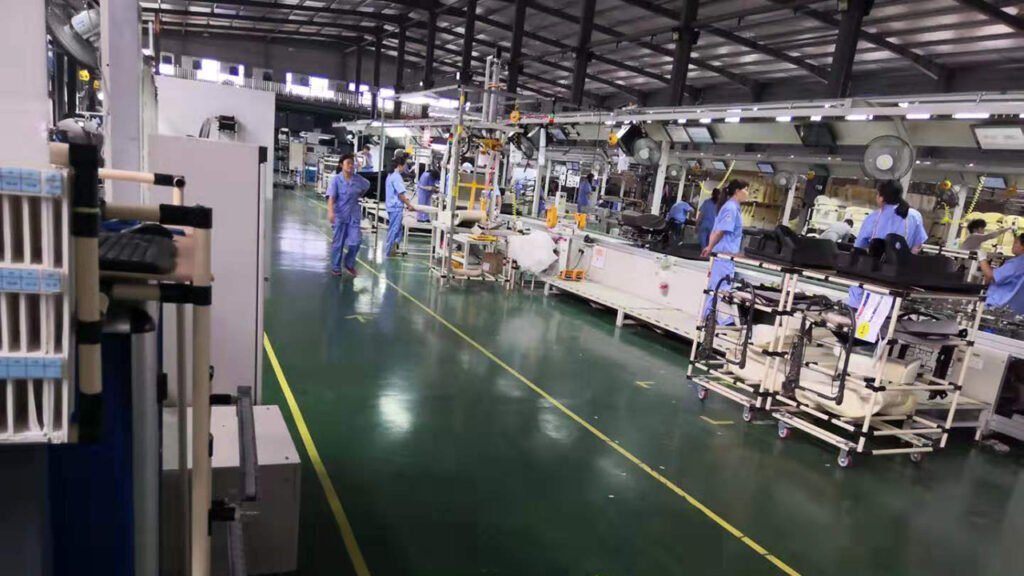
III. Automotive Seat Inspection Processes
Inspection runs through the entire product lifecycle: design validation, incoming material checks, in-process, and final inspection.
1. Design Validation & Type Testing (DV/PV)
- Strength & Durability Testing: Simulating over a decade of use. Includes Slide Rail Strength Test, Recliner Strength & Durability Test (tens of thousands of cycles), Head Restraint Strength Test (rear-impact protection), Seat Assembly Static/Dynamic Strength Test, etc.
- Safety Testing: According to regulations (e.g., GB, ECE, FMVSS), such as Seat Belt Anchorage Strength Test, Rear Impact Whiplash Test.
- Comfort & Ergonomics Testing: Measuring pressure distribution and seating posture (H-point measurement) using manikins, assessing long-term riding fatigue.
2. Incoming Material Inspection
- Frame: Dimensional checking with CMM, weld strength, plating thickness.
- Foam: Density, hardness, tensile strength, resilience.
- Fabric: Abrasion resistance, color fastness, UV resistance, flame retardancy.
- Motors/Recliners: Noise, current draw, lifespan, torque.
3. In-Process Inspection
- Vision Inspection: Automated machine vision systems check trim cover stitching, leather defects, assembly gaps, missing parts, etc.
- Torque Monitoring: 100% monitoring and recording of tightening torque for critical bolts, ensuring traceability.
- Electrical Performance Check: Power-on tests for all motor functions, resistance checks for heating pads, continuity checks for wiring harnesses.
4. Final Off-Line Inspection (100% Full Check)
- Final Functional Test: Operating all adjustment switches to check for smooth, complete, and noise-free operation. Testing heating/ventilation/massage functions.
- Final Appearance Check: Manual inspection under standard lighting for trim cover stains, wrinkles, scratches, color mismatch, fit and finish gaps, etc.
- Final Test Station: Typically equipped with fixtures simulating vehicle installation, integrated power supply, and test computers. Often features one-button automated testing of all electrical functions with report generation.
Part II. Differential Chain-Type Automotive Seat Assembly Line System Description
I. System Overview
The differential chain-type automotive seat assembly line is an efficient, flexible automated conveying system that utilizes a differential chain as its core conveying mechanism. It is widely used in the mass production of mid- to high-end automotive seats. By employing differential speed control, this system achieves precise positioning and stable transportation of seats between workstations. It is a standard configuration in modern automotive seat manufacturing.
II. Core Working Principle
Differential Chain Working Principle:
- Dual-Speed Design: The differential chain system incorporates two speed modes:
- High-Speed Segment: Used for rapid transportation between workstations to enhance production efficiency.
- Low-Speed/Stop Segment: Achieves precise deceleration or a complete stop at assembly stations.
- Smooth Transition: Speed changes are achieved smoothly via mechanical or electrical control systems.
System Control:
- Position Sensing: Real-time monitoring of pallet position via photoelectric sensors or encoders.
- Speed Regulation: Precise speed control implemented by PLC-controlled motors.
- Synchronization: Ensures perfect matching between conveying speed and assembly cycle time.
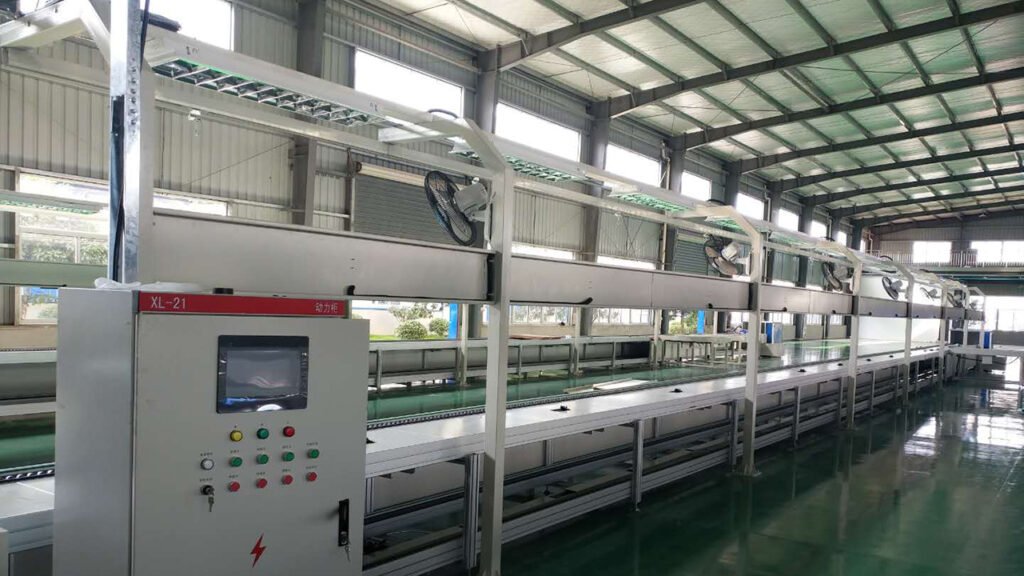
III. Main System Components
1. Conveying System
- Differential Chain: Specially designed dual-speed conveying chain.
- Drive Unit: Servo motor with gear reducer for precise control.
- Pallets/Work Carriers: Customized pallets with precision locating fixtures.
- Guiding Devices: Ensure stability during conveying.
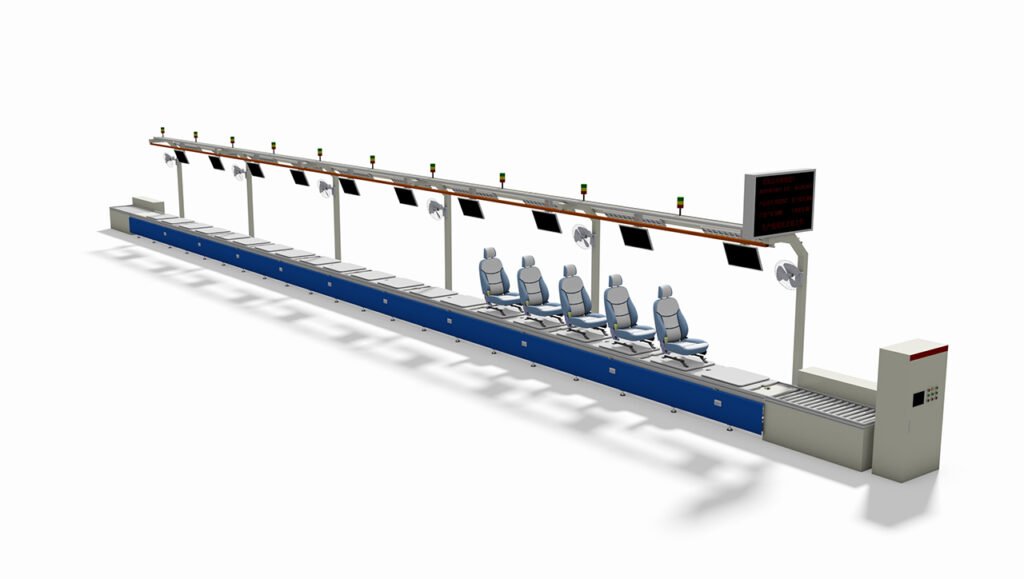
2. Workstation Configuration
- Fixed Stations: Each assembly station with suitable length.
- Height-Adjustable Platforms: Work surfaces with adjustable height.
- Rotation Mechanisms: Some stations equipped with 360° rotation capability.
- Safety Protection: Emergency stop buttons and light curtains at each station.
3. Material Supply System
- Line-Side Racks: Gravity-fed or electrically powered racks.
- AGV Replenishment: Automated guided vehicles for scheduled material replenishment.
- Kanban System: Visual indicators for material consumption.
4. Quality Control System
- In-Line Inspection Stations: Integrated into the assembly process.
- Torque Monitoring Stations: 100% recording of critical bolt torque values.
- Vision Inspection Systems: Automatic detection of assembly completeness.
IV. Technical Parameters and Performance
Basic Parameters:
- Conveying Speed: High-speed segment: 0.8-1.2 m/s; Low-speed segment: 0.1-0.3 m/s.
- Load Capacity: 200-500 kg per station.
- Positioning Accuracy: ±1 mm.
- Production Line Cycle Time: 45-90 seconds per seat.
Performance Characteristics:
- High Stability: Mechanical differential mechanism ensures stable operation.
- Flexible Production: Supports mixed-model production lines.
- Low Maintenance: Standardized design reduces maintenance requirements.
- Energy Efficient & Eco-Friendly: High-speed operation activated only when needed.
V. Control System Architecture
Hardware Configuration:
- Main PLC Controller: Siemens/Mitsubishi series.
- HMI Interfaces: Touchscreen at each workstation.
- Fieldbus Network: PROFINET/EtherCAT.
- Data Collection: RFID/Barcode scanning systems.
Software Functions:
- Production Scheduling: Automatic production planning and dispatching.
- Quality Traceability: Full-process traceability with unique item identification.
- Equipment Monitoring: Real-time monitoring of equipment status.
- Data Analysis: Statistical analysis of production data.
VI. Safety and Maintenance
Safety Features:
- Emergency stop buttons along the entire line.
- Safety light curtain protection.
- Overload protection devices.
- Audible and visual alarm systems.
Maintenance:
- Daily Checks: Chain lubrication, sensor cleaning.
- Regular Maintenance: Comprehensive monthly inspections.
- Annual Overhaul: Complete system inspection and upgrade.
VII. Application Advantages
- High Production Efficiency: Optimized speed control minimizes waiting time.
- Stable Product Quality: Precise positioning ensures assembly consistency.
- Operator-Friendly: Ergonomic design.
- High Scalability: Modular design facilitates capacity expansion.
- Fast ROI: High efficiency yields quick return on investment.
VIII. Typical Configuration Schemes
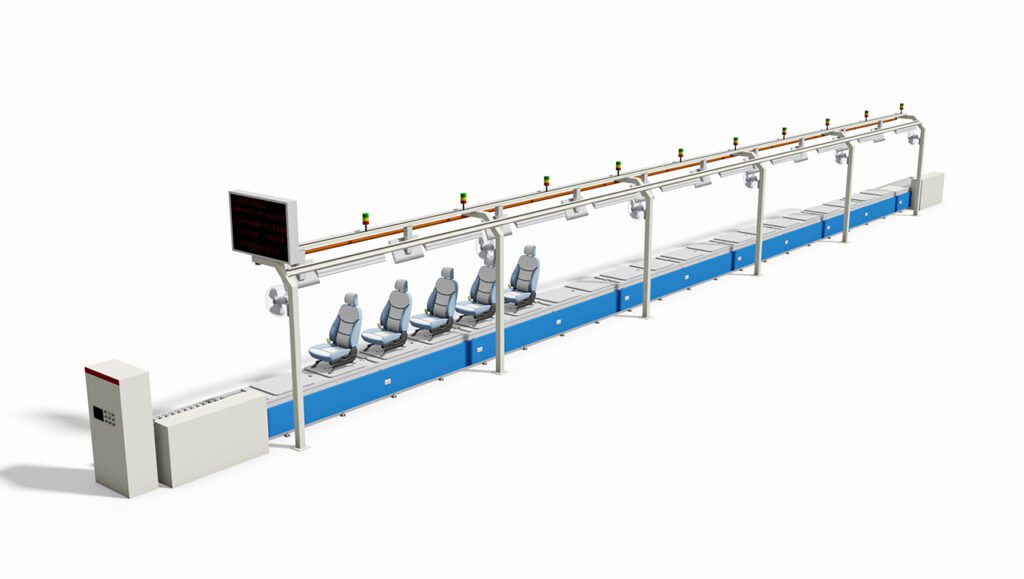
Basic Type:
- 15 standard workstations.
- Basic differential control system.
Enhanced Type:
- 20-25 workstations.
- Intelligent control system.
- Automated assembly equipment.
Premium Type:
- 25+ workstations.
- Fully automated system.
- Integrated intelligent logistics.
Summary: The differential chain-type automotive seat assembly line, with its stable performance, efficient cycle time, and good flexibility, has become the mainstream choice in the automotive seat manufacturing industry. Through precise speed control and intelligent management, the system achieves high-quality and high-efficiency production goals.
We can customize according to the client’s product specifications, production capacity or other requirements.
We provide comprehensive services including design, production, and installation/commissioning.